 EN
EN

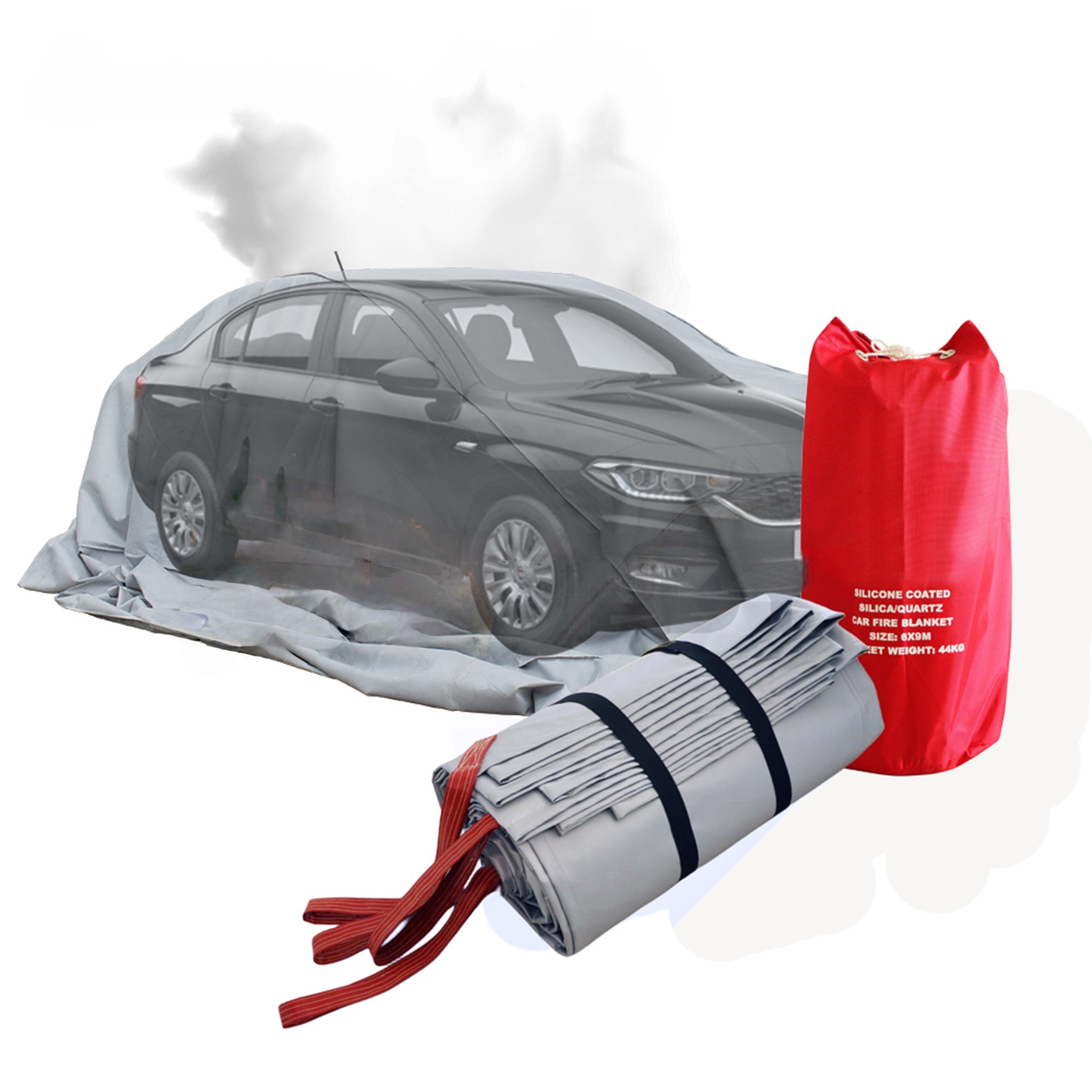
Jet Flames, Ejected Electrolyte, and Secondary Ignition Sources
Within a battery pack, individual cells vent hot gases through pressure-relief mechanisms when internal pressure exceeds design limits. These vented gases — a mixture of vaporized electrolyte solvents, hydrogen, carbon monoxide, and other flammable compounds — ignite upon contact with air at temperatures well above their auto-ignition points. The result is a jet-like flame that can extend horizontally for over one meter from the battery casing.
Simultaneously, droplets of burning liquid electrolyte are ejected from compromised cells. These droplets act as secondary ignition sources when they land on surrounding materials — vehicle upholstery, plastic trim, rubber seals, and nearby objects. A lithium battery fire blanket must address both the sustained jet flame and these distributed ignition points to effectively block fire spread.
Thermal Radiation as the Hidden Propagation Vector
While direct flame contact is visible and intuitively understood, radiant heat transfer is the stealthier mechanism of fire propagation. A battery pack in full thermal runaway can emit radiant heat fluxes exceeding 50 kW/m² at close range — sufficient to auto-ignite adjacent combustible materials within seconds and cause structural deformation of metal components within minutes. In tightly packed environments such as multi-story parking garages or vehicle transport ships, radiant heat alone can cascade a single EV fire into a multi-vehicle conflagration.
Three Barriers — How the Blanket Interrupts Each Pathway
Physical Barrier — Blocking Ejected Material and Direct Flame Contact
The woven fiberglass fabric of a lithium battery fire blanket forms a dense physical membrane that intercepts horizontally ejected burning electrolyte droplets and deflected jet flames. The fabric's tight weave structure — typically a plain or twill weave with high thread count — prevents penetration by particulate material while maintaining enough flexibility to drape conformally over vehicle contours.
The physical barrier function is particularly critical during the first 30-90 seconds of the incident, when venting is at its most violent. A blanket that maintains its position through this initial burst phase — secured by its own weight and, where applicable, integrated handling loops held by responders — prevents the most dangerous period of uncontrolled propagation.
Oxygen Barrier — Smothering External Combustion at the Surface
A properly deployed blanket creates a low-oxygen micro-environment at the vehicle surface. While the blanket cannot stop the internal thermal runaway chemistry — which generates oxygen from cathode decomposition — it dramatically reduces the oxygen available for external flame combustion. Surface flames that rely on atmospheric oxygen are smothered within seconds of full blanket coverage.
This mechanism is essentially the same principle that makes any fire blanket effective: fire requires fuel, heat, and oxygen. Remove the oxygen, and external combustion stops. For lithium battery fires specifically, the oxygen barrier function is what prevents the external vehicle fire from intensifying and spreading independently of the battery event.
Radiant Heat Barrier — Preventing Ignition of Adjacent Materials
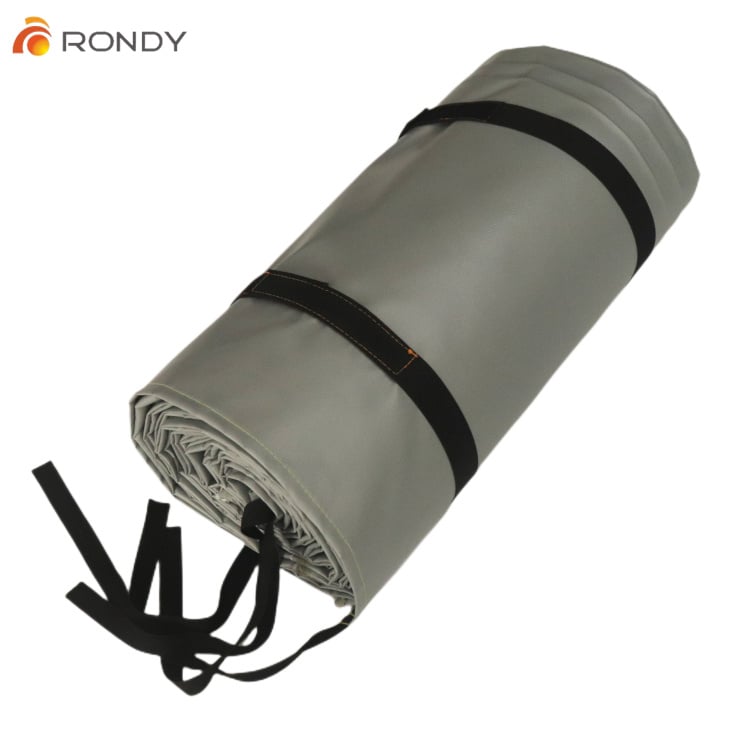
The third barrier function is thermal radiation attenuation. Fiberglass has inherently low thermal conductivity and high emissivity — properties that make it an effective radiant heat shield. When a lithium battery fire blanket covers a burning vehicle, it absorbs and reflects a significant portion of the infrared radiation that would otherwise heat adjacent surfaces to ignition temperature.
The effectiveness of this function depends on the blanket's thickness and any specialized reflective coating. Silicone-coated fiberglass fabric, for example, can reflect up to 70% of incident radiant heat at certain wavelengths. This is why procurement specifications for facility-wide blanket programs should evaluate not just temperature ratings but also radiant heat attenuation performance.
What Happens During a Real Deployment
A Logistics Warehouse Deployment That Prevented Inventory Loss
An e-commerce logistics center operating a fleet of electric delivery vans experienced a thermal runaway event during overnight charging in the facility's loading bay. The vehicle, parked approximately 2 meters from stacked inventory pallets containing cardboard packaging and plastic-wrapped goods, began emitting smoke at 02:47.
The night-shift security team, trained on a protocol developed after a risk assessment identified the charging bay as the facility's highest-consequence fire scenario, deployed a heavy-duty lithium battery fire blanket within 110 seconds of the initial alarm. The blanket, a 1.5mm thick fiberglass configuration with reinforced edge stitching, covered the vehicle from roof to ground on three sides.
The fire brigade arrived 18 minutes later. By that point, the blanket had prevented any flame contact with the adjacent inventory — pallets positioned less than 2.5 meters from the vehicle showed no heat damage. The warehouse resumed normal operations the following morning after smoke ventilation and a structural integrity inspection of the loading bay.
The Role of Blanket Thickness in Block Duration
Blanket thickness directly correlates with both the duration of effective flame blocking and the maximum sustainable radiant heat flux. A 0.6mm blanket may provide adequate short-duration protection in scenarios where professional firefighting response is expected within 5-10 minutes. For remote locations, marine applications, or facilities with extended response times, a 1.5mm to 1.7mm heavy-duty configuration extends the effective blocking window considerably.
Integrating Blankets into a Complete Fire Response Plan
Positioning, Training, and Multi-Blanket Coverage
A single blanket provides effective coverage for one standard passenger EV. Facilities with multiple charging bays should calculate blanket positioning based on worst-case simultaneous incident scenarios. Fleet depots typically position one blanket per five charging bays, with the assumption that simultaneous multi-vehicle events are statistically unlikely but single-vehicle events require immediate coverage.
Multi-blanket coverage — using two blankets to fully envelop a larger vehicle, such as an electric bus or delivery truck — requires additional training but significantly improves containment effectiveness for commercial vehicle applications.
Post-Incident Evaluation and Replacement Protocols
A lithium battery fire blanket deployed in an actual fire event must be replaced regardless of visible condition. Micro-fractures in the fiberglass weave, coating degradation from extreme temperature cycling, and contamination from combustion byproducts all compromise future performance in ways that visual inspection cannot reliably detect. Post-incident blankets should be treated as consumable safety equipment and disposed of according to manufacturer guidelines.
Frequently Asked Questions
How does a lithium battery fire blanket block flames differently from a regular fire blanket?
A lithium battery fire blanket uses heavier fiberglass fabric — typically 0.6mm to 1.7mm thick — compared to standard kitchen fire blankets. The increased thickness provides longer duration protection against the sustained high temperatures, jet flames, and ejected burning electrolyte characteristic of battery fires.
What thickness of fire blanket is needed for EV battery fires?
A minimum of 0.6mm is recommended for light-duty applications with rapid fire brigade response. For commercial facilities, fleet depots, or marine applications where response times exceed 10 minutes, a 1.5mm to 1.7mm heavy-duty configuration provides significantly longer effective protection.
Can one fire blanket cover multiple parked vehicles?
A standard EV fire blanket covers one passenger vehicle. For adjacent vehicle protection, strategic blanket positioning should prioritize the burning vehicle directly. Radiant heat shielding of neighboring vehicles may require additional blankets positioned as vertical barriers between vehicles.
Do lithium battery fire blankets work on electric buses?
Larger vehicles such as electric buses require either oversized blankets or multi-blanket deployment strategies using two or more blankets overlapped to provide full coverage. Blanket specifications should be matched to the largest vehicle type operating in the facility.
What training is required for effective blanket deployment?
Training should include realistic scenario-based drills covering approach angles, two-person coordination, rapid unfolding technique, and post-deployment positioning. Drills conducted in low-light conditions and using actual blanket weights provide the most transferable skills for real emergencies.
How should a used fire blanket be disposed of?
A blanket deployed in any fire event — even briefly — should be treated as contaminated safety equipment and replaced. Disposal should follow local hazardous waste regulations due to potential contamination from battery combustion byproducts including fluorinated compounds.