 EN
EN

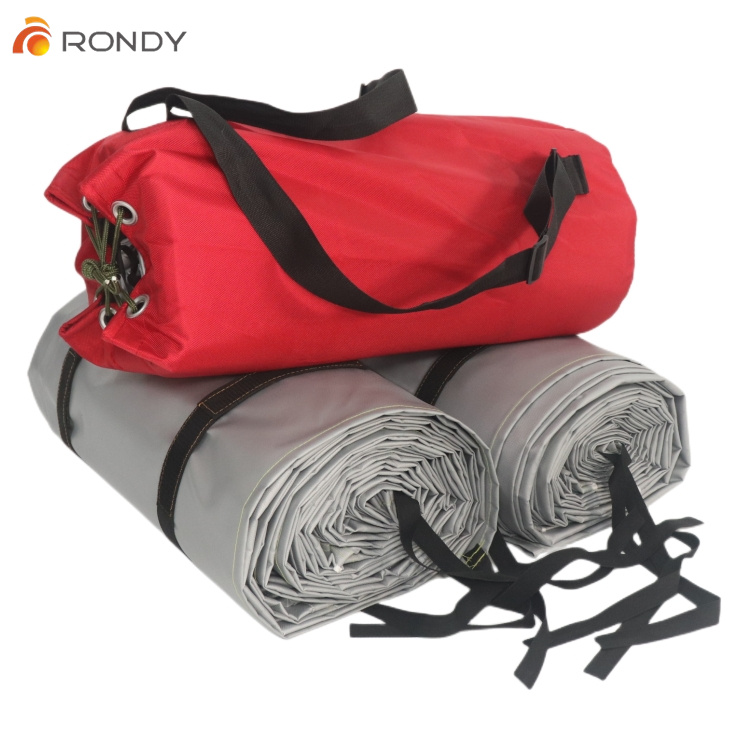
Electric vehicle adoption continues to accelerate across Europe, North America, and Asia. With more EVs on roads and in parking structures, fire safety professionals face a new challenge: lithium-ion battery fires that behave differently from conventional fuel fires. The fiberglass ev fire blanket has emerged as one of the most discussed tools for managing these incidents. But the question remains — is it genuinely effective?
How Lithium-Ion Thermal Runaway Differs from Ordinary Vehicle Fires
The Chemistry Behind Uncontrollable Battery Fires
Thermal runaway in a lithium-ion battery cell begins when internal temperatures exceed roughly 150°C (302°F). At this threshold, the separator between the anode and cathode breaks down, triggering an exothermic reaction that releases oxygen from the cathode material itself. Unlike a gasoline fire that requires external oxygen to sustain combustion, a battery in thermal runaway generates its own oxidizer. Temperatures can spike past 1,000°C (1,832°F) within seconds, and the reaction cascades from cell to cell in a phenomenon known as propagation.
This self-sustaining chemical chain makes lithium battery fires exceptionally difficult to extinguish. The fire produces toxic gases — including hydrogen fluoride, carbon monoxide, and volatile organic compounds — and can reignite hours or even days after apparent suppression.
Why Traditional Extinguishing Methods Fall Short
Conventional fire extinguishers — whether water-based, foam, dry chemical, or CO₂ — address the flame front but cannot halt the internal chemical decomposition inside battery cells. Water requires enormous volumes and sustained application, often thousands of liters per incident. Firefighting crews in multiple documented cases have reported vehicles reigniting after being towed to salvage yards, precisely because the root thermal reaction was never fully interrupted.
This is where containment, rather than extinguishment, becomes the pragmatic strategy. An ev fire blanket represents a shift in tactical thinking — from active suppression to passive isolation.
The Working Mechanism of an EV Fire Blanket
Material Science — Why Fiberglass Fabric Matters
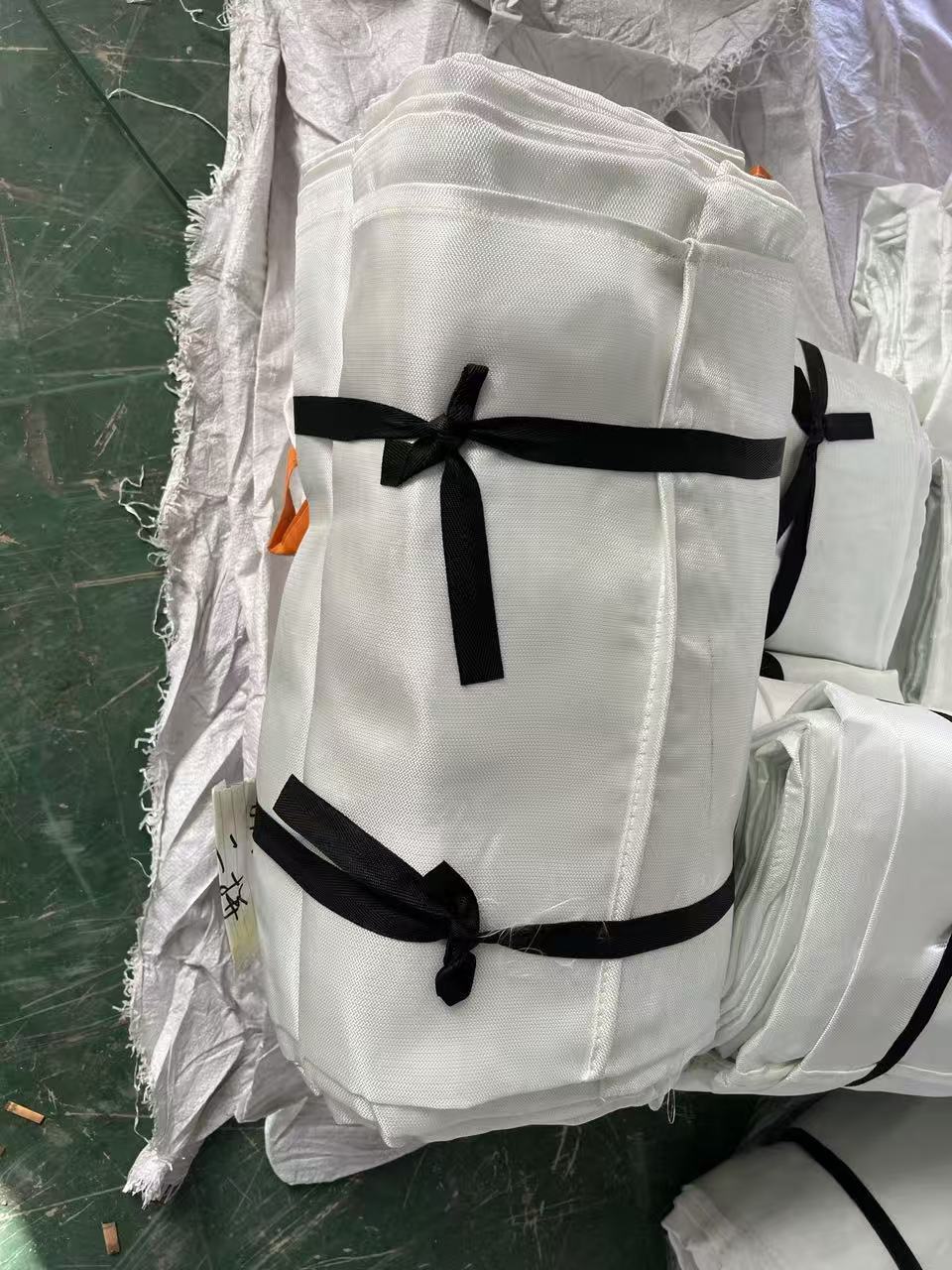
A high-performance ev fire blanket is manufactured from woven fiberglass fabric, typically E-glass fibers with a continuous temperature resistance of 550°C to 600°C (1,022°F to 1,112°F) and short-term peak resistance above 1,000°C. The fiberglass substrate provides the core thermal barrier, while specialized coatings — often silicone, vermiculite, or PU — enhance heat reflection and improve fabric integrity at extreme temperatures.
Fiberglass possesses several properties that make it uniquely suited for this application: it does not burn, it does not melt until well above 1,200°C, and it maintains structural integrity long enough to contain a battery fire event. The woven construction creates a flexible yet durable sheet that can be draped over irregular vehicle shapes, sealing off the fire from ambient oxygen.
Oxygen Starvation and Heat Containment as Dual Strategy
Once deployed over a burning EV, the blanket functions through two simultaneous mechanisms. First, it physically separates the flame front from atmospheric oxygen. While this cannot stop the internal thermal runaway chemistry — which produces its own oxygen — it does prevent the external combustion of ejected electrolyte, burning plastics, and other combustible vehicle components that would otherwise intensify the fire.
Second, the blanket contains radiant heat and prevents flame propagation to adjacent vehicles, building structures, or personnel. In multi-vehicle parking scenarios — underground garages, ferry decks, or logistics centers — this containment function is arguably more critical than extinguishment itself. A single EV fire in a tightly packed parking structure can cascade into a catastrophic multi-vehicle incident; the blanket buys the crucial time window for evacuation and professional firefighting intervention.
Real-World Effectiveness — What Field Data Reveals
A European Parking Garage Deployment Case Study
A municipal parking authority in a northern European city installed ev fire blanket kits across three underground parking levels after a risk assessment identified EV charging bays as the facility's highest fire vulnerability point. The assessment cited the dense vehicle arrangement, limited ventilation, and the documented difficulty of suppressing lithium battery fires with the building's sprinkler system alone.
Within the first year of deployment, a thermal runaway incident occurred in a plug-in hybrid vehicle charging on Level B2. Security personnel, trained under the facility's new emergency protocol, deployed the fiberglass blanket within 90 seconds of smoke detection. The blanket contained visible flames and smoke propagation for 12 minutes — sufficient time for the fire brigade to arrive, assess the situation, and initiate a controlled cooling strategy using a water lance inserted beneath the blanket edge.
The incident resulted in damage limited to the single vehicle. Adjacent vehicles — parked less than 1.5 meters away on either side — showed no heat damage. The parking structure itself remained operational after ventilation clearance, avoiding what could have been a multi-day closure.
Limitations and Proper Deployment Protocol
Effectiveness depends heavily on deployment speed and technique. A blanket applied after the fire has fully engulfed the vehicle provides diminishing returns. The optimal deployment window is within the first 2-3 minutes of visible flame — when the fire is still localized to the battery pack area.
Two-person deployment is strongly recommended. EV fire blankets typically weigh 20-30 kg for standard sizes, and the high-temperature environment demands that operators approach from upwind, use thermal gloves, and maintain distance from the vehicle's sides where battery venting may direct a jet of flame horizontally. Training programs offered by manufacturers like Shandong Rondy Composite Materials emphasize realistic scenario-based drills rather than theoretical instruction alone.
Selecting the Right EV Fire Blanket for Fleet and Facility Use
Key Specifications That Determine Performance
Procurement professionals evaluating an ev fire blanket should examine several technical parameters beyond the listed temperature rating. Fabric thickness — typically ranging from 0.6mm to 1.7mm — correlates directly with heat containment duration and mechanical durability. A 1.7mm heavy-duty configuration provides meaningfully longer containment than a thinner alternative, particularly when deployed over burning vehicles with sharp bodywork edges.
Edge finishing also matters. Double-stitched hems with high-temperature Kevlar or fiberglass thread prevent fraying during rapid deployment. Integrated handling loops positioned at multiple points around the blanket perimeter enable safer, faster positioning by two-person teams.
Certification verification should include EN 13501-1 fire classification for the fabric and, where applicable, compliance with IMO standards for marine deployment scenarios. Shandong Rondy Composite Materials, a manufacturer based in Jining, China, produces EV fire blankets that undergo third-party testing to validate both temperature resistance and mechanical integrity under simulated deployment conditions.

Inspection, Storage, and Deployment Training
Fiberglass blankets require periodic visual inspection — checking for fabric tears, coating delamination, or contamination from oil and chemicals that could compromise performance. Storage in a clearly marked, accessible cabinet near EV charging zones reduces retrieval time during an incident.
The most neglected aspect of blanket effectiveness is crew training. A blanket stored in perfect condition but deployed incorrectly provides limited protection. Facility managers should schedule hands-on deployment drills at least biannually, incorporating both daytime and low-light scenarios to reflect real emergency conditions.
Frequently Asked Questions
What temperature can a fiberglass EV fire blanket withstand?
A quality fiberglass EV fire blanket withstands continuous temperatures of 550°C to 600°C (1,022°F to 1,112°F) and can tolerate short-term peak exposures above 1,000°C. The exact rating depends on fabric thickness, coating type, and construction quality. Thicker blankets with silicone or vermiculite coatings generally offer higher thermal endurance.
How heavy is a standard EV fire blanket?
Standard EV fire blankets range from 20 to 30 kilograms (44 to 66 pounds) for sizes covering a typical passenger vehicle. Commercial vehicle blankets are heavier. The weight ensures sufficient fabric density for heat containment but makes two-person deployment the recommended practice in emergency situations.
Can an EV fire blanket extinguish a battery fire completely?
No fire blanket extinguishes a lithium-ion thermal runaway event completely because the battery generates its own oxygen internally. The blanket functions as a containment tool — smothering external flames, reducing smoke propagation, and preventing fire spread to adjacent vehicles or structures while professional firefighters manage the thermal event.
Where should EV fire blankets be stored?
EV fire blankets should be stored in clearly marked cabinets positioned near EV charging bays, parking facility entrances, or fleet maintenance areas. The storage location must be accessible within seconds of fire detection and protected from weather, chemical exposure, and physical damage.
How often should an EV fire blanket be inspected?
Visual inspection every six months is recommended. Checks should include fabric integrity — looking for tears, abrasions, or coating damage — plus verification of edge stitching and handling loop condition. Any blanket deployed in an actual fire event should be replaced, not reused, regardless of apparent condition.
What standards apply to EV fire blankets?
Key standards include EN 13501-1 for fire classification of construction products, EN 1869:1997 for general fire blanket requirements, and IMO FTP Code for marine applications. Additional certifications such as SGS third-party testing provide independent validation of manufacturer-specified performance claims.