 EN
EN

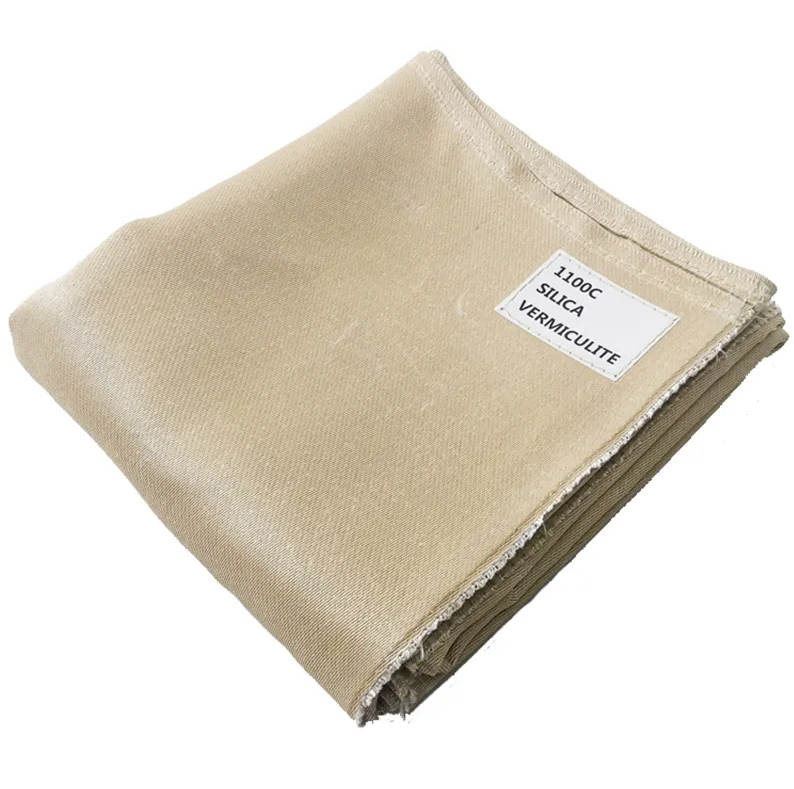
Heavy Duty Welding Blankets for Offshore Projects
A North Sea platform maintenance crew was conducting a riser repair 12 meters above the waterline — TIG welding a 16-inch carbon steel pipe with a 6mm root gap. The welding position put molten spatter directly above a bundle of hydraulic control lines and a fiber-optic communications cable tray. Standard 0.5mm welding protection was specified in the work permit. Within 15 minutes of arc striking, spatter penetrated the lightweight blanket, igniting the cable tray insulation. The fire was extinguished within 90 seconds by the standby fire watch, but the incident report concluded that a 1.0mm heavy-duty welding blanket would have prevented penetration entirely — the 0.5mm material had a continuous temperature rating of 550°C, while the spatter temperature at point of contact exceeded 800°C.
Offshore projects need heavy-duty welding blanket protection — not as a preference but as a direct consequence of risk factors that do not exist in onshore construction.
Offshore Welding — Why the Risk Profile Is Different
Three characteristics make offshore welding uniquely hazardous compared to onshore fabrication. Confined spaces — platforms, FPSO vessels, and drill ships concentrate high-energy hot work into compact structural volumes where personnel, process equipment, and escape routes occupy the same cubic meters. A fire in an offshore confined space cannot be outrun or avoided by moving to another area of the facility — evacuation to lifeboats is the only option, and that option requires the fire to be controlled long enough for muster and boarding.
Hydrocarbon proximity is the second factor. Even after gas-free certification, residual hydrocarbons in pipe walls, valve cavities, and dead-leg piping can release flammable vapor when heated by conducted welding heat — not just direct spatter. A welding blanket positioned as a barrier between the hot work area and adjacent process equipment prevents radiant heat from raising the temperature of hydrocarbon-containing components above their autoignition point — a protection function no water-based fire suppression system can provide.
The third factor is the consequence of failure. A welding fire on a 500-million offshore platform that triggers evacuation and production shutdown carries a daily revenue loss of 200,000-800,000 depending on production rates and commodity prices. The incremental cost of specifying a 1.0mm heavy-duty welding blanket versus a 0.5mm standard blanket — approximately $2-4 per square meter — is negligible against the operational and safety risk.
Why 1.0mm-1.7mm Is the Offshore Standard
A 1.0mm fiberglass welding blanket woven in a heat-treated satin pattern achieves continuous temperature resistance of 800°C (HT800 grade) and instantaneous spatter resistance exceeding 1000°C. The satin weave produces a smoother surface than plain weave, reducing the number of protruding fiber ends where spatter can catch and burn through. The heat treatment process burns off organic sizing applied during yarn production — sizing that would otherwise off-gas and create localized weak points when first exposed to welding heat.
A 1.7mm blanket rated to 1000°F (538°C) continuous and 1800°F (982°C) instantaneous — sometimes with an optional graphite or vermiculite coating — adds additional mass that absorbs spatter energy through thermal inertia rather than relying solely on material temperature resistance. The coating causes molten metal to bead and roll off rather than adhere to the fabric surface, extending the blanket's service life in repetitive-use offshore maintenance.
Frequently Asked Questions
Do offshore projects need heavier welding blankets than onshore construction?
Yes. Offshore welding carries higher confinement risk (no immediate evacuation), hydrocarbon proximity (autoignition from conducted heat), and higher consequence of failure (platform shutdown costs 200K-800K/day). A 1.0mm-1.7mm heavy-duty welding blanket rated to 800°C continuous is standard for offshore hot work; onshore construction often uses 0.5mm blankets that are inadequate for offshore spatter intensities.
What makes a welding blanket "heavy duty"?
Continuous temperature rating above 800°C, thickness of 1.0mm or greater, satin-weave construction with heat-treated yarn, and optional vermiculite or graphite coating that sheds molten metal. Standard-duty blankets (0.5mm, 550°C) provide adequate protection for light spatter and general heat shielding but are insufficient where spatter contacts the blanket directly at temperatures above 800°C.
How does salt spray affect fiberglass welding blankets offshore?
Fiberglass itself is inert to salt corrosion — the glass fibers do not rust or degrade in marine atmospheres. However, salt crystals accumulating on the blanket surface can reduce flexibility and, if the blanket is stored wet, promote mold growth on organic coatings. Offshore-stored welding blankets should be dried before folding and stored in ventilated containers to prevent salt-accelerated coating degradation.
What certification should offshore welding blankets carry?
EN1869:1997 (fire blanket performance), NFPA 701 (flame spread), and UL94 (flammability classification) are standard. Offshore operators may additionally require MED (Marine Equipment Directive) approval for EU-flagged vessels, ABS or DNV type approval for classified installations, and material traceability documentation to the mill certificate for safety-critical applications.
How should welding blankets be inspected before offshore deployment?
Visual inspection for holes, burns, coating delamination, and seam integrity. Any penetration that passes light through the blanket disqualifies it from hot-work service. Edge hem stitching should be intact. Blankets with more than five penetrating spatter burns per square meter should be removed from service regardless of overall condition. Offshore inspection frequency is typically every deployment.
Why use welding blankets instead of fire-resistant tarpaulins for offshore hot work?
Welding blankets are designed to contact molten metal spatter directly without ignition or burn-through. Fire-resistant tarpaulins (PVC-coated polyester) are designed to resist external flame spread but melt and drip when contacted by spatter at 1500°C — the molten polymer can cause secondary burns and fires. Welding blankets are non-combustible; tarpaulins are flame-retardant but not spatter-resistant.