 EN
EN

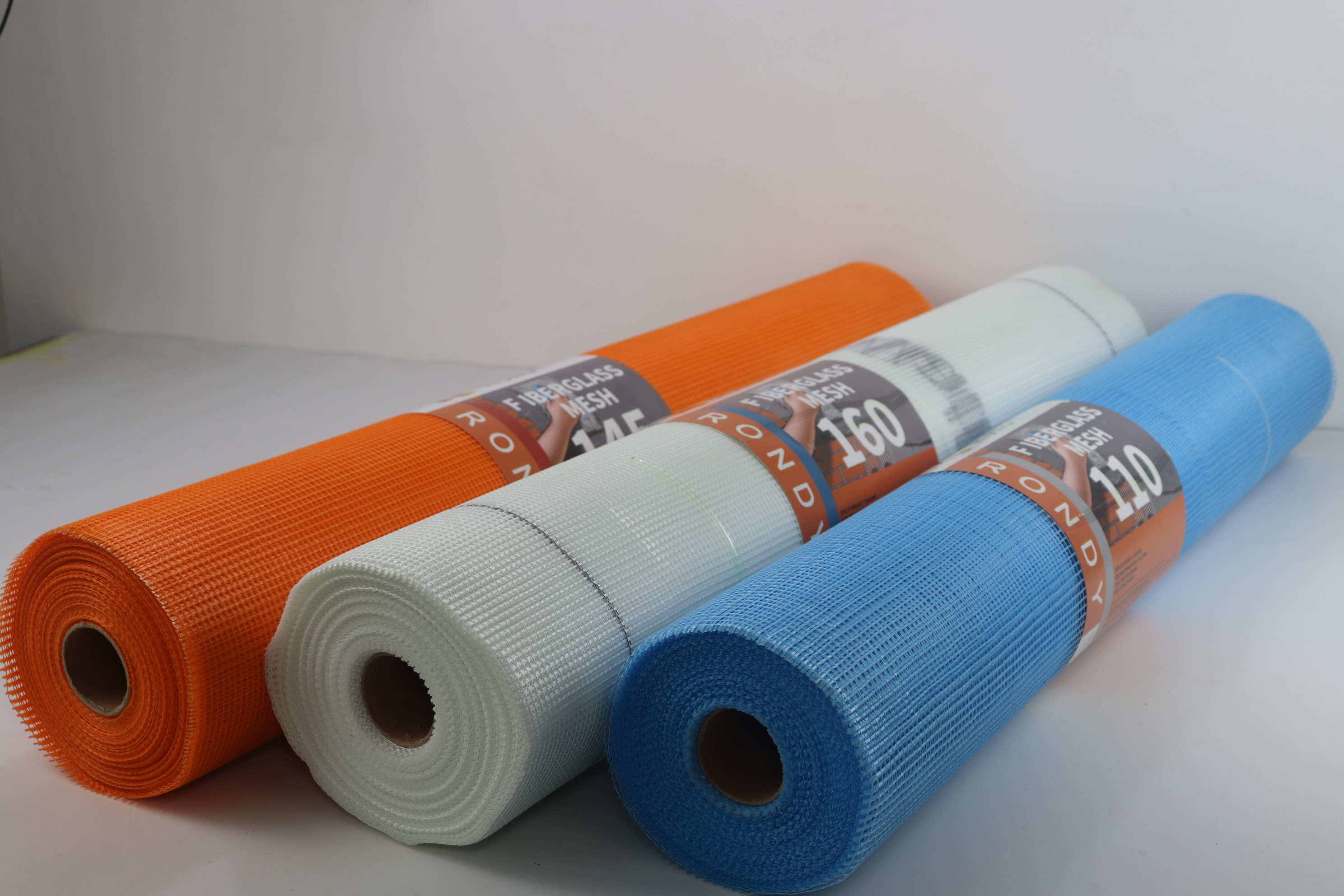
Stucco Fiberglass Mesh Weight for Exterior Plaster
A stucco contractor in Florida applied 110g/m² stucco fiberglass mesh to a three-coat exterior plaster system on a 4,200-square-foot custom residence. Six months after completion, diagonal cracking appeared at 14 window corners — locations where the mesh embedment depth during the scratch coat application was inconsistent, varying from 2mm to 6mm across the elevation. The 110g/m² mesh at 6mm embedment — in the outer third of the 19mm scratch coat — provided insufficient crack-bridging capacity because stucco cracking initiates at the outer surface where thermal stress concentrates. The repair specification upgraded the mesh to 160g/m² embedded at 4mm depth with a positive mechanical key into the scratch coat — not simply laid over the surface and covered with the brown coat.
Selecting the correct stucco fiberglass mesh weight requires understanding the stucco system type, the embedment depth relative to total render thickness, and the alkali resistance of the mesh coating — all of which interact to determine whether the reinforcement prevents cracks or merely decorates them.
Stucco System Types and Mesh Weight
Traditional three-coat stucco — scratch coat (10-12mm), brown coat (10-12mm), and finish coat (3-6mm) — requires the heaviest mesh reinforcement because the total render thickness of 23-30mm creates proportionally higher shrinkage stress during curing. A 145-160g/m² stucco fiberglass mesh with 4x4mm or 5x5mm openings provides the tensile strength (1,400-1,600 N/5cm warp direction after alkali aging) to distribute shrinkage stress across the mesh plane rather than concentrating it at corners, reveals, and changes in substrate — the locations where stucco cracking is most visible and most costly to repair.
The mesh is embedded in the outer portion of the scratch coat — typically at 4-6mm from the surface — so the reinforcement bridges the zone where thermal and shrinkage cracks initiate. Embedding the mesh deeper than the outer third of the scratch coat moves the reinforcement away from the crack-initiation zone and reduces its effectiveness. Embedding the mesh at the scratch-coat-to-substrate interface — directly against the building paper and lath — places the reinforcement behind the entire render thickness, where it reinforces the render-to-substrate bond but provides no crack control at the weather-exposed surface.
One-coat stucco systems — proprietary polymer-modified cementitious renders applied at 10-12mm total thickness over rigid foam insulation or directly over sheathing — use lighter mesh at 110-130g/m² because the thinner render develops less total shrinkage stress. The polymer modification of the render (typically 3-5% acrylic or EVA polymer solids on cement weight) also reduces shrinkage by improving water retention during curing — less water loss means less volume reduction. However, the lighter mesh requirement assumes the one-coat system manufacturer has qualified the specific mesh weight and embedment depth through system-level testing — substituting a heavier mesh "to be safe" can cause mesh read-through at the finish coat surface because the thicker yarn profile of 160g/m² mesh telegraphs through a 10mm render more readily than through a 19mm three-coat system.
Alkali Resistance — Non-Negotiable
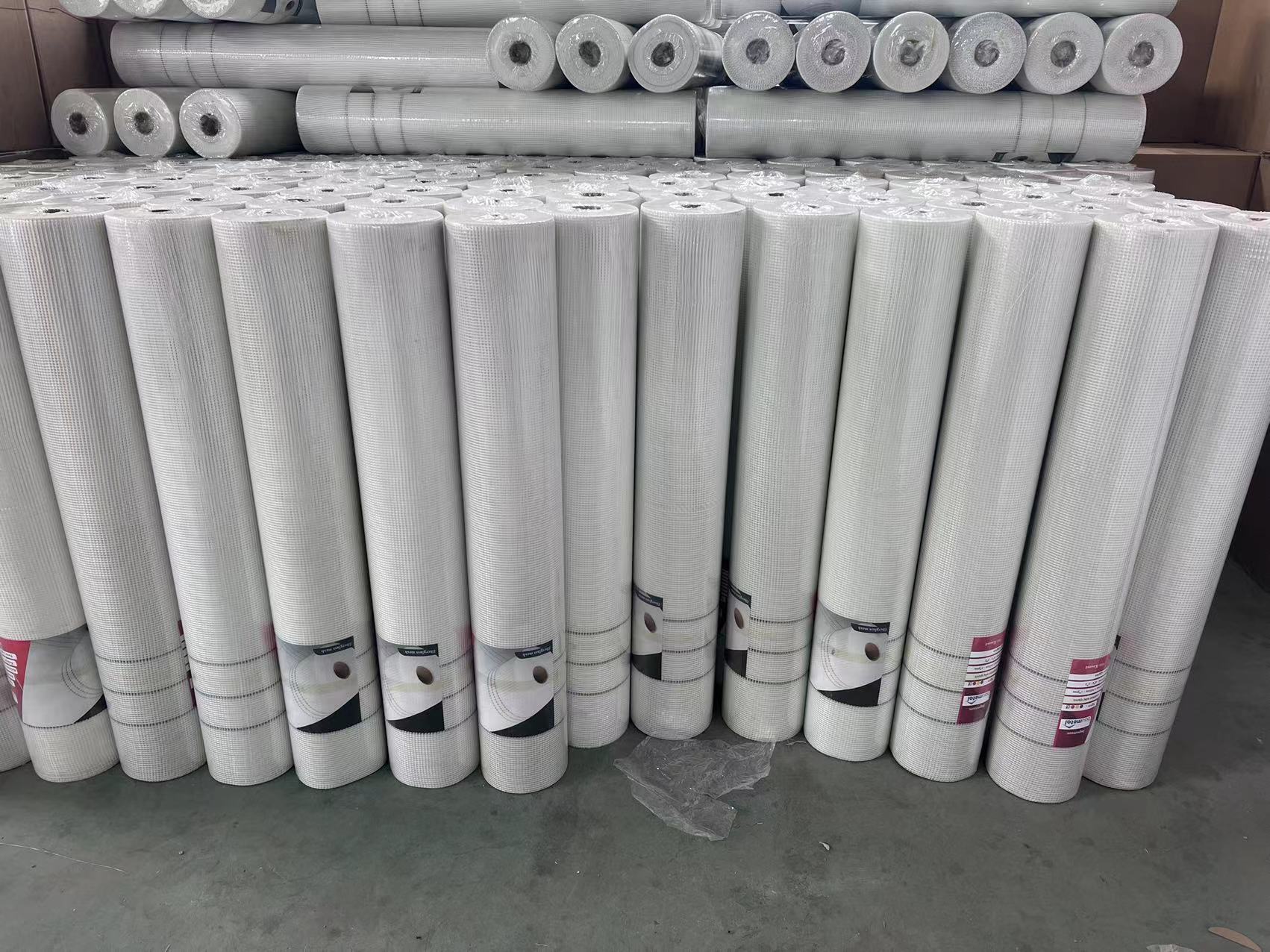
Portland cement stucco maintains a pore water pH of 12.5-13.5 throughout its service life — not just during curing. Standard fiberglass mesh without alkali-resistant coating loses 60-80% of its tensile strength within 5-7 years of embedment in cement stucco because the alkaline pore water dissolves the silica network of the glass fiber. Stucco fiberglass mesh specified for exterior plaster must carry an alkali-resistant coating — typically a styrene-acrylic or pure acrylic polymer containing ≥14% ZrO₂ (zirconium dioxide) for the coating formulation applied to the mesh.
The alkali resistance is verified through accelerated aging: 28-day immersion in 5% NaOH solution at 23°C followed by tensile testing. A mesh retaining ≥50% of original tensile strength after this treatment meets the ETAG 004 alkali resistance requirement. A mesh retaining ≥65% — achievable with ZrO₂ content above 16.5% — meets the more demanding requirements for EIFS base coat reinforcement.
Frequently Asked Questions
What weight stucco fiberglass mesh is needed for three-coat exterior plaster?
145-160g/m² with 4x4mm or 5x5mm mesh openings, embedded at 4-6mm from the scratch coat surface. This weight provides sufficient tensile strength to bridge shrinkage cracks in 23-30mm total render thickness. Lighter mesh (110-130g/m²) is inadequate for three-coat systems because the thicker render develops proportionally higher shrinkage stress.
Can the same stucco fiberglass mesh be used for one-coat and three-coat stucco?
No. One-coat systems at 10-12mm total thickness typically use 110-130g/m² mesh. Three-coat systems at 23-30mm total thickness require 145-160g/m² mesh. Using a three-coat mesh in a one-coat system risks visible mesh pattern telegraphing through the thinner finish — the thicker yarns of heavy mesh show through as a faint grid pattern on the finished surface.
What happens if stucco fiberglass mesh is embedded too deep in the scratch coat?
The mesh ends up in the inner half of the render thickness — behind the crack-initiation zone. Thermal and shrinkage cracking initiates at the outer surface and propagates inward. A mesh embedded at 10-12mm depth behind a 15mm scratch coat bridges cracks after they have already opened 0.5-1.0mm at the surface — the reinforcement is structurally intact but cosmetically ineffective because the crack is visible.
Why can't standard fiberglass mesh be used in cement stucco?
Standard fiberglass mesh lacks alkali-resistant coating — the glass fibers dissolve in the pH 12.5-13.5 cement pore water over 5-7 years, losing 60-80% of tensile strength. The stucco appears reinforced during construction but becomes unreinforced within the first decade of service — exactly when thermal cycling and building settlement produce the cracking the mesh was specified to prevent.
What mesh opening size works best for stucco?
4x4mm for standard stucco — provides the best balance of mortar strike-through (the render passes through the openings and keys to the substrate), embedment coverage (the render covers the mesh strands completely), and tensile strength (more strands per meter in both directions versus larger openings). 5x5mm is acceptable but provides marginally lower crack-bridging capacity. 10x10mm openings are used for stone and concrete backing reinforcement, not stucco finish systems.
How should stucco fiberglass mesh be installed to prevent cracking at corners?
Cut mesh into L-shaped pieces for each corner — never fold a single piece around the corner. The fold creates a stress concentration at the corner apex. Overlap the mesh from each wall face by at least 150mm (6 inches) onto the adjacent face. Embed the mesh with a trowel, not a roller — trowel pressure embeds the mesh into the wet scratch coat at the correct depth. Rollers push the mesh to inconsistent depths and trap air underneath.