 EN
EN

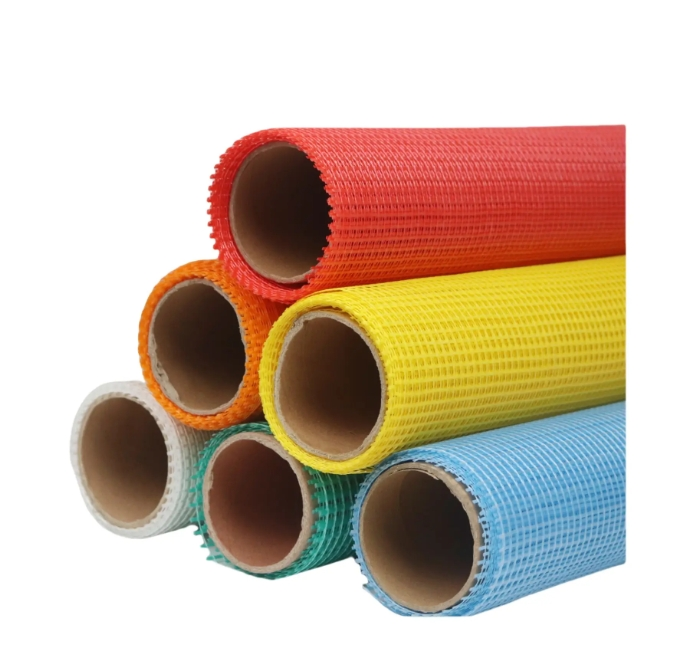
Fiberglass Mesh Size to Prevent Wall Plaster Cracks
A plastering contractor in Melbourne applied 160g/m² fiberglass mesh with 4x4mm openings to the exterior render of a two-story residence. The same contractor used 75g/m² mesh with 7x9mm openings on the interior plaster of an adjoining garage — a cost-saving decision, as the larger-opening mesh was 40% cheaper per square meter. Within 18 months, the garage interior plaster showed hairline cracking at 22 of 34 wall-to-ceiling junctions. The exterior render — exposed to 45°C summer heat and 5°C winter nights — remained crack-free. The difference was not environmental exposure but mesh geometry: 4x4mm openings at 160g/m² provide 25 yarns per 25mm in both directions, while 7x9mm openings at 75g/m² provide only 10 yarns per 25mm warp and 14 yarns per 25mm weft — one-third the reinforcement density in the primary stress direction.
Selecting fiberglass mesh size for wall plaster crack prevention requires matching mesh opening, weight, and embedment depth to the plaster system, the substrate movement potential, and the stress distribution pattern the wall will experience in service.
Stress Distribution vs Stress Concentration
Plaster cracks when localized tensile stress exceeds the plaster's tensile strength — approximately 0.5-1.5 MPa for cement-based render and 0.3-0.8 MPa for gypsum plaster. The stress originates from shrinkage during curing (chemical and drying shrinkage), thermal expansion and contraction (differential movement between the plaster and substrate), and structural movement (building frame settlement, wind loading, vibration).
Unreinforced plaster concentrates stress at geometric discontinuities — window corners, door heads, wall-to-ceiling junctions, and changes in substrate material. A crack initiates at the point of highest stress concentration and propagates along the path of least resistance — typically following the weakest plane in the plaster, which is the thinnest section or the section with the poorest substrate bond.
Fiberglass mesh embedded in the plaster distributes tensile stress across the entire mesh plane rather than allowing it to concentrate at geometric weak points. Each mesh strand crossing a potential crack line carries a portion of the tensile load — the load required to open a visible crack is the sum of the tensile strengths of all strands bridging the crack divided by the crack length. A 4x4mm mesh at 160g/m² provides approximately 6 strands per 25mm in the warp direction, each with a residual tensile strength after alkali aging of 250-300 N — total crack-bridging capacity of 1,500-1,800 N per 25mm of crack length. The same crack in unreinforced plaster concentrates the full tensile stress at the crack tip, requiring less than 200 N to propagate.
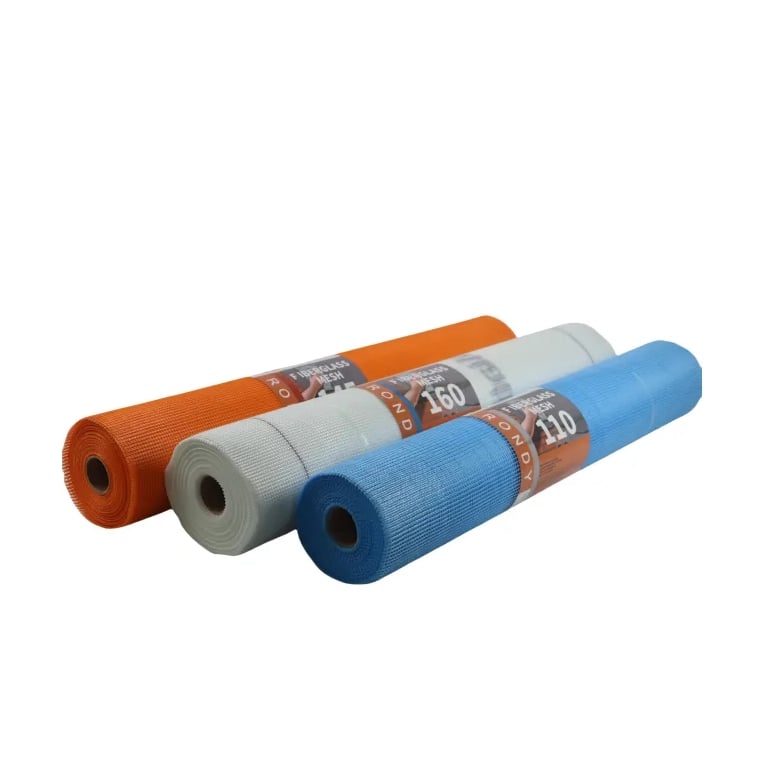
Mesh Size Selection by Application
4x4mm mesh at 145-160g/m² is the standard specification for exterior cement-based render exposed to thermal cycling and weather. The small opening size provides high strand count per linear meter — 25 strands per 25mm in both directions — maximizing crack-bridging capacity. The tight weave also provides better mortar strike-through (the render passes through the openings and keys to the substrate) because each opening is small enough that surface tension in the wet mortar does not bridge the gap — the mortar penetrates rather than spanning.
5x5mm mesh at 75-125g/m² is the standard specification for interior gypsum plaster on stable substrates — concrete block, clay brick, and cement board where thermal cycling is minimal and the primary stress is curing shrinkage. The larger opening reduces mesh cost and weight while providing adequate reinforcement for the lower stress levels of interior environments.
10x10mm mesh at 110-145g/m² serves specialized applications — stone veneer backing, concrete repair, and tile backing — where the primary function is substrate bonding rather than crack prevention and where the large openings accommodate the coarse aggregate in the bonding mortar. This mesh is not recommended for wall plaster crack prevention in visible finished surfaces because the low strand count — 2.5 strands per 25mm in each direction — provides insufficient crack-bridging for the fine cracks (0.1-0.3mm width) that are visually objectionable in painted plaster walls.
Frequently Asked Questions
What mesh size fiberglass mesh works best for preventing wall plaster cracks?
4x4mm mesh at 145-160g/m² for exterior cement render. 5x5mm mesh at 75-125g/m² for interior gypsum plaster on stable substrates. The small opening provides the highest strand count per linear meter — maximizing crack-bridging capacity — and the best mortar strike-through for mechanical keying to the substrate.
Can a heavier fiberglass mesh compensate for a larger mesh opening?
Partially. A 10x10mm mesh at 300g/m² provides approximately 4,000 N/5cm tensile strength from very thick yarns — but with only 2.5 strands per 25mm, each strand must individually bridge a crack that opens between strands. The plaster cracks between the strands because the plaster's own tensile strength (0.5-1.5 MPa) is exceeded before the strand is loaded. More strands at moderate weight distribute stress better than fewer strands at high weight.
What is the correct embedment depth for fiberglass mesh in wall plaster?
In the outer third of the plaster thickness. For a 15mm plaster coat, the mesh should be embedded at 3-5mm from the surface. Embedding deeper than the outer third places the reinforcement behind the crack-initiation zone — the mesh is structurally intact but cosmetically ineffective. Embedding too shallow (less than 2mm) risks mesh read-through — the mesh pattern visible through the finish coat.
Does fiberglass mesh prevent cracks from structural movement?
No. Fiberglass mesh reinforces against shrinkage and thermal cracking — tensile stresses up to approximately 2,000 N per 25mm of crack length. Structural movement — foundation settlement, frame deflection, seismic displacement — generates forces exceeding 10,000 N that no textile reinforcement can resist. Structural cracks require structural repair — crack stitching with helical steel bars, epoxy injection, or underpinning — before plastering.
How should fiberglass mesh be overlapped at joints?
Minimum 100mm (4 inches) overlap in both directions. The overlap creates a continuous reinforcement plane — a butt joint (edges touching without overlap) creates an unreinforced line through the entire plaster thickness. At corners, cut separate pieces and overlap rather than folding — a folded mesh creates a stress concentration at the fold line that initiates cracking.
What is the difference between fiberglass mesh for interior plaster and exterior render?
Exterior render mesh requires an alkali-resistant coating with ≥14% ZrO₂ to survive the pH 12.5-13.5 cement environment. Interior plaster mesh on gypsum-based plaster (pH 7-8.5) can use standard coating with lower ZrO₂ content because gypsum is chemically neutral. Using interior mesh in exterior render is a catastrophic specification error — the glass fibers dissolve within 5-7 years, and the render cracks as if it were never reinforced.