 EN
EN

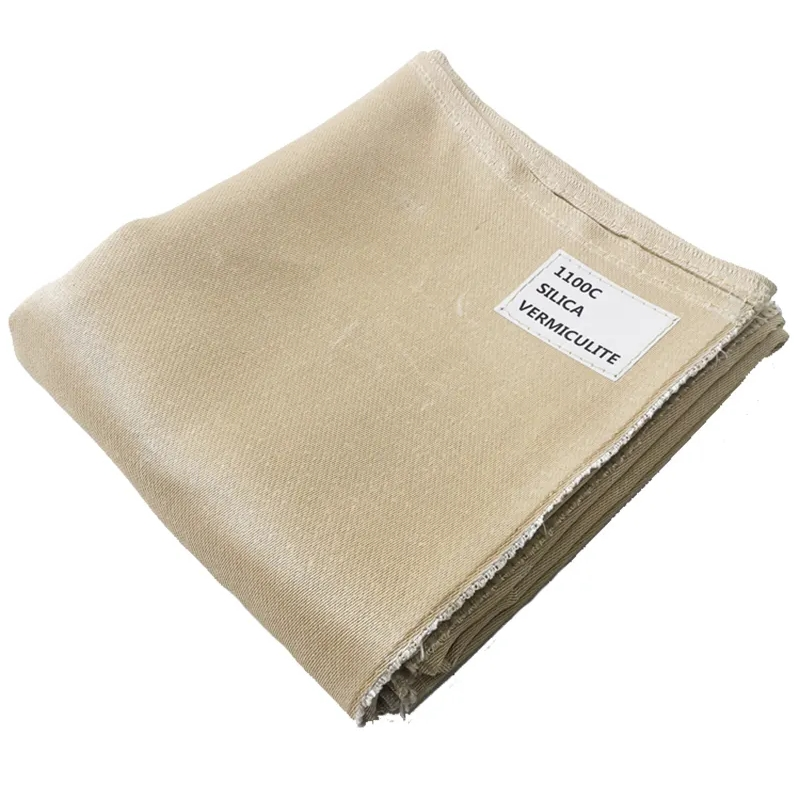
Understanding Welding Blanket Thickness: A Practical Guide for Shop Safety
For anyone working regularly with MIG, TIG, or stick welding, sparks and molten spatter are an unavoidable reality of the trade. These tiny projectiles eject from the weld pool at extreme velocities and temperatures, often exceeding 2,000 degrees Fahrenheit. Without proper protection, they can quickly ignite oil-soaked rags, damage nearby hydraulic hoses, or melt through expensive wiring harnesses. This is where welding blankets enter the picture. However, choosing the right blanket isn't as simple as grabbing the thickest one off the shelf. Experienced fabricators know that thickness interacts directly with the welding process, the type of material being welded, and the physical layout of the workshop. Getting this balance wrong leads to costly equipment damage, dangerous flash fires, or frustratingly stiff blankets that simply won't cover the workpiece.
Translating Safety Standards into Real-World Benchmarks
Understanding official safety codes is a solid starting point, but interpreting them correctly is what keeps a shop out of trouble. OSHA, under its general duty clause and specific fire protection standards, mandates that employers must shield personnel and combustibles from sparks. The key here is that OSHA does not mandate a specific minimum blanket thickness in millimeters. Instead, industry benchmarks from ANSI Z49.1 and AWS D1.1 define a performance-based standard. Essentially, the thermal barrier must be capable of resisting the heat and spatter generated by the specific amperage and duty cycle of the job in use. High-amperage flux-cored arc welding, for example, demands a much more robust barrier than a low-amperage TIG job on thin aluminum. So, while there isn't a strict law that says "use 0.75mm," practical experience across the welding industry has established 0.75mm as the sweet spot. It is the widely accepted minimum baseline for general fabrication because it offers enough mass to absorb heat without becoming too rigid to handle.
Why 0.75mm Has Become the Industry's Practical Threshold
The preference for a 0.75mm welding blanket isn't just a random number pulled from a manual; it stems from the physics of heat transfer. At this thickness, a standard silicone-coated fiberglass blanket provides reliable protection against continuous temperatures up to 550 degrees Celsius and can handle brief spikes up to 800 degrees. This covers the vast majority of spatter generated by MIG, TIG, and light stick welding in day-to-day operations. Going thinner—down to 0.5mm—drastically increases the risk of burn-through. Welding sparks hit the thin material, lose their momentum, and quickly melt through the weave, leaving the underlying surface exposed. Conversely, selecting a 1.0mm or thicker blanket introduces a new set of problems. The material becomes much stiffer. For welders trying to drape a blanket over an irregularly shaped gearbox housing, a stiff blanket leaves major gaps around the edges where sparks can slip through. The 0.75mm grade offers the ideal compromise: enough density to catch and cool the hot spatter, but enough flexibility to conform to complex metallic shapes without creating dangerous openings.
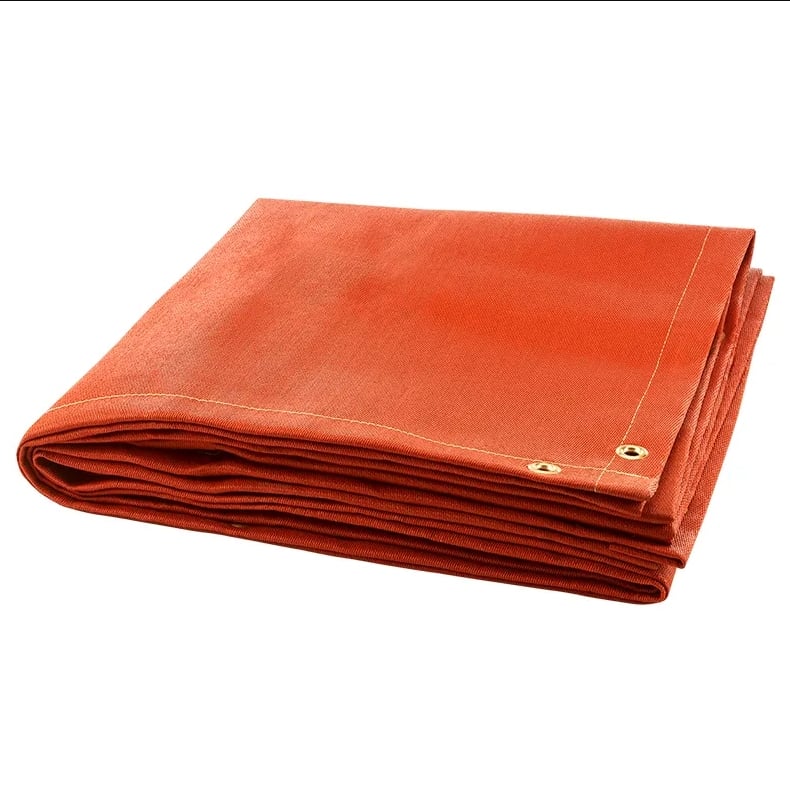
The Surprising Influence of Material Composition on Protection
Thickness is only one half of the protection equation; material composition plays the other, equally important role. A standard untreated fiberglass blanket at 0.75mm will struggle with heavy, large-diameter spatter because the molten droplets adhere to the exposed glass fibers, creating localized hotspots that degrade the fabric rapidly. Aluminum-coated versions, often marketed for their reflectivity, can actually make the situation worse. The metallic surface encourages spatter to cling rather than roll off, turning the blanket into a burning pad that holds the heat against the fabric. This is where advanced ceramic-faced blankets completely change the performance curve. At the same 0.75mm thickness, the ceramic layer resists spatter bonding almost entirely. The molten droplets bounce off the surface rather than melting into the weave. This superior release property, combined with the ceramic's low thermal conductivity, enables a 0.75mm ceramic blanket to often outperform a bare 1.0mm fiberglass blanket in heavy shop environments.
Balancing Heat Resistance with Maneuverability in Heavy Fabrication
In heavy fabrication and structural steel work, welding amperage routinely pushes past 400 amps. At these power levels, molten spatter can exceed 2,000 degrees Celsius upon ejection. Thin or poorly coated blankets lose their tensile strength instantly, leaving the work area unprotected after just a few seconds of spark exposure. While it is true that adding thickness increases the time a blanket can survive a direct spark hit, the law of diminishing returns applies heavily to flexibility. A heavier, thicker blanket might protect against extreme heat for a few seconds longer, but it will be nearly impossible to wrap around the underside of a heavy steel beam or drape into the tight corners of a vehicle chassis. This is why the 1.0mm ceramic-faced options are specifically engineered for extreme circumstances like plasma cutting or welding near flammable liquids, rather than being used as a general-purpose blanket. For common fabrication shops, selecting a material that prioritizes spatter release and retains its pliability is usually a safer daily choice than simply chasing higher millimeter counts.
Selecting Thickness Based on Task Severity
Smart shop managers choose blanket thickness based on the actual hazard level presented by the job. For light-duty operations like basic soldering, grinding, or TIG welding of small components, the heat generated is minimal. A lightweight 0.5mm or 0.75mm silicone-coated fiberglass blanket provides ample protection, is easy to store, and allows quick setup and tear-down. Conversely, for structural steel erection, heavy pipe welding, or any work happening within a confined engine bay, the severity of the fire risk skyrockets. In these settings, relying on a 1.0mm ceramic-faced blanket isn't an upgrade; it is a necessary engineering control. It provides the critical extra seconds of heat resistance required to stop molten steel from igniting fuels or hydraulic fluids before the operator has time to react.
How Process Control and Quality Material Sourcing Determine Success
It is worth noting that no passive blanket is a substitute for a comprehensive hot work safety protocol. Even the thickest ceramic blanket cannot prevent all fires if the surrounding environment hasn't been properly cleaned of debris and flammable vapors. The best protection strategy combines proper blanket selection with continuous gas monitoring and the issuance of formal hot work permits. On the manufacturing side, the consistent quality of these safety blankets depends entirely on disciplined production oversight. Reliable suppliers who adhere to strict international quality standards ensure that the coating thickness, the weave density, and the heat treatment of the ceramic layer remain perfectly uniform from roll to roll. By maintaining tight control over the raw materials—from sourcing the high-tenacity fiberglass yarns to the application of the protective coating—a quality-focused manufacturer guarantees that the end-user receives a product that performs exactly as expected when molten metal starts flying.