 EN
EN

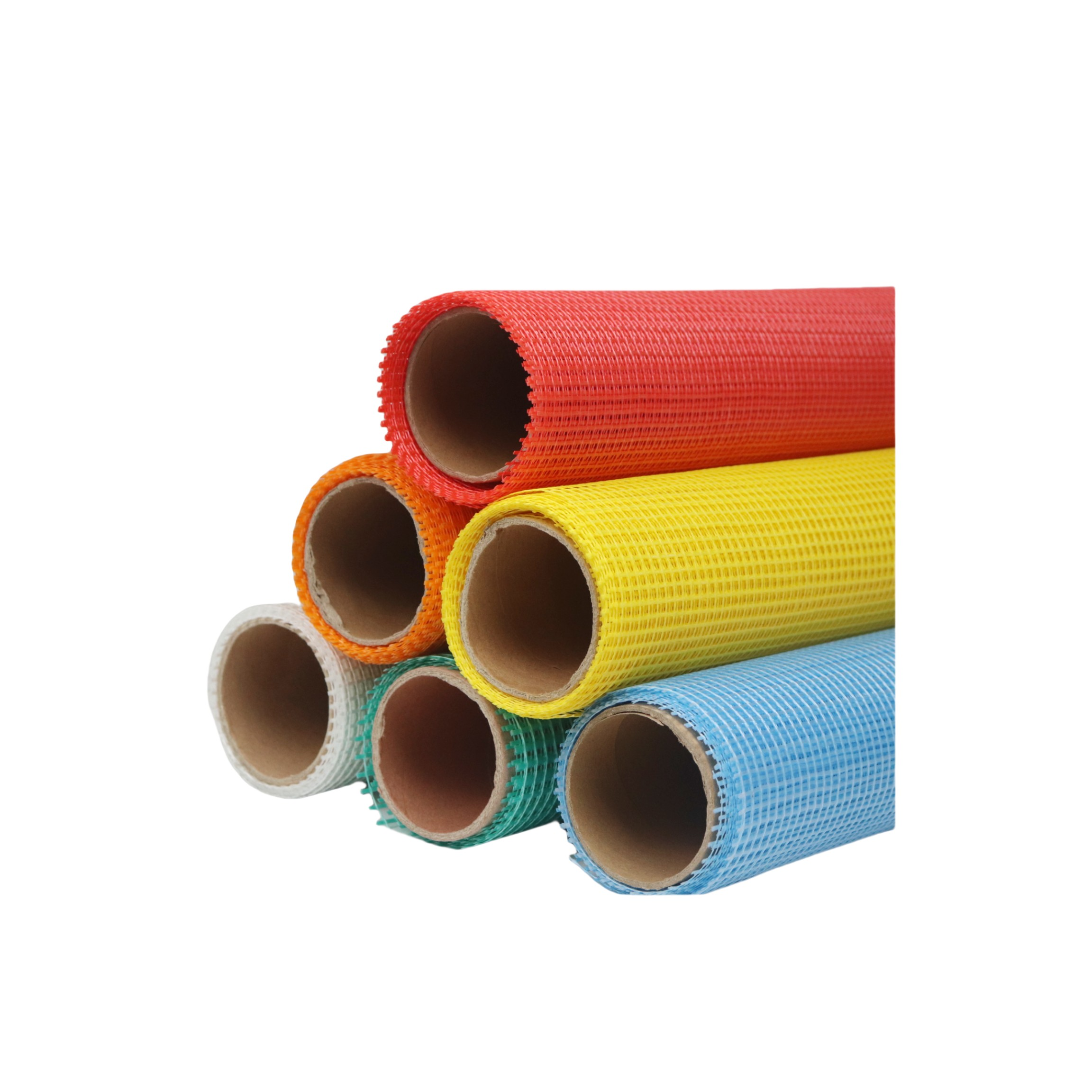
Core Properties That Define Fiberglass Mesh Performance
Fiber Composition, Weave Density, and Alkali-Resistant Coating Essentials
Fiberglass mesh performance hinges on three interdependent properties: fiber composition, weave density, and alkali-resistant coating. E-glass fibers—standard in most construction-grade meshes—deliver high tensile strength (often exceeding 1,500 MPa) and inherent resistance to moisture and corrosion. Weave density, measured in threads per inch (TPI), governs the balance between reinforcement capacity and conformability: denser weaves (4–6 TPI) increase tensile strength but may reduce flexibility and adhesion if not properly embedded. Most critically, the alkali-resistant coating—typically a zirconia-based treatment—prevents rapid degradation of glass fibers in high-pH cementitious environments like stucco, concrete, or EIFS base coats, preserving long-term ductility and bond integrity.
| Property | Role in Performance |
|---|---|
| Fiber Composition | Base material (e.g., E-glass) ensuring strength and chemical resistance. |
| Weave Density | Thread count per inch influencing tensile strength, flexibility, and bonding. |
| Alkali-Resistant Coating | Protective layer shielding against alkaline corrosion in substrates. |
Together, these properties ensure dimensional stability, crack-bridging capability, and service life exceeding 25 years when installed per ASTM D7572 and ACI 549.3R guidelines.
Key Selection Criteria: Weight, Openness, and Tensile Strength
Standard (125–160 g/m²), Heavy-Duty (180–220 g/m²), and Specialty Weights Explained
Mesh weight—expressed in grams per square meter (g/m²)—is the most immediate indicator of load-bearing capacity and application suitability. Standard-weight meshes (125–160 g/m²) offer optimal cost-performance for interior drywall jointing and non-structural plaster applications. Heavy-duty variants (180–220 g/m²) provide up to 40% greater impact resistance and are specified for exterior stucco, seismic zones, and high-traffic commercial walls per ICC-ES AC38. Specialty weights—including ultra-light (≤110 g/m²) for acoustic plasters and reinforced 240+ g/m² versions for GFRC—address niche structural or regulatory requirements. As confirmed by independent testing per ISO 10406-1, tensile strength increases linearly with grammage, making weight a reliable proxy for crack-resistance performance in design-stage selection.
Mesh Opening Size and Its Impact on Bonding with Cementitious Materials
Opening size—typically ranging from 4 mm to 10 mm—directly affects mechanical interlock with mortar or stucco. Smaller apertures (4×4 mm to 5×5 mm) maximize fiber-to-paste contact area, improving bond strength in thin-set applications like tile backer or GFRC, but risk air entrapment or incomplete embedment in thick-bed mortars. Larger openings (8×8 mm to 10×10 mm) facilitate deeper paste penetration and ease of tensioning but require precise substrate preparation to prevent sagging or bridging. ASTM C1583 pull-off testing shows optimal bond strength occurs when openings allow full encapsulation of fibers without voids—generally achieved with 5×5 mm mesh in 3–6 mm base coat thicknesses. Field data from over 120 U.S. stucco projects indicates mismatched opening size contributes to 28% of premature cracking incidents, underscoring the need to align aperture dimensions with aggregate gradation and application method.
Matching Fiberglass Mesh to Construction Applications
Stucco, EIFS, Drywall Reinforcement, and Tile Backer Requirements
Application-specific demands dictate mesh selection—not just weight, but coating integrity, opening geometry, and elongation characteristics. For stucco and EIFS systems, alkali resistance is mandatory: only ASTM D7572-certified, zirconia-coated meshes withstand prolonged exposure to pH >12.5 cementitious base coats without embrittlement. Drywall joint reinforcement prioritizes flexibility and conformability; 125–145 g/m² mesh with moderate elongation (≥3%) bridges minor framing movement while remaining easy to embed in joint compound. Tile backer boards demand higher tensile strength (≥3.5 kN/m) and impact resilience—requirements met by 180–220 g/m² alkali-resistant mesh with tight 4×4 mm openings that resist lateral shear during grouting and foot traffic.
| Application | Key Requirements | Recommended Mesh Weight |
|---|---|---|
| Stucco/EIFS | Alkali resistance, UV stability | 160–180 g/m² |
| Drywall Joints | Flexibility, crack bridging | 125–145 g/m² |
| Tile Backer Boards | High tensile strength, impact resistance | 180–220 g/m² |
Architectural Concrete, GFRC, and Precast Panel Specifications
Architectural concrete and GFRC rely on fine-mesh reinforcement to avoid visual defects and ensure uniform stress distribution. A 4×4 mm or 5×5 mm opening prevents coarse aggregate “show-through” while enabling full fiber encapsulation in low-water-content mixes. GFRC specifically benefits from meshes with ≥10% elongation—accommodating early-age shrinkage without delamination or microcracking. Precast panels use heavy-duty 220+ g/m² mesh with high modulus (≥70 GPa) to minimize deflection during handling, transport, and erection—meeting PCI MNL-131 requirements for structural precast elements. For façades subject to thermal cycling (e.g., daily swings >50°C), meshes must retain ≥90% of original tensile strength after 100 cycles per ASTM C1657, a benchmark met only by fully stabilized, dual-coated E-glass products.
FAQ
What properties define the performance of fiberglass mesh?
The performance of fiberglass mesh is defined by fiber composition, weave density, and alkali-resistant coating.
How does mesh weight affect its application?
Mesh weight, expressed in grams per square meter, indicates load-bearing capacity and application suitability.
What is the importance of mesh opening size?
Mesh opening size affects mechanical interlock with mortar or stucco, impacting the bond strength and application accuracy.
Which applications require alkali-resistant fiberglass mesh?
Applications like stucco, EIFS systems, and tile backer boards require alkali-resistant fiberglass mesh due to exposure to high-pH environments.