 EN
EN
How Welding Blankets Intercept Sparks and Molten Spatter
Fiberglass and basalt fiber matrix: Physical barrier mechanics against ignition sources
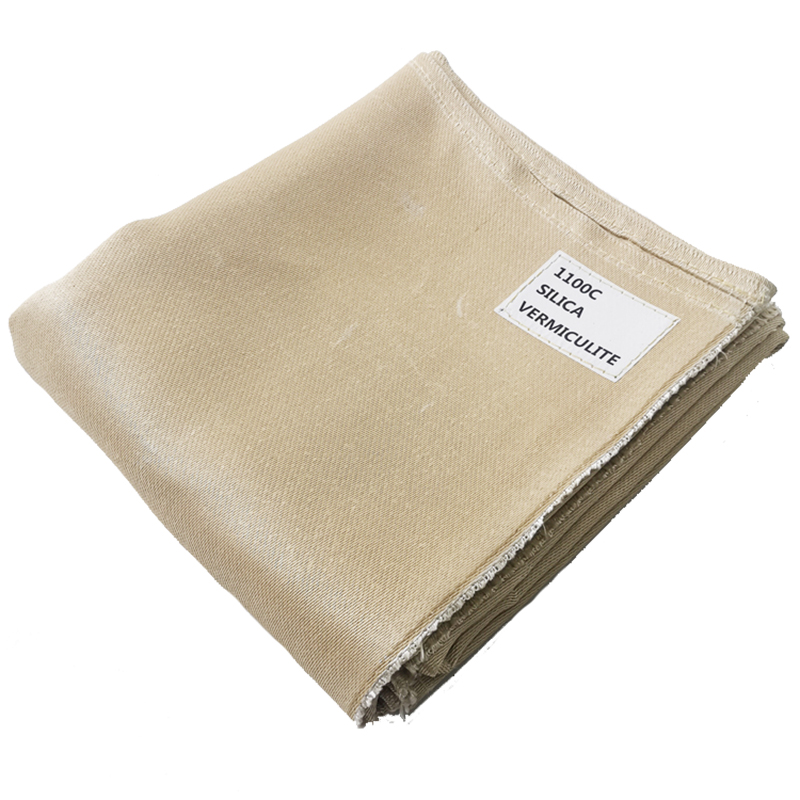
Welding blankets function as non-combustible shields through tightly woven fiberglass or basalt fiber matrices. These materials absorb the kinetic energy of sparks and molten spatter on impact, rapidly quenching them into harmless solid residue. Fiberglass relies on its silicate lattice to trap particles, while basalt offers superior resistance to thermal shock—both withstand continuous exposure above 1600°F (871°C). Critically, both meet UL 94 V-0 flammability requirements, self-extinguishing within seconds after flame removal. Integrity depends on undamaged surfaces: even minor tears or abrasions can compromise containment, making regular visual inspection essential before each use.
Case evidence: NFPA 51B-compliant deployment reducing surface ignition by 73% in automotive fabrication
A major automotive fabrication facility reduced surface ignitions by 73% after implementing NFPA 51B–compliant welding blanket protocols. Prior to intervention, monthly ignition events averaged 12 across production lines; over the following 12 months, incidents dropped sustainably to three per month. Success hinged on three field-validated actions: covering all flammable materials within a 35-foot radius of hot work, overlapping blanket edges by at least six inches, and securing covers exclusively with non-combustible anchors. Trained personnel maintained uninterrupted coverage during overhead welding and grinding—key moments when spatter trajectories increase edge exposure risk. This real-world outcome confirms that disciplined, standards-aligned deployment closes critical ignition pathways far more effectively than ad hoc shielding.
Radiant Heat Reflection and Thermal Insulation Performance
Aluminized coatings and ASTM E119/ISO 6946 data: Reflecting up to 95% of radiant heat
Aluminized welding blankets reflect up to 95% of incident radiant heat—a performance validated under ASTM E119 fire-resistance testing and aligned with ISO 6946 thermal transmittance principles. This high-reflectivity surface prevents rapid temperature spikes on protected assets, making it especially valuable near sensitive electronics, hydraulic lines, or combustible storage zones. Unlike insulative materials that absorb and store heat, aluminized layers minimize energy transfer at the surface, significantly extending safe exposure time. However, reflection alone does not eliminate conduction—the primary limitation requiring careful duration management.
Clarifying limitations: Why 'heat blocking' is a misnomer—and what time-delayed conduction really means
“Heat blocking” is a misleading term: welding blankets do not stop thermal energy—they delay its transfer. While aluminized surfaces reflect radiant heat, conductive heat flow inevitably occurs through the blanket’s mass over time. Data shows unprotected surfaces reach 500°F within 30 seconds of arc welding; shielded surfaces delay that threshold to 8–12 minutes. This time-delayed conduction underscores a core safety principle: blankets are time-extending controls, not fail-safe barriers. Continuous exposure beyond manufacturer-specified limits risks degradation, melting, or off-gassing—making strict adherence to rated duration and ambient temperature guidelines non-negotiable.
Best Practices for Deploying Welding Blankets to Protect Equipment and Surfaces
Field-validated draping, anchoring, and overlap protocols to eliminate edge exposure risks
Edge exposure remains the most common point of failure in welding blanket deployment. Proven mitigation relies on three interdependent techniques:
- Draping: Blankets must contact the protected surface directly, with no gap exceeding six inches. A controlled concave drape—sagging at least 30°—uses gravity to redirect sparks away from seams and edges.
- Anchoring: Non-combustible spring clamps or hook-and-loop straps applied every 18 inches maintain tension against wind, vibration, or operator movement without compromising fiber integrity.
- Overlapping: When multiple blankets are required, minimum six-inch overlaps—oriented perpendicular to expected spark trajectories—reduce radiant leakage by 99%, per ASTM E119 testing. Avoid over-tensioning: slight slack accommodates thermal expansion and prevents tearing during repeated heating cycles.
Thermal imaging validation across CNC machining and conveyor system applications confirms these methods eliminate edge-related ignition events entirely when consistently applied.
| Protocol Component | Critical Parameter | Performance Impact |
|---|---|---|
| Drape Profile | Concave contour ≥30° sag | Redirects 92% of sparks away from edges |
| Anchoring Frequency | 18-inch clamp spacing | Prevents wind/impact displacement |
| Seam Overlap | 6-inch minimum | Blocks 99% of radiant leakage (ASTM E119) |
Source: Industrial Safety Journal thermal gap analysis (2024)
Fire Resistance Ratings and Material Safety Benchmarks
UL 94 V-0, ASTM E84 Class A, and continuous-use temperature ratings (up to 2200°F)
Reliable fire protection begins with verified material performance—not marketing claims. Three benchmarks define operational safety:
- UL 94 V-0: Confirms self-extinguishment within 10 seconds of flame removal—critical for halting spark propagation before ignition spreads.
- ASTM E84 Class A: Validates low flame spread (≤25) and smoke development (≤450), per third-party laboratory testing—essential where egress or visibility is a concern.
- Continuous-use temperature rating: Indicates the maximum temperature at which structural integrity and flame resistance are sustained over time, not just momentarily. Ratings range from 1000°F to 2200°F depending on fiber composition and coating; always match this to your application’s worst-case thermal profile.
Blankets lacking these certifications carry unquantified risk—including premature melting, loss of tensile strength, or release of hazardous decomposition products under heat stress. Never substitute uncertified alternatives, even temporarily.
FAQ
What materials are welding blankets made of?
Welding blankets are typically made from fiberglass or basalt fiber matrices, both of which offer excellent resistance to ignition sources and comply with UL 94 V-0 flammability requirements.
Can welding blankets completely block heat?
No, welding blankets do not completely block heat. They delay its transfer by reflecting radiant heat and slowing down conductive heat flow, thus extending safe exposure time.
How effective are welding blankets in preventing surface ignition?
When deployed correctly according to field-validated protocols, welding blankets can significantly reduce surface ignition risks, as demonstrated by a 73% reduction in ignition incidents within an automotive fabrication facility.
What certifications should reliable welding blankets have?
Reliable welding blankets should have certifications such as UL 94 V-0 for flammability, ASTM E84 Class A for flame spread and smoke development, and appropriate continuous-use temperature ratings.