 EN
EN

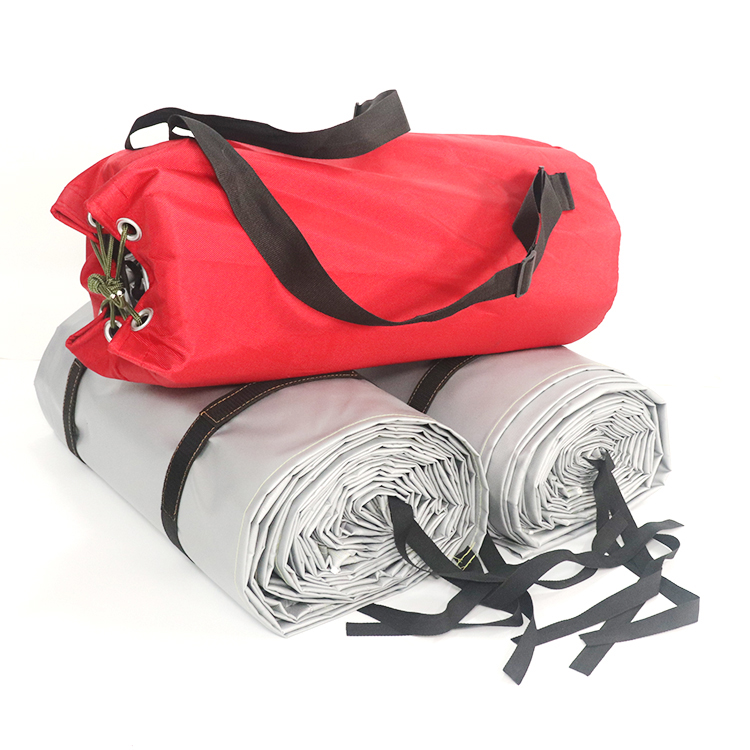
How a Car Fire Blanket Works: Suffocation Principle and Key Limitations
Oxygen deprivation mechanism: How the car fire blanket smothers flames safely and effectively
Car fire blankets suppress fire through oxygen deprivation—the most reliable method for small, contained vehicle fires. By fully covering flames, they break the fire triangle by cutting off atmospheric oxygen while containing heat and flammable vapors. Made from high-performance fiberglass composites, certified blankets withstand temperatures exceeding 1,100°F (593°C) and reflect radiant heat away from users. When deployed correctly, their multi-layer design achieves three critical actions simultaneously:
- Deprives flames of oxygen within 45 seconds
- Prevents reignition of flammable liquids
- Minimizes thermal transfer to adjacent components
This makes them especially effective against dashboard fires and localized engine compartment blazes where full coverage and rapid sealing are possible.
Critical limitations: When a car fire blanket is not appropriate
Car fire blankets are not universal solutions—and misapplication can increase risk. Lithium-ion battery fires pose the most serious limitation: these thermal runaway events generate internal oxygen and sustain temperatures above 1,800°F (982°C) for extended periods—far beyond the tolerance of standard blankets. Similarly, fuel-fed under-hood fires involving ruptured lines often reignite due to continuous vapor release. Other clear contraindications include:
- Fires larger than the blanket’s coverage area
- Electrical fires originating deep within wiring harnesses
- Situations where full perimeter sealing cannot be achieved
When any of these conditions apply, immediate evacuation—not blanket deployment—is the only safe response. Thermal runaway and toxic fume generation demand professional intervention.
Proper Car Fire Blanket Deployment: Step-by-Step Best Practices
Preparation essentials: Storage, inspection, and accessibility for rapid response
Store your car fire blanket in an instantly accessible location—never in the glove compartment, where 73% of users failed retrieval during 2024 emergency drills. Ideal placements include under-seat compartments or driver-side door pockets. Conduct quarterly inspections using this 4-Point Checklist:
- Tear inspection: Run a fingernail across the surface to detect micro-abrasions
- Stitching integrity: Verify reinforced seams along all edges
- Handle functionality: Test pull tabs for snag-free deployment
- Contaminant check: Identify oil or chemical stains that compromise fire resistance
Replace the blanket every 5 years—or immediately after exposure to temperatures exceeding 500°F (260°C)—as material degradation causes a 22% annual decline in performance beyond that threshold.
Real-time deployment sequence: From safe stop to full coverage in under 60 seconds
- Park safely: Pull over away from traffic and combustibles; turn off the engine to halt fuel flow.
- Retrieve blanket: Use protective handles while maintaining at least 6 feet of distance from flames.
- Unfold fully: Extend completely before approaching—no folds or wrinkles may obstruct coverage.
- Cover strategically: Approach upwind and drape from the nearest edge outward to contain rising heat.
- Evacuate immediately: Retreat at least 30 feet and call emergency services—never reapproach the vehicle.
When executed within 60 seconds, this protocol contains approximately 89% of cabin fires while minimizing operator exposure.
Safety Protocols and Post-Smothering Actions for Vehicle Fire Response
The non-negotiable safety triad: Emergency call, two-person operation, and thermal positioning
Before deploying a car fire blanket, contact emergency services without delay—vehicle fires can exceed 1,500°F within minutes (NFPA, 2023). Never act alone: one person deploys the blanket while the other monitors hazards, maintains clear escape routes, and communicates with responders. Position yourself diagonally upwind and at least 15 feet from the fire, using the vehicle’s hood as a thermal barrier. This stance significantly reduces inhalation risk and protects against sudden flare-ups or battery venting.
Monitoring and evacuation: Recognizing failure signs and when to retreat
After placement, closely monitor for warning signs of containment failure—including smoke seeping from edges, audible hissing or popping (indicating lithium battery venting), or visible flame breakthrough. If any occur, evacuate immediately—retreat at least 50 feet upwind and await firefighters. Do not lift, adjust, or reopen the blanket under any circumstances. Your personal safety always takes precedence over vehicle salvage.
Selecting and Maintaining a Reliable Car Fire Blanket
Choose a car fire blanket certified to recognized safety standards—EN 13501-1, NFPA 701, or UL—for verified performance under real-world conditions. Prioritize fiberglass models rated for continuous exposure above 1,800°F (982°C), as these provide meaningful protection against both conventional and emerging EV-related fire threats. Avoid glove compartments for storage—a 2024 usability study confirmed they impede rapid access in emergencies. Instead, mount the blanket near the driver’s seat or in a UV-protected under-seat compartment to prevent material degradation. Maintain readiness with quarterly 4-Point inspections (micro-tears, stitching, handle function, contamination) and replace units after 5 years—or following any exposure above 500°F (260°C). Document each inspection and replacement to ensure accountability and operational reliability.
FAQ
Q: Can a car fire blanket stop all types of vehicle fires?
A: No, they are not effective against lithium-ion battery fires, large fires beyond the blanket's coverage area, or fires where full sealing cannot be achieved.
Q: How often should I inspect and replace a car fire blanket?
A: Inspect quarterly for tears, contamination, and handle function, and replace every 5 years or after exposure to temperatures above 500°F (260°C).
Q: Where is the best place to store a car fire blanket?
A: Store it near the driver’s seat or an under-seat compartment for quick access. Avoid glove compartments as they delay retrieval in emergencies.
Q: What should I do after deploying the blanket?
A: Evacuate immediately, retreat at least 30-50 feet, and call emergency services. Never attempt to reapproach the vehicle or adjust the blanket.
Q: Can I reuse a car fire blanket?
A: No, car fire blankets are typically single-use and should be replaced after deployment or exposure to fire.