 EN
EN

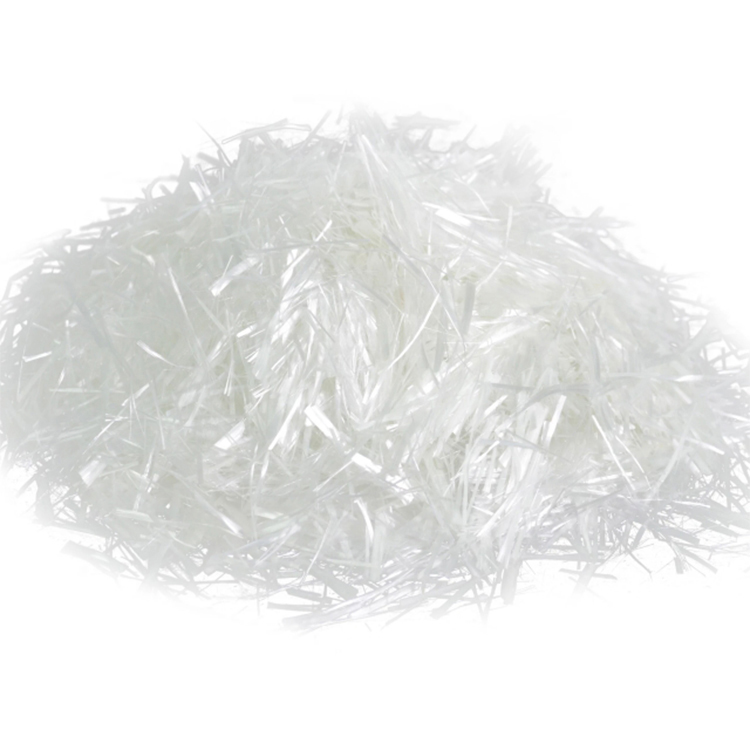
How Fiberglass Chopped Strand Mat Structure Influences Resin Absorption
Pore Architecture and Fiber Orientation in Chopped Strand Mat
How well chopped strand mat (CSM) performs structurally really comes down to two main factors: the random way the fibers are arranged and the overall porous nature of the material. When we look at it compared to woven fabrics, what makes CSM special is this tangled network of fibers that actually forms tiny capillary channels. These channels work like little pumps, pulling in resin when the material gets saturated. The openness of this matrix allows for good resin flow, but there's a catch it needs careful handling. The binder used in CSM is soluble in styrene, so when compatible resins touch it, they start dissolving away. This lets the fibers mold themselves around complicated shapes during manufacturing. For thinner mats around 1.5 ounces per square yard the pores are much smaller, which means resin doesn't penetrate as deeply. Heavier versions like those at 30 oz/yd² have bigger gaps between fibers, giving them greater absorption capabilities. Getting proper saturation right matters a lot because if parts aren't fully wetted out, weak spots develop. These areas become vulnerable points where layers might separate when stress is applied later on.
Empirical Resin Uptake Data Across Thickness Grades (1.5 oz to 30 oz/yd²)
Resin absorption correlates directly with CSM density, as confirmed by industry-standard material testing:
| Mat Weight (oz/yd²) | Avg. Resin Uptake (% by weight) | Key Application Insight |
|---|---|---|
| 1.5 | 30–40% | Requires multiple layers for structural integrity; prone to dry spots |
| 3 | 40–45% | Balanced saturation for curved surfaces like marine hulls |
| 30 | 55–60% | High resin retention enables rapid thickness buildup in industrial molds |
Thicker mats retain more resin but demand extended working time to achieve full penetration—under-saturated 30 oz/yd² CSM exhibits 18% lower interlaminar shear strength than optimally saturated equivalents. This confirms that uniform resin distribution requires adjusting application techniques based on mat density—not applying universal ratios.
Establishing the Optimal Fiberglass Chopped to Resin Ratio by Application
Structural Integrity Thresholds: When Under-Saturation Compromises Tensile Strength
Getting the right balance between chopped fiberglass and resin isn't just important it's absolutely essential for making sure structures hold together properly. When there's not enough resin saturation, we end up with dry spots where the fibers don't bond properly with the matrix material. This can cut down on tensile strength by as much as 40 percent in parts that need to support weight according to recent research from Serban in 2024. For polyester resin systems specifically, manufacturers generally recommend at least a 2.5 to 1 ratio of resin to fiber so it can properly soak into those tiny spaces in the CSM fabric. If they fall below that level, the resulting composite materials start showing problems like reduced durability and poor performance under stress conditions.
- Delamination risks in high-stress joints
- Void concentrations exceeding 5% (ASTM D2734)
- Impact resistance losses of 18–22% versus optimally saturated laminates
Marine, Automotive, and Industrial Use Cases: Why a Single Ratio Doesn’t Fit All
Application-specific demands dictate resin ratios due to divergent environmental and mechanical requirements:
| Sector | Primary Stressors | Ideal Resin Ratio | Performance Priority |
|---|---|---|---|
| Marine | Saltwater corrosion | 3.2:1 | Moisture barrier integrity |
| Automotive | Vibration fatigue | 2.1:1 | Weight-to-strength ratio |
| Industrial | Chemical exposure | 2.8:1 | Abrasion resistance |
Automotive panels tolerate leaner ratios for weight savings, while marine hulls demand resin-rich layers to prevent osmotic blistering. Industrial chemical tanks require balanced saturation—excess resin reduces chemical resistance, yet insufficient ratios accelerate fiber degradation in acidic environments (NACE 2023).
Resin Compatibility Essentials for Fiberglass Chopped Systems
Polyester Resin Reactivity with Silane-Treated Fiberglass Chopped Strands
When working with polyester resin and silane treated fiberglass strands, the chemical changes on the fiber surface really help them stick together better and cut down on those pesky gaps between layers. Silane acts as a bridge between the fibers and resin molecules, which means better wetting out during mixing and stronger overall material when it cures. If the resin doesn't fully soak into the fibers though, we end up with composites that are just too weak for serious jobs like wind turbine blades. Poor bonding there leads to failures long before they should happen when subjected to real world stresses and loads.
Vinyl Ester and Epoxy Alternatives: Impact on Mixing Ratio Flexibility
Vinyl ester and epoxy resins bring better compatibility options to the table, allowing manufacturers to work with resin-to-fiber ratios around 1.8 to 2.2 without sacrificing chemical resistance properties needed in marine environments or automotive applications. The fact that these materials have lower viscosity makes them much easier to work with during infusion processes, which is why they're so popular for creating lightweight components where every gram counts. What really stands out about these resins though is how they handle heat generation during curing. Unlike polyester, they produce significantly less exothermic heat, which means there's far less chance of cracks forming in those critical stress points of industrial parts after they've been cured.
Process-Driven Ratio Control: Hand Lay-Up vs. Vacuum Infusion
When deciding between hand lay-up and vacuum infusion methods, manufacturers need to adjust their approach to the fiberglass chopped-to-resin ratio because these processes work so differently when it comes to how materials get saturated. With hand lay-up, workers apply resin by hand to the chopped strand mat (CSM), which often leads to uneven coverage and sometimes too much resin collecting in certain areas. According to industry research, this traditional method usually results in around 30 to 40 percent fiber volume fraction, while void content tends to hover around 2.1 percent mainly because of those human errors during application. On the other side of things, vacuum infusion works differently altogether. By creating negative pressure, the system actually pulls resin through dry reinforcements, giving much better control over the process. This technique can reach 50 to 60 percent fiber volume fraction, and most importantly keeps void levels under 0.5 percent consistently across production runs.
| Process | Fiber Volume Fraction | Typical Void Content | Resin Application Control |
|---|---|---|---|
| Hand Lay-up | 30–40% | ~2.1% | Manual saturation |
| Vacuum Infusion | 50–60% | <0.5% | Pressure-driven uniformity |
Hand lay-up works well for complicated shapes since it doesn't need much equipment, but there's a catch - it eats through resin pretty fast which cancels out those initial savings on costs. Vacuum infusion requires some special tools upfront, sure, but manufacturers report around 20 to maybe 25 percent less wasted materials compared to traditional methods. Plus, the layers stick together better in the final product. When building parts where strength matters most, especially under tension, vacuum infusion becomes essential because of how precisely it controls the resin to fiber ratio. Hand lay-up still has its place though, particularly for smaller batches or prototypes where speed beats perfection every time.
Frequently Asked Questions (FAQ)
What is the primary benefit of using fiberglass chopped strand mat?
The primary benefit of using fiberglass chopped strand mat lies in its unique tangled network of fibers that allows efficient resin absorption and adaptability to complex shapes during manufacturing.
How does the weight of the chopped strand mat affect resin absorption?
Heavier chopped strand mats have larger gaps between fibers, providing greater resin absorption capabilities compared to thinner mats with smaller pores, which require multiple layers to achieve structural integrity.
What resin-to-fiber ratio should be used for polyester resin systems?
Manufacturers typically recommend at least a 2.5 to 1 ratio of resin to fiber for polyester resin systems to ensure optimal saturation and avoid performance issues such as reduced tensile strength and durability.
Are vinyl ester and epoxy resins more flexible in terms of mixing ratios?
Yes, vinyl ester and epoxy resins allow for more flexibility in mixing ratios, ranging from 1.8 to 2.2, while maintaining chemical resistance. They are also easier to work with due to their lower viscosity.
Table of Contents
- How Fiberglass Chopped Strand Mat Structure Influences Resin Absorption
- Establishing the Optimal Fiberglass Chopped to Resin Ratio by Application
- Resin Compatibility Essentials for Fiberglass Chopped Systems
-
Process-Driven Ratio Control: Hand Lay-Up vs. Vacuum Infusion
- Frequently Asked Questions (FAQ)
- What is the primary benefit of using fiberglass chopped strand mat?
- How does the weight of the chopped strand mat affect resin absorption?
- What resin-to-fiber ratio should be used for polyester resin systems?
- Are vinyl ester and epoxy resins more flexible in terms of mixing ratios?