 EN
EN

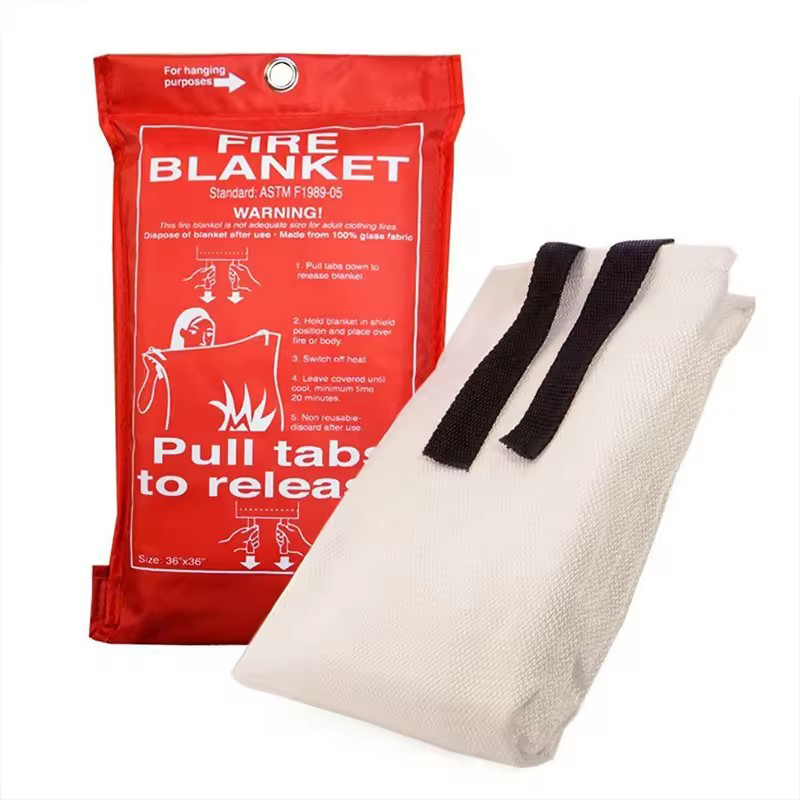
How to Deploy a Fire Blanket Correctly: Speed, Technique, and Physics
Why deployment speed matters: The critical 60-second window for effective fire suppression
A fire can grow twice as big every half minute, which means getting something on it within a full minute is really important if we want to stop it from spreading. Fire blankets work great for this situation. People who've been properly trained can get one deployed in about 8 to 12 seconds flat. That beats out fire extinguishers by a good margin since those take around 15 to 30 seconds to get going. Plus there's no messy residue left behind after using a fire blanket, and they don't require yearly checks like extinguishers do. Just replace them once they've been used. Looking at actual accident data from transportation safety boards shows that this time difference makes a real impact, with fire blankets stopping small fires successfully about 73% more often than other methods. When putting one on, grab those little handles at the top like holding a shield. Don't just toss it over the flames either. Instead, carefully cover everything so air doesn't keep feeding the fire. Make sure all sides are sealed tight too. If someone hesitates or leaves gaps, the whole thing falls apart because what actually stops the fire is cutting off its oxygen supply.
The science behind smothering: Oxygen displacement thresholds and material thermal inertia (fiberglass vs. wool)
Fire goes out when there's not enough oxygen around, specifically when it drops below 15%. Good quality fire blankets work fast, creating an air tight seal that cuts off oxygen supply within just a few seconds. Most manufacturers stick with fiberglass as their go to material because it handles extreme heat really well. Fiberglass stays strong even when temperatures climb past 1000 degrees Celsius. Wool on the other hand starts breaking down much sooner, around 600 degrees, and can actually catch fire again if not handled properly. Another plus point for fiberglass is how poorly it conducts heat, so people putting out fires don't get burned on the blanket itself. Once a fire is covered up, it's important to keep the blanket in place for about 15 minutes straight. This makes sure the fire doesn't come back, particularly with things like cooking oil that still hold onto heat long after they look put out. Without keeping them isolated from oxygen for that full time period, these types of fires can flare up again unexpectedly.
Fire Blanket Application for High-Risk Scenarios: Clothing Fires and Evacuation Support
Clothing ignition response: Proper drape angle (>45°) and full-body coverage to prevent re-ignition
Clothing catching fire demands quick action without question, but how someone responds makes all the difference between injury and survival. Tell the person affected to stop moving, drop down, and start rolling back and forth to put out flames wherever they can reach them. Next step involves placing a fire blanket correctly - not just any old way. The blanket needs to be angled about 45 degrees across the shoulders first, then pulled down tightly around the body for full protection. Getting this right matters because if the blanket slips even slightly, it creates gaps where heat builds up incredibly fast. Studies show temperatures can hit over 300 degrees Celsius inside those spaces within seconds, and flames might come back stronger in less than eight seconds flat. That's why covering every part of the body counts as essential, not just something extra. Complete coverage stops fires from continuing to burn and guards against painful second-degree burns later on.
Fire blanket escape drills: Evidence from UK care homes showing 92% faster compliance with evacuation protocols
Fire blanket escape drills have shown real results when put to the test in actual situations, particularly helping those with mobility issues get out safely. Some recent tests at care homes across the UK found that staff who went through regular practice sessions were about 92 percent quicker at following proper evacuation steps compared to those who didn't train as much. When people actually tried deploying blankets during these exercises, they got pretty good at it too - most could wrap themselves up properly within around 15 seconds even while heading towards an exit. The main things they learned? How to stop flames while getting away at the same time, keeping their protection intact as they moved around, and passing off responsibility smoothly from one person to another if needed. Regular training really helps create habits that kick in automatically during stressful moments, cuts down on mistakes made when everyone's panicking, and gets teams working together better so what would normally be chaotic becomes something more controlled instead.
When Not to Use a Fire Blanket: Recognizing Critical Limitations and Hazards
Grease fires: Why covering a pan fails above 370°C — debunking the 'blanket over flame' myth with ASTM E1515 data
Not all fire blankets work well against grease fires. Tests according to ASTM E1515 standards reveal that many regular fiberglass blankets can handle around 260 to 350 degrees Celsius before they start failing. When temperatures climb past 370°C (which often happens when cooking oil gets too hot), those fiberglass layers actually crack at microscopic levels. These tiny cracks let air in, which means the fire can flare back up dangerously as the heated oil works its way through the damaged fabric. Trying to smother these kinds of fires usually leads to quick reignition plus the risk of burning oil splattering everywhere. If someone encounters a grease fire, first thing is to shut off whatever heat source caused it if possible. Only attempt covering it if the flames are really small and the pan isn't too hot. Otherwise, better to get out fast when there's any doubt about safety.
Decision criteria for immediate evacuation: Flame height >30 cm, fire area >0.5 m², or electrical arcing
Fire blankets work best for small fires just starting out. If flames get taller than about arm's length or cover an area bigger than half a square meter, get out right away. These sizes mean the fire is growing too fast for anything but full scale firefighting equipment. Special caution needed for electrical fires where sparks are jumping around. Fire blankets won't stop electric shocks and touching them during such fires could lead to serious injury. Studies show that when fires reach these sizes, they tend to spread about 70 percent quicker, leaving people with less than a minute to react safely. Better safe than sorry folks. If unsure what to do, always put lives first. Sound the alarm, leave the building, and call for help from outside.
Maintaining Your Fire Blanket: Storage, Inspection, and Shelf-Life Best Practices
Regular maintenance ensures your fire blanket performs reliably when seconds count. Follow these evidence-based practices:
- Storage: Keep blankets in their original protective case, mounted visibly and unobstructedly near high-risk areas like kitchens. Avoid locations near heat sources (>40°C) or moisture—78% of deployment failures stem from poor accessibility or environmental damage (Fire Safety Journal, 2023).
- Inspection: Conduct visual checks every six months for tears, discoloration, stiffness, or frayed stitching. Replace immediately after any use—fire blankets are single-use devices.
- Shelf Life: Standard fiberglass blankets remain effective for 5–7 years; wool variants degrade after 3–5 years. Material integrity declines by ~30% annually past year five (Material Safety Review, 2022), and oxygen displacement capacity drops 15% per year post-expiry. Always defer to manufacturer expiration dates—never reactivate expired units.
| Maintenance Factor | Best Practice | Critical Threshold |
|---|---|---|
| Temperature | Store below 40°C | Material warps above 60°C |
| Humidity | Maintain <60% RH | Fiber degradation at >70% |
| Inspection | Bi-annual visual checks | Replace if stitching frayed |
FAQ
Why are fire blankets better for quick fire suppression compared to fire extinguishers?
Fire blankets can be deployed in 8 to 12 seconds, offering rapid oxygen displacement to smother the fire. They don't leave residue, require no yearly checks, and are more effective in small fire scenarios.
What materials are used for fire blankets and why?
Most fire blankets are made of fiberglass due to its heat-resistant properties up to 1000°C and poor heat conduction, making it safer for handlers.
Can fire blankets be used for any type of fire?
No, fire blankets are not suitable for large fires, grease fires above 370°C, or electrical fires due to their limitations.
How should fire blankets be stored and maintained?
Store them below 40°C, conduct bi-annual inspections, and replace them after any usage. Follow manufacturer guidelines for expiration.
Table of Contents
- How to Deploy a Fire Blanket Correctly: Speed, Technique, and Physics
- Fire Blanket Application for High-Risk Scenarios: Clothing Fires and Evacuation Support
- When Not to Use a Fire Blanket: Recognizing Critical Limitations and Hazards
- Maintaining Your Fire Blanket: Storage, Inspection, and Shelf-Life Best Practices
- FAQ