 EN
EN

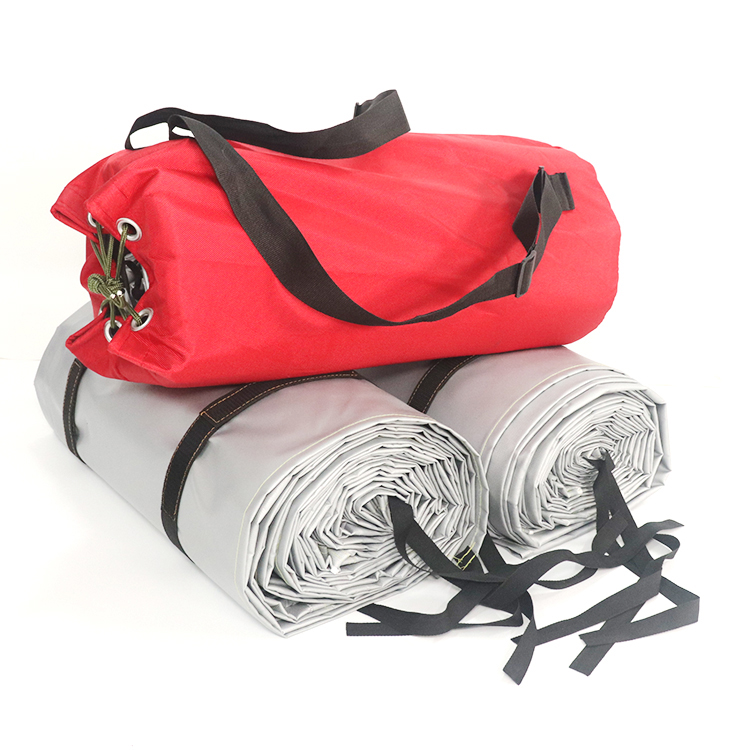
Why a Car Fire Blanket Is the Fastest First-Response Tool for Vehicle Fires
Car fires can get completely out of control fast, sometimes reaching over 1000 degrees Celsius within three minutes flat. Fire blankets work much quicker than regular fire extinguishers too. They deploy in around 8 to 12 seconds while most extinguishers take between 15 and 30 seconds to get going. What makes these blankets so valuable is how straightforward they are to use. No need to fumble with nozzle aiming or remember those complicated PASS steps everyone tries to recall during emergencies. When someone's panicking, this simplicity really matters because thinking straight becomes next to impossible in such situations.
Fire blankets work by cutting off oxygen supply to the flames, which makes them really good at tackling engine fires that account for around 60% of all car fires. Chemical fire extinguishers are not so great because they often leave behind stuff that can eat away at delicate electronic components and wiring inside vehicles. Fire blankets don't make a mess though. Made with strong fiberglass material, these blankets handle intense heat pretty well. After using one, someone just needs to check if it still looks okay structurally before putting it back into service. Most folks find this much easier than dealing with cleanup after traditional methods.
| Response Factor | Fire Blanket | Fire Extinguisher |
|---|---|---|
| Deployment Time | 8–12 seconds | 15–30 seconds |
| Training Required | Minimal | Extensive |
| Residue Impact | None | Corrosive damage |
In case of small fires that haven't spread too far, having this device around gives people those crucial extra minutes needed to get out safely. Most safety groups these days, including folks from the National Fire Protection Association or NFPA as they're commonly called, suggest drivers keep one handy somewhere easy to reach like the glove box or under their feet near the driver's seat. The good news is there's really nothing complicated about maintaining it. No need to check pressures or recharge anything ever again once it's installed properly. And remember, during emergencies every second counts. Simple tools often make all the difference between getting out unharmed and facing serious consequences.
How to Use a Car Fire Blanket: Step-by-Step Deployment and Technique
Pre-Deployment Readiness: Inspection, Storage, and Accessibility
Keep that car fire blanket where everyone can see it inside the cabin. Best bet? Tuck it under the driver's seat or put it in a special emergency kit in the trunk. Don't let it get lost under all those shopping bags and gym gear. Check on it once a month too. Make sure the packaging is still good, those pull tabs work properly, and there's no sign of dampness, rips, or damage from sitting in sunlight for too long. Get used to grabbing it quickly. Most people don't realize how fast things can go wrong. According to recent studies, around seven out of ten vehicle fires spread way beyond control within just 90 seconds. That's why being able to grab that blanket in under five seconds could make all the difference in an emergency situation.
Real-Time Deployment: Safe Approach, Controlled Unfolding, and Effective Smothering
- Position Safely: Park away from traffic and flammable surfaces, turn off the ignition, and evacuate all passengers before approaching the vehicle.
- Unfold Strategically: Hold corner tabs to shield hands, unfold downwind while keeping the blanket fully between you and the fire source.
- Smother Completely: Cover the fire edge-to-edge in one smooth motion—do not pat or press. Maintain full coverage for at least 15 minutes to ensure complete oxygen starvation and prevent reignition.
| Critical Error | Correct Technique |
|---|---|
| Partial coverage | Overlap edges by ¥20 cm beyond visible flames |
| Standing upwind | Position crosswind to avoid smoke inhalation |
| Removing too soon | Wait ¥5 minutes after flames fully subside |
Post-Smothering Protocol: Monitoring, Cooling, and When to Evacuate or Call Professionals
After smothering, monitor the covered area for 15 minutes without disturbing the blanket. If conditions permit and the fire remains fully suppressed, apply water around (not directly on) the blanket's perimeter to cool adjacent components and reduce radiant heat transfer.
Evacuate immediately if any of the following occur:
- Smoke persists beyond 3 minutes;
- Audible hissing or venting from high-voltage battery packs (common in EVs/hybrids);
- Flames breach the blanket's edges;
- You detect unusual odors, rapid heat buildup, or projectile risk.
Always contact emergency services—even after apparent suppression. Reignitions occur in 40% of vehicle fires within 10 minutes (UL Fire Council 2023).
Car Fire Blanket Effectiveness by Vehicle Type: Conventional, Hybrid, and EV Considerations
Thermal Resistance, Coverage Area, and Response Time Requirements Across Powertrains
Vehicle fires demand powertrain-specific responses. Conventional internal combustion engine (ICE) fires typically reach 1,000°F within 90 seconds (Fire Safety Journal 2024), making standard car fire blankets—rated to 1,200°C and sized 1.8m × 1.8m—highly effective for initial engine bay or wheel-well suppression.
Hybrid vehicles introduce dual hazards: gasoline flammability and lithium-ion battery thermal runaway. Here, multi-layer blankets with reflective silica coatings are essential—not only to smother fuel-based flames but also to reflect radiant heat and slow battery cell propagation.
When it comes to fire safety challenges, electric vehicles create some pretty tough situations. The lithium batteries inside these cars can reach temperatures over 1800 degrees Fahrenheit when they catch fire, and those flames often last for more than half an hour. What makes things even worse is how fast thermal runaway happens sometimes reaching 500 degrees Celsius per second. Specialized firefighting blankets designed for EVs need much larger coverage areas at least around six by eight meters in size. These blankets also incorporate advanced materials like silica fiberglass composites and must withstand intense radiant heat that goes beyond 2000 degrees Celsius. Time becomes extremely critical too. Firefighters really only have about one minute from the moment they detect smoke before starting their response if they want any chance of containing the fire effectively.
Critical Limitations: When a Car Fire Blanket Should Not Be Used
Car fire blankets are powerful first-response tools—but they are not universal solutions. Their use has clear, non-negotiable boundaries:
| Limitation Factor | Critical Threshold | Required Action |
|---|---|---|
| Fire Size | >40% of vehicle surface involved | Combine with Class B extinguisher or evacuate |
| Deployment Delay | >90 seconds post-ignition | Evacuate immediately; do not attempt suppression |
| Battery Venting | Visible projectiles, explosions, or violent gas release | Establish ¥100 ft exclusion zone and await professionals |
| Blanket Integrity | Tears >1 cm, UV cracking, or age >2 years | Replace unconditionally |
Never deploy during active pressurized fuel leaks or intense lithium thermal runaway—these generate instantaneous peak temperatures exceeding 2,000°F, overwhelming even high-spec blankets. In such cases, prioritize immediate evacuation and professional response. Always assess smoke density, ignition source location, and audible cues before approaching.
FAQs
What is the primary benefit of using a fire blanket over a fire extinguisher for car fires?
Fire blankets deploy faster and are easier to use, requiring no training, unlike fire extinguishers which need aim and activation.
How often should I check my car fire blanket?
Inspect your fire blanket monthly for signs of damage, dampness, or UV exposure to ensure it's ready in an emergency.
Where should I store my car fire blanket?
Keep it in an easily accessible location like under the driver’s seat or in a visible emergency kit in the trunk.
Can I reuse a car fire blanket after deployment?
Yes, if it remains structurally intact. Check for damage before reusing.