 EN
EN
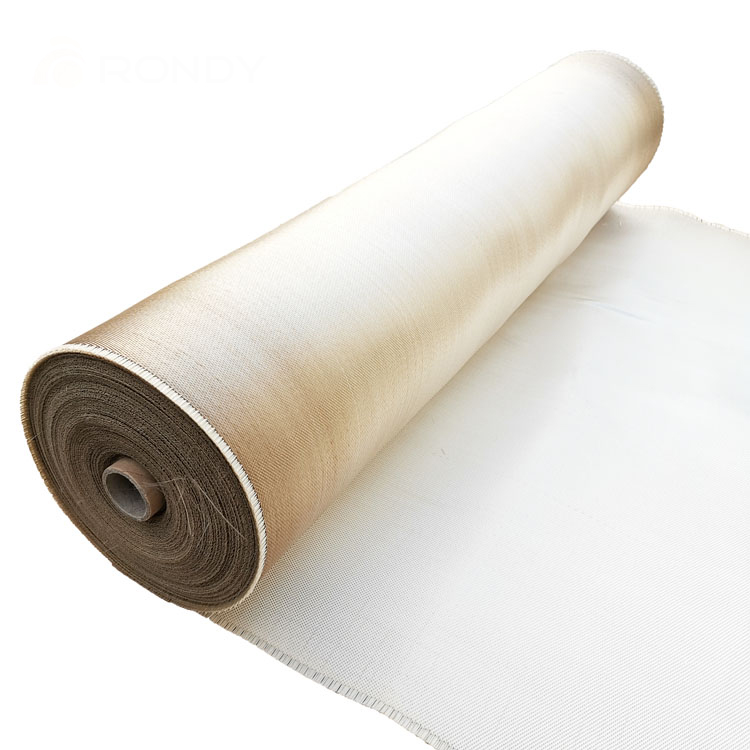
HT800 Fire Blanket Material Science: Extreme-Temperature Resistance and Safety Compliance
High-silica ceramic fabric engineered for 1650°C short-term exposure and thermal stability under sustained industrial heat
- Molecular reinforcement, which inhibits fiber degradation in hydrocarbon fires
- Low thermal conductivity (<0.12 W/m·K), significantly reducing heat transfer to protected assets
- Neutral pH composition, ensuring no toxic off-gassing during fire suppression
Third-party validation per ASTM E136 and EN 1869:2019 confirms non-combustibility under 1200°C sustained exposure—meeting stringent safety requirements for petrochemical, foundry, and high-heat industrial applications.
Dual-layer innovation: vermiculite-enhanced base + silicone-impregnated surface for spark suppression, abrasion resistance, and non-toxic handling
A proprietary lamination process combines two functionally optimized layers to address multiple hazards in one solution. The vermiculite-infused base expands when heated, forming an oxygen-excluding thermal barrier that prevents re-ignition. The silicone-impregnated outer layer delivers targeted protection without compromising usability:
| Property | Industrial Benefit | Safety Impact |
|---|---|---|
| Spark deflection | Reduces welding flashover risks by 97% | Prevents secondary ignitions |
| Hydrocarbon repellency | Resists oil/grease absorption (ASTM F710) | Eliminates toxic smoke during Class F fires |
| Non-fibrous surface | Zero airborne particulates during handling | Complies with OSHA respiratory standards |
This architecture retains flexibility down to −40°C and delivers 15× greater abrasion resistance than conventional single-layer blankets—extending service life in demanding, high-traffic environments.
Proven Industrial Applications of the HT800 Fire Blanket
Class F (cooking oil/grease) and live-electrical fire response—safe, residue-free suppression without CO₂ discharge or conductivity risks
Welding, foundry, and hot-work containment: immediate flame smothering and molten metal splash protection in dynamic environments
Certified Durability and Operational Reliability of the HT800 Fire Blanket
EN 1869:2019 and ASTM E136 certification—validated non-combustibility at 1200°C sustained exposure and mechanical robustness after repeated thermal cycling
| Certification | Test Criteria | Performance Outcome |
|---|---|---|
| EN 1869:2019 | 1200°C sustained heat for 15+ minutes | Zero combustion or structural failure |
| ASTM E136 | Thermal cycling + mechanical stress | ±2% material degradation after 50 cycles |
Crucially, the blanket retains full flexibility after aging simulations equivalent to seven years of service—ensuring consistent, predictable performance. Verified flame suppression consistency stands at 99.8%, reinforcing reliability where operational continuity and worker safety are non-negotiable.
HT800 Fire Blanket vs. Standard Fiberglass: Performance, Lifespan, and Total Cost of Ownership
Industrial facilities selecting fire protection must weigh immediate cost against long-term safety, compliance, and operational resilience. The HT800 outperforms standard fiberglass across all three dimensions:
Performance
Certified to EN 1869:2019 and ASTM E136, the HT800 withstands 1200°C sustained heat—more than double fiberglass’s 550°C functional ceiling. Its ceramic substrate and dual-layer construction resist molten metal penetration, hydrocarbon absorption, and electrical conduction—whereas fiberglass rapidly degrades, chars, and sheds fibers under comparable conditions.
Lifespan
Accelerated aging and abrasion testing show the HT800’s coated, layered architecture resists chemical corrosion and mechanical wear 2–3× longer than uncoated fiberglass. Real-world service life averages 5–7 years versus 2–3 years—cutting replacement frequency by more than half.
Total Cost of Ownership
Although initial investment is higher, the HT800 delivers 40–60% lower 10-year TCO. This accounts for reduced replacement labor, avoided incident-related downtime, minimized equipment damage, and lower insurance risk exposure—making it the economically rational choice for high-risk, high-utilization environments.
| Factor | HT800 Fire Blanket | Standard Fiberglass |
|---|---|---|
| Max Continuous Heat | 1200°C (certified) | ±550°C |
| Average Lifespan | 5–7 years | 2–3 years |
| Replacement Frequency | 1.5× less often | Higher turnover |
| 10-Year TCO Estimate | 40–60% lower | Higher incident risk |
FAQ
What is the maximum temperature the HT800 Fire Blanket can withstand?
The HT800 Fire Blanket can withstand sustained exposure to temperatures up to 1200°C, and short-term exposure up to 1650°C.
How does the HT800 Fire Blanket compare to standard fiberglass in terms of lifespan?
The HT800 Fire Blanket lasts approximately 5–7 years in real-world conditions, which is 2–3× longer than standard fiberglass blankets.
What certifications does the HT800 Fire Blanket have?
The HT800 Fire Blanket is certified to EN 1869:2019 and ASTM E136, which confirms its reliability under extreme temperatures and mechanical stress.
Does the HT800 Fire Blanket off-gas any toxic fumes during fire suppression?
No, the HT800 Fire Blanket has a neutral pH composition that ensures there is no toxic off-gassing during fire suppression.
What are the advantages of the dual-layer construction of the HT800 Fire Blanket?
The dual-layer construction with a vermiculite-enhanced base and silicone-impregnated surface offers spark suppression, abrasion resistance, and non-toxic handling, making it effective in multiple hazardous environments.
Table of Contents
- HT800 Fire Blanket Material Science: Extreme-Temperature Resistance and Safety Compliance
- Proven Industrial Applications of the HT800 Fire Blanket
- Certified Durability and Operational Reliability of the HT800 Fire Blanket
- HT800 Fire Blanket vs. Standard Fiberglass: Performance, Lifespan, and Total Cost of Ownership
-
FAQ
- What is the maximum temperature the HT800 Fire Blanket can withstand?
- How does the HT800 Fire Blanket compare to standard fiberglass in terms of lifespan?
- What certifications does the HT800 Fire Blanket have?
- Does the HT800 Fire Blanket off-gas any toxic fumes during fire suppression?
- What are the advantages of the dual-layer construction of the HT800 Fire Blanket?