 EN
EN

Gypsum Tape vs. Fiberglass Mesh: Choosing the Right Weapon for Drywall Joints
For professional drywall finishers, the debate between traditional paper-backed gypsum tape and modern fiberglass mesh tape is as old as the trade itself. Both products serve the same fundamental purpose: reinforcing the delicate seams where two panels of drywall meet. However, they achieve this goal through completely different mechanisms, and choosing the wrong one for the job can lead to disastrous results. A compromised joint doesn't just look bad; it telegraphs cracks to the surface, ruining the paint job and inviting constant callbacks from frustrated homeowners. Understanding the structural behavior, handling characteristics, and environmental limits of each tape is essential for delivering a flawless, long-lasting finish. Smart contractors know that the “better” option depends entirely on the specific conditions of the wall and the demands of the project.
The Reinforcing Philosophy Behind Paper Joint Tape
Paper joint tape, often called gypsum tape, is the traditional standard for a reason. It is manufactured from a dense, non-creped paper substrate reinforced with long cellulose fibers, which give it exceptional dimensional stability. Unlike softer papers, this specialized backing resists stretching and wrinkling when it is wetted down and pressed into the wet joint compound. The real magic, however, occurs through the starch-based adhesive saturation embedded in the paper. When the tape is pressed into the wet compound, the paper absorbs moisture, which reactivates the starch. As the compound dries and hardens, this reactivated starch cures, locking the tape into the seam with a powerful mechanical and chemical bond. This low-elongation, rigid structure is precisely why paper tape excels at keeping long, straight seams flat and tight. It absorbs the micro-stresses of a settling building without stretching or cracking itself.
Understanding the Structural Mechanics of Fiberglass Mesh
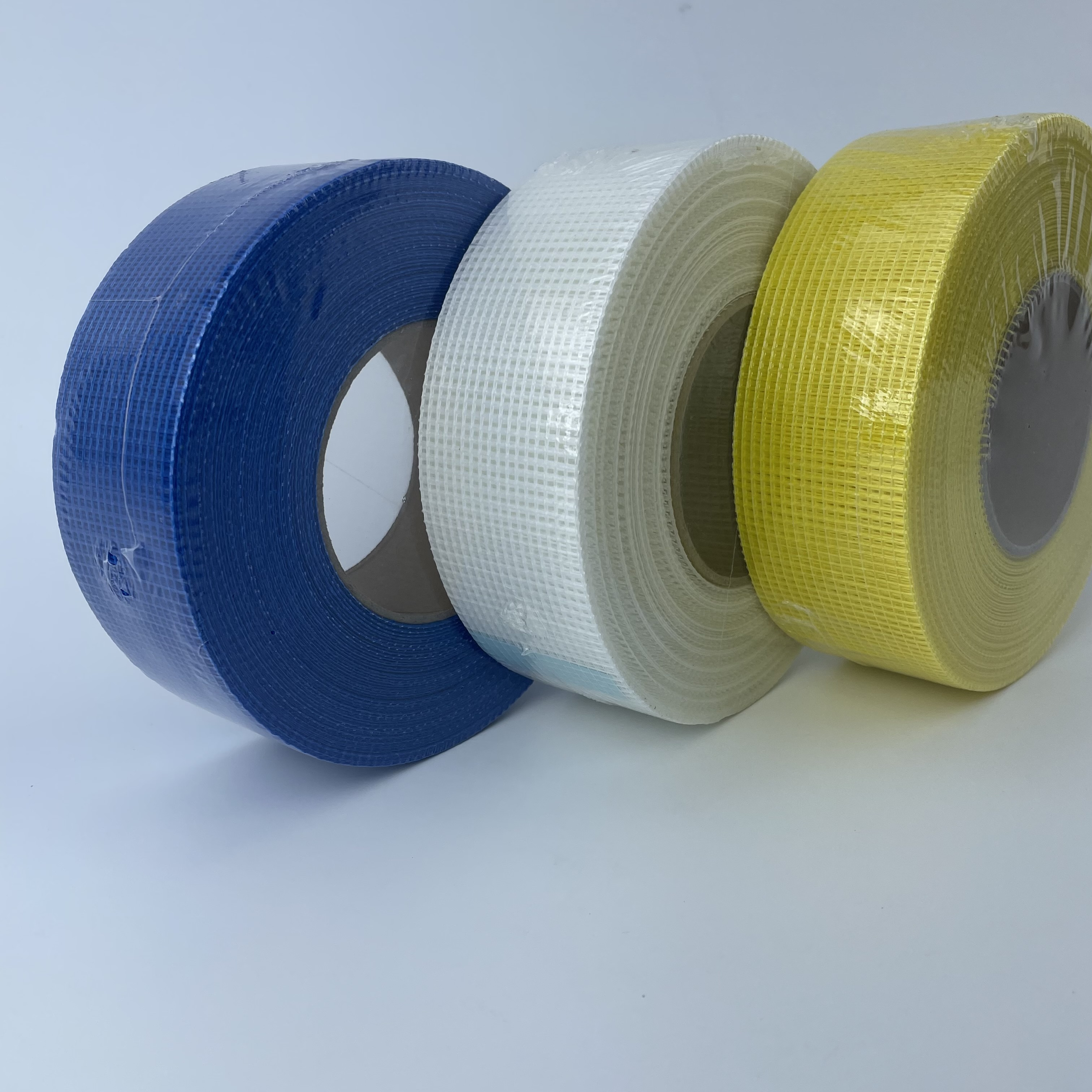
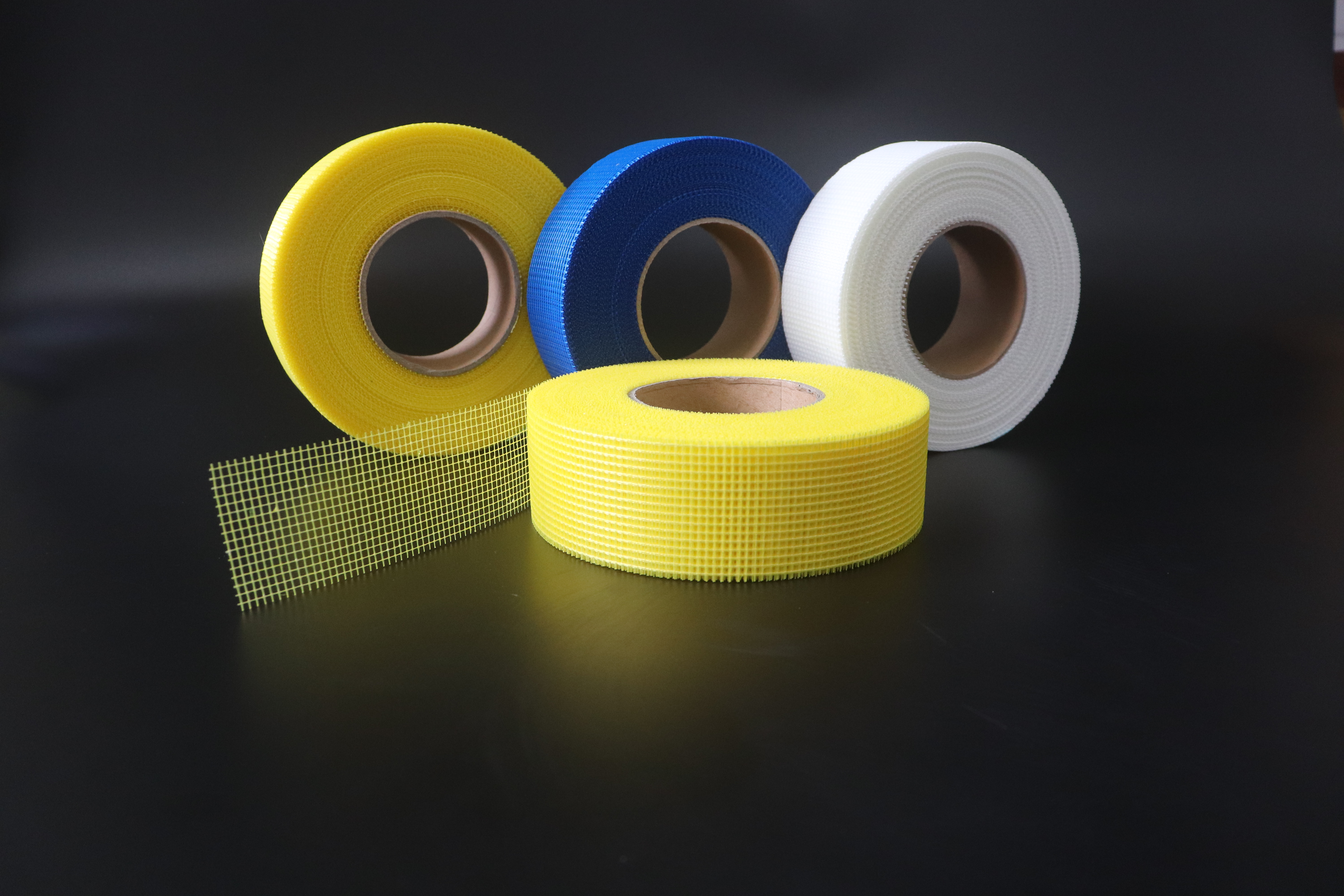
Fiberglass mesh tape takes a completely different engineering approach. Instead of a solid paper sheet, it features an open cross-weave of glass filaments coated with an acrylic resin binder. This open structure is its greatest strength and its most significant weakness. The open weave allows the joint compound to flow directly through the tape, meaning that finishers do not need to apply a separate bedding coat before pressing on the tape. This self-adhesion feature saves a significant amount of time on small patch jobs and repairs. However, because the mesh relies entirely on mechanical interlocking between the individual strands and the mud, it does not form a solid, monolithic bond. Under structural movement, the grid structure tends to stretch and flex more than paper tape. This elasticity can telegraph to the surface, resulting in fine hairline cracks along the seam over time, especially at high-stress butt joints.
Breaking Down Tensile Strength and Elongation Differences
When selecting a tape for a critical structural seam, the physical properties of tensile strength and elongation become the deciding factors. Proper testing protocols, such as those outlined by the ASTM C171 standard, measure how much pulling force a tape can endure before snapping, and how much it stretches before breaking. Paper tape consistently outperforms mesh in these metrics. Paper has a higher tensile strength, meaning it is stronger when pulled under tension. More importantly, paper tape exhibits a very low elongation rate—it does not stretch under load. When the drywall naturally expands and contracts due to temperature changes, the rigid paper tape holds the line firmly. Fiberglass mesh, on the other hand, has a higher elongation rate. While this flexibility helps it conform to curved surfaces, it becomes a liability on straight, high-stress joints where the stretching can lead to surface cracks.
The Critical Factor of Environmental Moisture Exposure
Drywall installers often face the challenge of working in basements, bathrooms, or laundry rooms where environmental moisture is inevitable. In these wet zones, the performance gap between the two tapes becomes dramatic. Paper tape is a hygroscopic material; it naturally absorbs moisture from the air and the joint compound. When exposed to continuous dampness, the cellulose fibers can swell, and the starch adhesive may eventually break down, leading to bulging joints and delamination. Over time, the damp environment can even encourage mold growth behind the tape. Field observations from building inspectors frequently reveal that standard paper tape has a significantly higher failure rate in shower enclosures. While moisture-resistant paper tapes exist specifically for these zones, standard fiberglass mesh is often the safer, non-absorbent choice for continuously damp environments, provided the installer uses a polymer-modified compound to ensure a strong mechanical bond.
The Impact of Thermal Expansion on Fire-Rated Walls
In commercial construction, fire-rated wall assemblies often rely on UL 1715 testing standards to ensure the integrity of the partition during a fire. The behavior of the joint tape under extreme heat and thermal cycling is a major part of this test. Paper joint tape has a coefficient of thermal expansion that closely matches the gypsum core of the drywall board. This means that as the wall heats up and cools down during a fire, the tape and the drywall expand and contract at the same rate, minimizing stress at the seam. Fiberglass mesh, due to its woven synthetic nature, has a different thermal response. Under rapid temperature swings, the elastic mismatch between the mesh and the drywall can cause the joint compound to micro-crack. For this reason, reputable architects and specification writers consistently prefer paper joint tape for fire-rated partitions where life safety is at stake.
Comparing the Learning Curve and Application Techniques
For the apprentice finisher, learning how to handle paper tape often takes a bit of practice. The procedure requires using a taping knife to embed the paper into a thin, even bed of all-purpose compound. The finisher must apply firm, consistent pressure to force the compound through the tape and eliminate any trapped air pockets. Because paper absorbs water, it expands slightly, which helps it conform to minor irregularities in the wall surface. While this process is slower initially, it becomes second nature after a few dozen joints. Furthermore, paper tape offers a valuable forgiveness factor; it can be gently repositioned for a few minutes before the compound sets. Mesh tape, conversely, is extremely quick to install because it relies on its factory-applied self-adhesive. A finisher can press it onto a seam and proceed immediately. However, this speed comes with risks. If the wall isn't perfectly clean and dry, the adhesive fails. And if a piece of mesh is placed poorly, it is almost impossible to peel off and reposition without ruining the sticky backing.
Achieving the Smoothest Surface Finish
The ultimate goal of drywall finishing is to create a seamless, invisible surface that accepts paint beautifully. Paper tape holds a significant advantage in this final stage. Because paper tape is a solid sheet with very thin, tapered edges, it feathers out to a virtually invisible thickness when scraped with compound. The paper surface sands extremely cleanly with fine-grit abrasives, without fuzzing or pilling. Fiberglass mesh, because of its open weave, requires a thicker initial bed of compound to encapsulate the glass filaments completely. If the installer is not careful, the coarse grid pattern can show through the final coat or become difficult to sand flat. In high-visibility areas where a Level 5 finish is required, experienced finishers almost universally prefer paper tape for its superior smoothness.
How Manufacturing Control Guarantees Long-Term Performance
Ultimately, whether a contractor chooses paper tape or mesh tape, their long-term success in the field depends heavily on the quality of the manufacturing process. Paper tapes must have precise saturated starch weights, consistent fiber orientation, and exact caliper thickness to perform predictably. Manufacturers who operate under recognized quality management systems, such as ISO 9001, subject their raw pulp and finished rolls to rigorous tensile testing to ensure batch-to-batch consistency. By maintaining a closed-loop oversight on the raw material sourcing and the saturation process, reliable suppliers ensure that their paper tape will absorb the compound perfectly and bond tightly without delamination. For a drywall professional whose reputation hinges on the durability of their work, sourcing joint tapes from a factory with transparent supply chain controls provides undeniable peace of mind on every single project.