 EN
EN

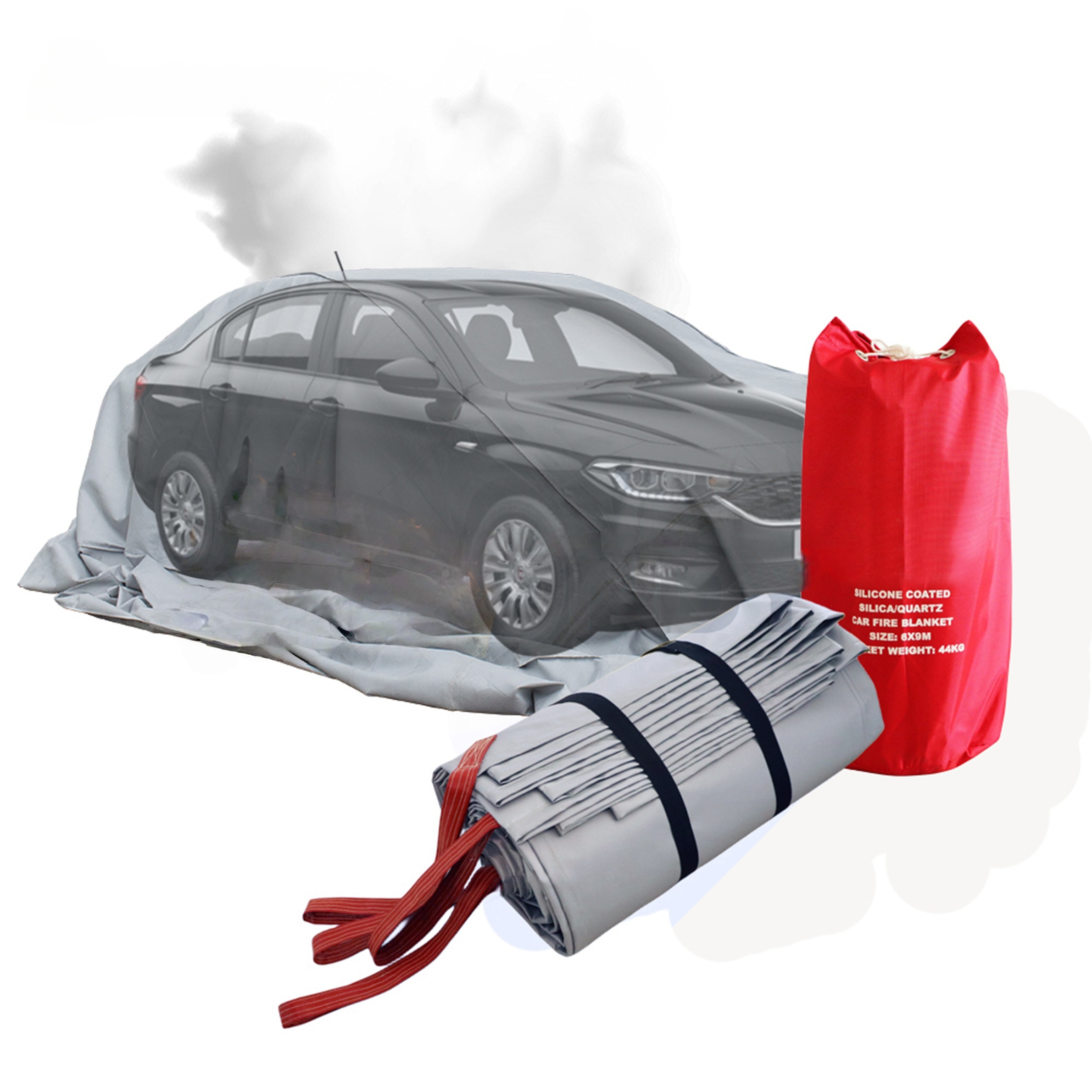
Why Most Fire Blankets Fail on EV Battery Fires (And What Actually Works in the Field)
If you have ever stood next to an electric vehicle pack undergoing thermal runaway, you know that sickening jet-engine hiss. Within ninety seconds, temperatures spike past 1,000°C, and the air turns into a corrosive cloud of hydrogen fluoride.
Over the past six years of running battery burn tests and outfitting fleet bays, the single most common mistake I see safety managers make is treating an EV battery fire like an oversized engine compartment fire. Grabbing a standard wool or aramid blanket for a burning lithium-ion pack is not just ineffective; it is dangerous.
Here is what really happens during a battery fire, why traditional gear fails under real-world thermal stress, and how purpose-built silica fiberglass blankets solve the containment problem.
The Reality of Thermal Runaway: You Cannot Smother an Internal Reaction
The core issue with lithium-ion fires is that they generate their own fuel and oxygen simultaneously. When an internal separator fails in a single pouch or prismatic cell, cathode compounds (like NMC) break down exothermically and release oxygen molecules directly into the burning pack.
| Metric / Hazard | Standard Class A/B Vehicle Fire | EV Lithium-Ion Battery Fire |
|---|---|---|
| Combustion Mechanism | Dependent on external atmospheric oxygen | Self-sustaining chemical decomposition releasing internal oxygen |
| Peak Temperatures | Typically 600°C to 800°C | Rapid spikes exceeding 1,000°C to 1,200°C |
| Off-Gas Toxicity | Mostly carbon monoxide and soot particulates | Severe levels of Hydrogen Fluoride (HF), VOCs, and explosive hydrogen |
| Reignition Risk Window | Minimal once cooled below flash point | High; dormant damaged cells can reignite 24 to 72 hours later |
Because the pack feeds itself with oxygen from the inside out, conventional suppression tactics designed to cut off ambient air will not stop cell-to-cell thermal propagation. Containment is about thermal dissipation management and flame deflection, not oxygen starvation.
Material Comparison: What Survives 1,000°C Continuous Heat?
We put several common fire blanket fabrics through controlled bench tests under direct flame exposure. The differences between laboratory claims and live pack conditions are stark.
| Material Type | Max Continuous Temp | Relative Cost | Field Performance & Failure Point |
|---|---|---|---|
| High-Silica Fiberglass (SiO₂) | ~1,000°C to 1,200°C | Moderate (1.0x baseline) | Maintains structural strength; resists HF vapors; zero flame breakthrough during prolonged burns. |
| Standard Aramid (Kevlar/Nomex) | ~450°C to 500°C | High (2.5x - 3.0x) | Softens, shrinks rapidly, and degrades above 500°C; releases noxious organic smoke. |
| Treated Wool / Class A Blends | ~500°C to 600°C | Low (0.4x - 0.5x) | Chars within seconds; burns through completely under direct torching; high ash collapse. |
| Carbon Fiber Mesh | ~1,800°C (inert only) | Very High (5.0x - 6.0x) | Oxidizes quickly in standard atmosphere; electrically conductive, posing severe shock hazards. |
Silica-based fiberglass remains the only sensible material choice. With a melting threshold above 1,400°C, it provides a vital margin of error when burning cells vent directly against the fabric.
Tactical Engineering: Fume Management and Re-ignition Buffering
A high-grade EV fire blanket is an engineered suppression system, not a simple sheet of cloth.
| Functional Feature | Engineering Purpose | Field Operational Benefit |
|---|---|---|
| Directional Venting Design | Prevents explosive gas capture under the cover | Channels combustible vapors away from responders while trapping sparks and molten metal. |
| Low Thermal Conductivity Barrier | Dampens radiant heat dissipation | Drops exterior perimeter heat from >800°C down to manageable handling thresholds within minutes. |
| Post-Incident Energy Buffer | Maintains stable cooling environment | Prevents thermal shock-induced shorting; stabilizes the pack for safe towing per NFPA 855 / NTSB protocols. |
Standard Operating Procedure: Deploying an EV Blanket Safely
Deploying a fire blanket onto a compromised EV requires clear teamwork and correct positioning.
| Step Number | Phase | Actionable Field Protocol |
|---|---|---|
| Step 1 | Approach & Wind Check | Approach from upwind with full PPE and SCBA breathing apparatus to avoid HF acid plumes. |
| Step 2 | Two-Person Unroll | Unfold the blanket parallel to the vehicle; each operator holds high-visibility grab loops. |
| Step 3 | Smooth Pull Across | Pull the blanket continuously over the hood, roof, and trunk in one motion without dragging on sharp metal edges. |
| Step 4 | Ground Sealing | Adjust weighted edges flush to the asphalt to isolate side flame spread. |
| Step 5 | Extended Stand-off | Keep the blanket deployed for a minimum of 60 to 90 minutes while monitoring pack temperature with thermal imaging. |
Frequently Asked Questions
| Question | Practical Field Answer |
|---|---|
| Does an EV fire blanket completely put out the fire? | No. A blanket isolates radiant heat, prevents fire spread to adjacent vehicles, and suffocates secondary structural fires, but the internal pack thermal reaction must complete its chemical cooling cycle. |
| Why is hydrogen fluoride (HF) off-gassing so critical? | When electrolytes vaporize, moisture in the air converts the fumes into hydrofluoric acid, which severely burns skin and attacks bone tissue. Vent-designed blankets channel these fumes safely upwards. |
| Can one blanket be reused after a severe battery fire? | If exposed to temperatures exceeding 1,000°C with severe molten metal slag, the blanket should be retired and inspected per manufacturer and NFPA standards. |