 EN
EN

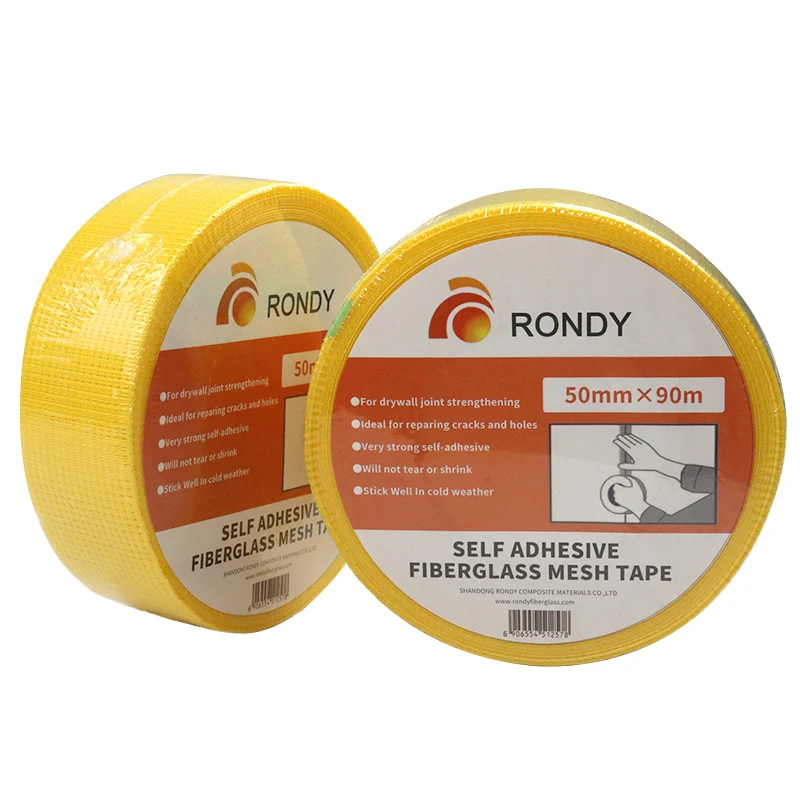
Key Takeaway: For standard factory-tapered drywall flat seams, standard 2-inch (1-7/8") self-adhesive mesh tape performs flawlessly provided it is dry-applied and filled with setting-type compound. For non-tapered butt joints, ceiling joints, and stress-prone door headers, stepping up to 3-inch wide mesh is mandatory to bridge framing deflection without crowning your joints.
⚠️ The Mechanics of Tape Width: Tapered Edges vs. Flat Butt Joints
In my 15 years running drywall finishing crews, the most persistent job site callback is the dreaded hairline crack running along a ceiling seam or butt joint. Nine times out of ten, the finisher reached for a narrow tape on a joint that demanded broader shear distribution.
Drywall panels feature two distinct joint profiles: recessed factory edges and cut butt ends. Factory edges create a shallow recess (taper) designed to accommodate tape and mud without bulging off the wall plane. Butt joints, where two square ends butt together, have zero recess.
When structural framing moves due to seasonal moisture shifts, stress concentrates along that raw seam line. A wider tape expands the structural bonding footprint across adjacent framing members.
| Joint Configuration | Recommended Mesh Width | Physical Stress Vector | Professional Job Site Rationale |
|---|---|---|---|
| Factory Tapered Seams | 2-inch (1-7/8") | Low to moderate lateral shear | Sits completely within the factory recess; allows a clean, flat 3-coat feather. |
| Field Butt Joints (Cut Ends) | 3-inch Wide Mesh | High shear and rotational tension | Disperses stress 50% wider across square edges, eliminating ridge telegraphing. |
| Ceiling Spans & Cathedral Peaks | 3-inch to 4-inch Wide Mesh | Continuous gravitational & truss uplift stress | Prevents sagging and truss-expansion cracking across long unbroken overhead planes. |
| Inside 90° Corners | NEVER MESH (Use Paper Tape) | High corner compression | Warning: Mesh tape lacks a crease; knife edges shred glass filaments, causing rounded, failed corners. |
| Outside Corner Beads | No Face Mesh Needed | Impact and vibration | Bead flanges bond mechanically into compound; wrapping wide mesh causes heavy humps. |
? The 3-Inch Advantage on Butt Joints: Engineering Stress Distribution
Cut butt joints are the weakest link in any drywall assembly. Because there is no factory indentation, every milliliter of compound applied sits proud of the gypsum board plane.
Applying a standard 2-inch tape on a butt joint creates a sharp, narrow hinge point. When the underlying wall studs twist or settle, the narrow bond boundary shears easily.
By switching to 3-inch high-density fiberglass mesh, you increase the surface contact area by over 50%. This geometry allows the load to dissipate outward rather than focusing directly over the seam:
| Performance Criterion | Standard 2-inch Mesh Tape | Heavy-Duty 3-inch Mesh Tape | Field Impact on Long-Term Durability |
|---|---|---|---|
| Total Adhesive Bonding Footprint | ~24 sq. inches per linear foot | ~36 sq. inches per linear foot | 3-inch tape provides 50% more contact area to resist edge curl. |
| Fastener Head Bridging | Frequently misses perimeter drywall screws | Spans perimeter screws located within 1.5" of board edge | Locks screw heads and seam into a single unified structural plane. |
| Required Feathering Width | 10 to 12 inches | 14 to 18 inches | 3-inch tape requires wider feathering, but completely conceals the butt-joint ridge under glancing light. |
| Compliance Rating | ASTM C475 (Standard assembly) | ASTM C475 / GA-216 (High-stress zones) | Mandated on commercial specifications where truss uplift is anticipated. |
? Master Class: Proper Application Protocol (The Zero-Blister Method)
A common rookie error is attempting to "bed" self-adhesive mesh tape into wet mud the way you do with paper tape. Doing so ruins the pressure-sensitive adhesive and causes the mesh to bunch up. Follow this proven field sequence:
| Step | Operation & Technique | Pro Tip to Avoid Costly Callbacks |
|---|---|---|
| 01. Board Prep & Dry Hang | Ensure boards are dust-free. Roll the self-adhesive mesh tape directly over the dry joint, pressing down firmly with a 4-inch clean taping knife. | Never overlap tape layers at seam intersections. Overlapping mesh creates double thickness that will telegraph through paint. Butt intersections square. |
| 02. The First Bed Coat (Crucial) | Mandatory: Use chemical-setting compound (Hot Mud, 45 or 90 minute). Force the mud firmly through the open grid weave using a 6-inch knife at a 45-degree angle. | Never use bucket ready-mix for the first coat on mesh. Air-drying compound shrinks and lacks the shear strength to hold elastic glass mesh, guaranteeing hairline cracks. |
| 03. Strike Off Flush | Wipe away excess compound so the mud sits flush with the mesh profile, leaving no heavy ridges. | Ensure every grid opening is filled 100% solid. Hollow pockets behind the mesh create air bubbles on the second coat. |
| 04. Finish & Feather Coats | Once the hot mud hardens (sets chemically), apply two subsequent finish coats using all-purpose or lightweight topping mud, feathering edges outward. | Use an 8-inch knife for the second coat, and a 12-inch or 14-inch curved trowel for the final skim coat. |
⚠️ Technical Specifications: ASTM C475 and GA-216 Compliance
-
ASTM C475 (Standard Specification for Joint Compound and Joint Tape): Regulates the mechanical properties of tape-and-compound systems. Self-adhesive mesh tapes must deliver uniform yarn tensile strength across warp and weft directions to prevent diagonal shearing under framing deflection.
-
Gypsum Association GA-216 Guidelines: Dictates finishing procedures for commercial and residential applications. GA-216 explicitly notes that whenever glass fiber mesh tape is specified on ceilings or fire-rated assemblies, chemically setting compounds must be used for the embedment layer to guarantee system integrity.
❓ Field Frequently Asked Questions
| Question | Veteran Drywaller Answer |
|---|---|
| Can I use 2-inch mesh tape everywhere to save money? | On standard residential walls with factory recessed edges, 2-inch tape works fine. However, using 2-inch tape on long ceiling butt joints or stairwell transitions almost guarantees cracks within 12 to 18 months. Spend the extra pennies on 3-inch tape for high-stress seams. |
| Why can't I use self-adhesive mesh on inside 90-degree corners? | Mesh tape has no center memory crease. When you push a corner knife into it, the blade cuts the fiberglass yarn, and the mesh springs back, creating round corners that bubble. Always use pre-creased paper tape or structural composite tape for inside corners. |
| Does wider mesh tape make it harder to sand? | No, because you should never be sanding the tape itself. If your sandpaper touches the glass mesh, you have "fuzzed" the fibers and ruined the joint. Proper multi-stage feathering leaves a solid 1/16-inch protective bed of compound over the mesh surface. |