 EN
EN

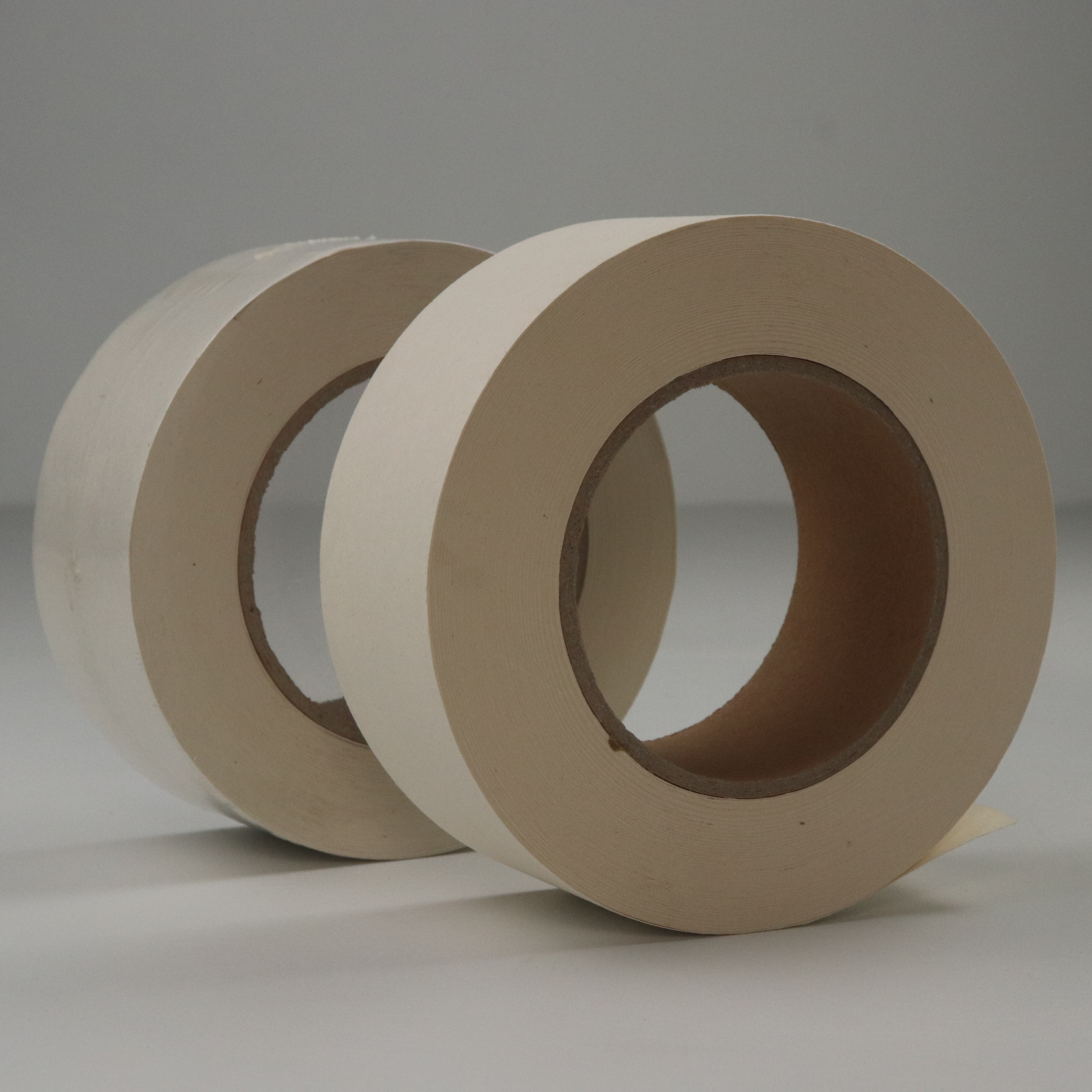
Key Takeaway: No paint job is better than the tape line beneath it. For 95% of standard flat seams and inside 90-degree angles, engineered fiber paper joint tape remains the absolute gold standard over fiberglass mesh. To avoid disastrous joint blisters or dry-spots, you must establish a continuous 1/16-inch bedding coat of setting-type compound to anchor the tape into a monolithic composite sandwich.
? The Sandwich Physics: How Paper Tape Structurally Anchors Drywall Seams
In my 15 years running drywall finishing crews on both commercial and high-end residential jobs, I have seen too many rookies treat taping as a simple cosmetic cover-up. It is not.
Drywall sheets are dynamic. When the building settles, the HVAC system cycles on, or the interior wood framing cures and shrinks (drying down from a green 19% moisture content to a stable 8%), those adjacent drywall panels pull apart and shear against one another.
If you do not reinforce that seam correctly, the joint compound—which has excellent compressive strength but terrible tensile (pulling) strength—will snap like dry chalk.
Paper joint tape works by establishing a high-tensile composite sandwich. When embedded correctly, the wet compound saturates the tiny, microscopic paper pores on the back of the tape. As it dries, the glue polymers within the compound lock onto these fibers, turning the paper and mud into a unified, rigid fiber-reinforced plate that spans the seam.
| Seam Performance Attribute | Engineered Kraft Paper Tape | Self-Adhesive Fiberglass Mesh | Pro Field Verdict & Failure Modes |
|---|---|---|---|
| Structural Tensile Strength | High (Resists lateral structural pulling forces) | Low to Moderate (Prone to stretching under stress) | Paper tape holds structural framing settlement; mesh tape often shears, causing hairline cracks. |
| Physical Bond Mechanism | Chemical polymer absorption & mechanical locking | Low-tack topical pressure-sensitive adhesive | Paper creates a true composite "sandwich"; mesh sits on top and relies solely on top-coat penetration. |
| Inside 90° Corner Fit | Flawless (Pre-creased center line folds crisp and holds memory) | Poor (Prone to knife cuts and rounded, sloppy corners) | Use paper for sharp, laser-straight inside corners; mesh will fray and ruin your corner knife. |
| ASTM Compliance | ASTM C475 (Full system compliance when embedded) | Requires specialized chemical-cure hot mud | Paper is universally approved; mesh fails inspections on fire-rated assemblies if paired with air-dry mud. |
| Typical Installation Risk | Blistering/Bubbling if the bed coat is starved of mud | Telegraphing/Fading where the mesh pattern grid flashes through paint | Paper requires skill to avoid dry spots; mesh requires extra skim coats to hide the grid. |
? The Telegraphing Illusion: Why Tape Alone Is Only Half the Battle
A common client callback is: "I can see the seam silhouette when the evening sun hits the wall."
This is not a tape failure; it is an optical taper failure.
Paper tape is roughly 0.01 inches thick. If you simply tape a joint and apply one tight coat of mud over it, you have created a physical hump on the wall. Under critical lighting (light that strikes the wall at a shallow angle, such as from recessed spotlights or large windows), even a 1/32-inch ridge will cast a dramatic shadow line.
To make a seam truly disappear, you must master the feathered edge. This means progressively widening your mud coats with larger knives:
? Master Class: The Pro Taping Protocol (Step-by-Step)
The difference between a crack-free 20-year wall and a 6-month warranty disaster comes down to how the paper tape is bedded. Follow this field-tested protocol to eliminate blistering:
| Step | Action and Technique | Pro Field Tip to Avoid Callbacks |
|---|---|---|
| 01. The Bedding Laydown | Apply a uniform 1/8-inch thick layer of all-purpose ready-mix or setting-type hot mud into the recess of the joint with a 5-inch taping knife. | Do not scrape the joint starved. If the drywall under the tape is dry, the paper cannot bond and will bubble (blister) as soon as you paint. |
| 02. Center and Seat | Unroll your pre-creased paper tape directly over the wet mud, starting from top to bottom. Lightly press it in with your fingers to hold it in place. | For inside corners, fold the tape along the crease before applying. Never push the knife tip directly into the corner fold, or you will slice the paper. |
| 03. The Tight Squeegee | Hold your 5-inch knife at a 45-degree angle. Starting from the middle of the joint, pull firmly toward the ends to squeeze out excess mud. | Leave exactly 1/16-inch of mud under the paper. If you pull too hard and squeegee all the mud out, you create a "dry joint" that will peel off later. |
| 04. Lock-In Skim | Immediately apply a ultra-thin skim coat of the squeezed-out mud over the face of the paper. | This locks the paper in from both sides, preventing the edges from curling up as the compound dries. |
⚠️ Technical Specifications: ASTM C475 and Gypsum Association Standards
For commercial bids, municipal school projects, and high-end residential handovers, technical compliance is non-negotiable:
-
ASTM C475 (Standard Specification for Joint Compound and Joint Tape): This standard mandates that the tape and compound must act as an integrated system. Paper tape certified under ASTM C475 undergoes rigorous tests for tensile strength, dimensional stability (humidity expansion), and crack resistance.
-
Gypsum Association GA-216 (Application and Finishing of Gypsum Panel Products): GA-216 specifies that all high-vibration areas (such as ceilings and staircase walls) should utilize paper tape systems to distribute structural shear stress. It notes that self-adhesive mesh tape should only be used on flat joints in low-stress environments when paired with setting-type (chemically curing) compounds.
❓ FAQ: Real-World Drywall Solutions
| Question | Veteran Drywaller Answer |
|---|---|
| What causes paper joint tape to bubble (blister) after it dries? | Paper bubbles for one reason: there was no mud underneath it. This happens when the installer either let the bedding mud dry out before applying the paper, or squeezed the tape too aggressively, wiping out the necessary 1/16-inch bond layer. To fix it, cut out the bubbled section with a utility knife, fill the crater with hot mud, and patch over it. |
| Can I use lightweight topping compound (blue lid) to embed paper tape? | I highly advise against it. Lightweight topping compounds are engineered for easy sanding and contain fewer adhesive polymers. They lack the "glue" strength needed to hold the paper tight under structural tension. Always use green-lid All-Purpose, black-lid Taping compound, or bag-mix setting compound (Hot Mud) for your first embedding coat. |
| Is fiberglass mesh ever acceptable for flat drywall joints? | Yes, but only under two conditions: first, you must use a chemically setting joint compound (like Easy Sand 45 or 90) for the first coat, as regular bucket mud shrinks too much and will crack across the elastic mesh. Second, use it only on non-structural, low-movement walls where speed is prioritized over ultimate structural strength. |