 EN
EN

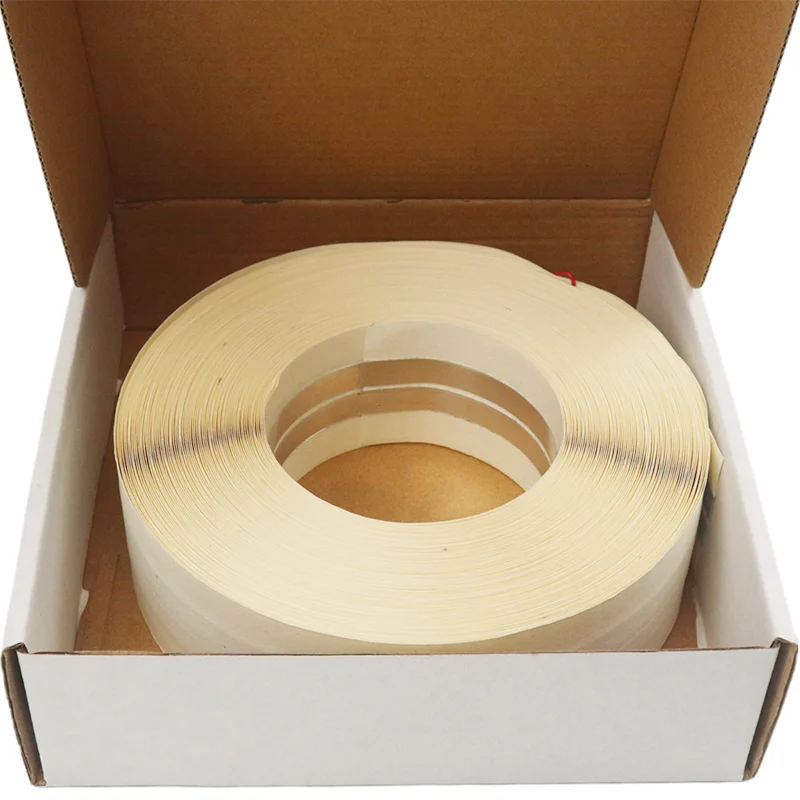
Key Takeaway: Never, under any circumstances, use fiberglass mesh tape on an outside 90-degree corner. If you want straight, crack-free, impact-resistant external corners that survive furniture knocks and house settling, mud-set paper-faced corner bead tape is your only professional choice.
? The Job Site Reality: Why Outside Corners Destroy Mesh Tape
Walk onto any commercial remodel job or residential warranty walkthrough, and you will see identical failure points: chipped, spiderweb-cracked external corners in hallways and doorways. When we cut into those failed corners, nine times out of ten, somebody tried to save five minutes by wrapping self-adhesive fiberglass mesh tape around an outside corner.
Mesh tape is strictly engineered for flat drywall joints and interior angles where two sheets butt together and share a flat framing plane. It possesses tensile strength across a flat surface, but it has zero structural rigidity. When a moving dolly, a vacuum cleaner, or even seasonal framing expansion strikes an outside corner, mesh tape cannot distribute that point-load stress. The brittle joint compound behind it shatters instantly.
Corner bead tape solves this structurally. By integrating a continuous, rigid spine—engineered from galvanized steel, treated polymers, or rigid composite laminates—with high-tensile paper flanges, it builds a structural armor system over the fragile gypsum core.
| Performance Attribute | Self-Adhesive Mesh Tape | Composite / Paper-Faced Corner Bead Tape | Field Impact & Contractor Verdict |
|---|---|---|---|
| Primary Design Function | Flat seam crack prevention | Load-bearing exterior corner shield | Mesh tape acts like a bandage; corner bead tape acts like an exoskeleton. |
| Impact Absorption | Negligible; compound shatters easily | High; forces disperse down the rigid spine | Bead tape survives high-traffic commercial impacts. |
| Geometric Straightness | Follows drywall defects and waves | Establishes a true, laser-straight edge | Bead tape bridges crooked framing; mesh telegraphs every wall flaw. |
| Code & Standard Alignment | ASTM C475 (Joint treatment compound) | ASTM C1047 (Accessories for gypsum wallboard) | Bead tape meets rigid accessory specifications; mesh tape is not rated for corner profiles. |
| Typical Callback Rate | High (frequent edge chips within 12 months) | Near zero when embedded properly in compound | Eliminating mesh on corners cuts drywall warranty service calls dramatically. |
? The Real Pro Workflow: Mud-Setting Corner Bead Tape Without Screws
A common beginner mistake is driving drywall screws or staples through paper-faced corner bead tape. Doing that distorts the straight nose and creates paper blisters that will plague your paint finish. Real pros use the "mud-set" method. Here is the field-tested step-by-step workflow:
| Stage | Action Steps | Field Pitfall to Avoid |
|---|---|---|
| 01. Prep & Dry Fit | Cut the bead tape 1/2-inch short of the floor line with aviation snips. Dry-fit against the drywall framing to check for framing high spots or protruding screws. | Never run the bead tight against subfloors; foundation settling will crush the bottom of the bead and cause bulging. |
| 02. Laying the Bedding Mud | Apply a generous, uniform ribbon of all-purpose taping compound (or setting-type "hot mud") along both sides of the corner with a 4-inch taping knife. | Avoid using lightweight topping compound for the bed coat. Topping mud lacks the glue polymers required for an unbreakable bond. |
| 03. Seating & Rolling | Center the tape spine over the corner. Press into the wet mud by hand, then glide an outside corner roller firmly from top to bottom. | Do not press with uneven force; use uniform rolling pressure to seat the nose plumb. |
| 04. Wiping Down Tight | Hold your 4-inch or 5-inch knife at a 45-degree angle. Firmly wipe down both paper wings, squeezing out excess mud and eliminating air pockets. | Do not dry-wipe the tape wings completely clean of compound; leave a 1/32-inch bedding layer under the paper to prevent blistering. |
| 05. Fill & Feather Coats | Allow the bed coat to dry thoroughly. Apply a second coat using a 6-inch or 8-inch knife, filling to the edge of the bead nose. Finish with a skim coat feathered out 10 inches. | Sanding before the compound is completely bone-dry will cause paper fuzzing and surface grooves. |
? Technical Compliance: ASTM C1047 and GA-216 Standards
When specifying materials for commercial installations, healthcare facilities, or multi-family construction, engineering compliance matters:
| Regulatory Standard | Scope & Requisite Criteria | Why Corner Bead Tape Complies |
|---|---|---|
| ASTM C1047 | Standard Specification for Accessories for Gypsum Wallboard and Gypsum Veneer Base | Specifies protective bead profiles, corrosion resistance, and compound adhesion standards. High-grade composite corner bead tapes satisfy these edge protection requirements. |
| Gypsum Association GA-216 | Application and Finishing of Gypsum Panel Products | Recommends dedicated corner protection on all exposed external angles subjected to traffic and impact wear. |
| Healthcare / Commercial Specs | FGI Guidelines for durable wall assemblies in high-traffic corridors | Paper-faced bead tape integrates monolithically with wallboard, resisting peeling, cracking, and rust even under frequent cleaning. |
? Job Specification Guide: Choosing the Right Corner Reinforcement
| Project Application | Recommended Corner Product | Why It Is Non-Negotiable |
|---|---|---|
| High-Traffic Commercial (Schools, Hospitals) | Heavy-duty composite / metal corner bead tape | Resists gurney and cart collisions; will not rust or show edge cracks. |
| High-End Custom Residential | Paper-faced flexible composite bead tape | Bridges irregular cathedral ceilings, off-angles (135°/bullnose), and structural settling lines. |
| Exterior Soffits & High-Humidity Zones | All-vinyl or polymer-faced corner bead tape | Paperless composite core eliminates rust and mold risks in damp ambient conditions. |
| Flat Butt Joints & Recessed Seams Only | Fiberglass mesh tape or perforated paper tape | Use mesh strictly on flat seams paired with setting-type chemically curing compound. |
❓ Frequently Asked Questions
| Question | Answer |
|---|---|
| Can I use self-adhesive mesh tape on outside corners if I use setting-type hot mud? | No. While hot mud cures harder than bucket mud, mesh tape still lacks a rigid spine. The very first door swing or piece of furniture hitting the edge will crush the corner. |
| Why does my paper-faced corner bead tape bubble after painting? | Bubbling occurs when there is insufficient mud under the paper wings during installation, or when the mud is squeezed out too aggressively, creating dry hollows under the tape. |
| Do I need to sand between mud coats on the corner bead? | No, do not sand intermediate coats. Simply scrape ridges gently with a clean 6-inch putty knife between coats, and save final sanding for the third feathered skim coat. |