 EN
EN

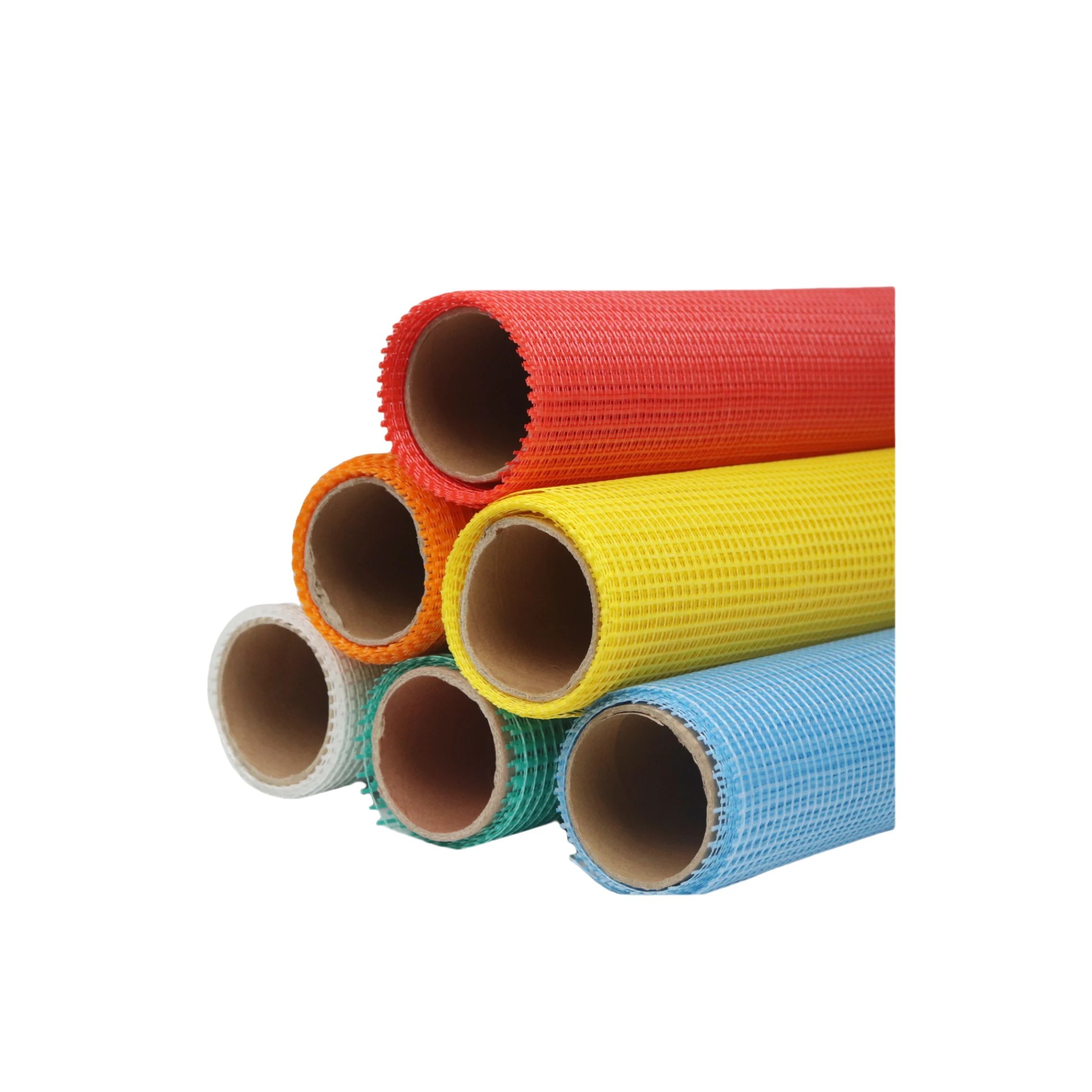
Key Takeaway: For 90% of standard residential drywall joint taping, 90 GSM self-adhesive fiberglass mesh is the sweet spot. Going lighter (60–75 GSM) runs a severe risk of joint shearing under framing settlement, while going heavier (110+ GSM) will force you to double your compound crowning width and battle stubborn edge "fuzzing" during final sanding.
? The Mechanics of GSM: Why Density Dictates Your Sanding Labor
In my 15 years running commercial drywall crews, I have seen too many apprentices assume all fiberglass mesh rolls are created equal. They grab whatever is cheap from the local hardware store, slap it on, coat it, and then call me over when their paint job looks like a wave pool.
GSM—Grams per Square Meter—defines the weight and weave density of your mesh. But in the mudding world, GSM translates directly to how much mud you have to carry on your knife.
When you apply a heavy-duty mesh (such as 120 GSM), the glass fibers are physically thicker. This means the mesh has a higher profile (it sits further off the wall board). To cover that proud profile and prevent it from "floating" or showing through your paint, you are forced to spread your joint compound much wider—often feathering 12 inches out instead of 8 inches.
Conversely, if you go too light (like a cheap 65 GSM mesh), the weave is loose, and the tensile strength is insufficient. The moment the house takes its seasonal thermal gulp, that weak joint shears, leaving you with a call-back to fix a hairline crack.
| Mesh Weight Class | Physical Thickness Profile | Average Tensile Strength | Best Joint Compound Match | Field Verdict & Labor Impact |
|---|---|---|---|---|
| 60 – 75 GSM | Ultra-Thin (~0.15mm) | Low (~20 N/5cm) | All-Purpose Ready-Mix | Great for quick patches; will tear on active structural seams. |
| 80 – 100 GSM | The Sweet Spot (~0.22mm) | High (~35 N/5cm) | Setting-Type (Hot Mud) first coat | The Industry Standard. Disappears easily; zero edge shadow. |
| 105 – 125 GSM | Thick Rigid Profile (~0.32mm) | Extreme (~55 N/5cm) | High-Strength Setting Compound | Mandatory for high-movement commercial zones; requires massive feathering. |
? Structural Performance: Choosing Your Tape Based on Physics
Choosing between fiberglass mesh and traditional paper tape isn't about personal preference; it's about matching material physics to your local climate.
-
Moisture and Mold Resistance: Paper is organic cellulose. In high-humidity areas like bathrooms or kitchens, paper tape behaves like a sponge—absorbing airborne vapor, swelling, and eventually delaminating from the drywall surface. Properly woven 90 GSM alkali-resistant fiberglass mesh does not hold water, preventing the common "bubbling" failures that plague paper-taped wet-area joints.
-
The "Mechanical Interlock" Advantage: Paper tape relies on a purely adhesive chemical bond. It sits flat on top of your first layer of mud. If your mud layer was dry-patched (mud-starved), the paper lifts. Fiberglass mesh, however, features an open grid weave. When you press your taping knife over it, the compound squeezes directly through the holes, binding the mesh and the drywall board together in a unified, three-dimensional composite structure.
? Master Class: Matching the Right GSM to the Job Site
Never use a single "universal" mesh roll for an entire house. Real drywall pros carry at least three grades in their rigs:
[60-75 GSM]   ---> Low-stress cosmetic patches & quick dings (Saves sanding time)
[80-100 GSM]  ---> Standard residential flat joints & butt joints (Your daily workhorse)
[115-125 GSM] ---> High-vibration commercial ceilings & around door headers (Maximum strength)
The If-Then Decision Matrix
-
If you are taping standard 1/2-inch residential wall joints: Use 90 GSM mesh paired with a setting-type compound (hot mud) for your first bed coat. This delivers perfect crack resistance and sands down flush with a standard 120-grit sanding sponge.
-
If you are repairing stress cracks around door headers or window frames: Use 115–125 GSM heavy-duty mesh. These areas absorb heavy vibration from slammed doors. You will need the extra tensile strength to bridge the shifting framing. Pro tip: Use a 10-inch trowel to feather the edges out far enough to hide the thicker mesh bulge.
-
If you are patching a quick blowout hole or nail pops: Use 65 GSM ultra-lightweight mesh. There is zero structural stress here, and the low-profile weave allows you to complete the repair in just two tight skim coats.
⚠️ Technical Compliance: ASTM C475 and Gypsum Association Guidelines
In commercial tenant improvement (TI) projects, inspectors don't care about "looks"—they care about ASTM standards.
-
ASTM C475 Compliance: This standard regulates the joint compound and tape systems used to finish drywall. When using fiberglass mesh on load-bearing or fire-rated assemblies, ASTM C475 mandates that the mesh must be paired with a chemically setting joint compound (not air-drying ready-mix mud) for the embedding coat to guarantee structural joint strength.
-
Gypsum Association GA-216 Specification: Recommends specific corner and seam reinforcement in high-traffic commercial corridors. When completing Level 4 or Level 5 finishes, using a certified 90+ GSM alkali-resistant mesh guarantees that alkali compounds within the joint cement won't degrade the glass fibers over a 20-year building lifecycle.
❓ FAQ: Real Solutions to Real Job Site Problems
| Question | Veteran Drywaller Answer |
|---|---|
| Why does my fiberglass mesh keep fuzzying up when I sand my joints? | This is "mesh exposure." It happens because you either sanded too aggressively with coarse paper (use 150-grit or higher for finish coats), or you didn't apply a wide enough second/skim coat over the embedded mesh. Once the glass fibers are frayed, you must skim over them again; you cannot paint over frayed mesh. |
| Do I have to use "hot mud" with fiberglass mesh? | Yes, absolutely. Air-drying bucket mud (like green-lid all-purpose) shrinks significantly as the water evaporates. Because fiberglass mesh has some elastic stretch, air-dry mud can crack under that shrinkage. Setting compound chemically cures without shrinking, locking the mesh tight. |
| Can I use fiberglass mesh on inside corners? | Avoid it if you can. While some pros use a corner-creaser tool with mesh, it's very easy to slice the glass fibers with your knife tip, ruining its structural integrity. Stick to paper tape or composite-faced corner tapes for crisp, sharp inside 90s. |