 EN

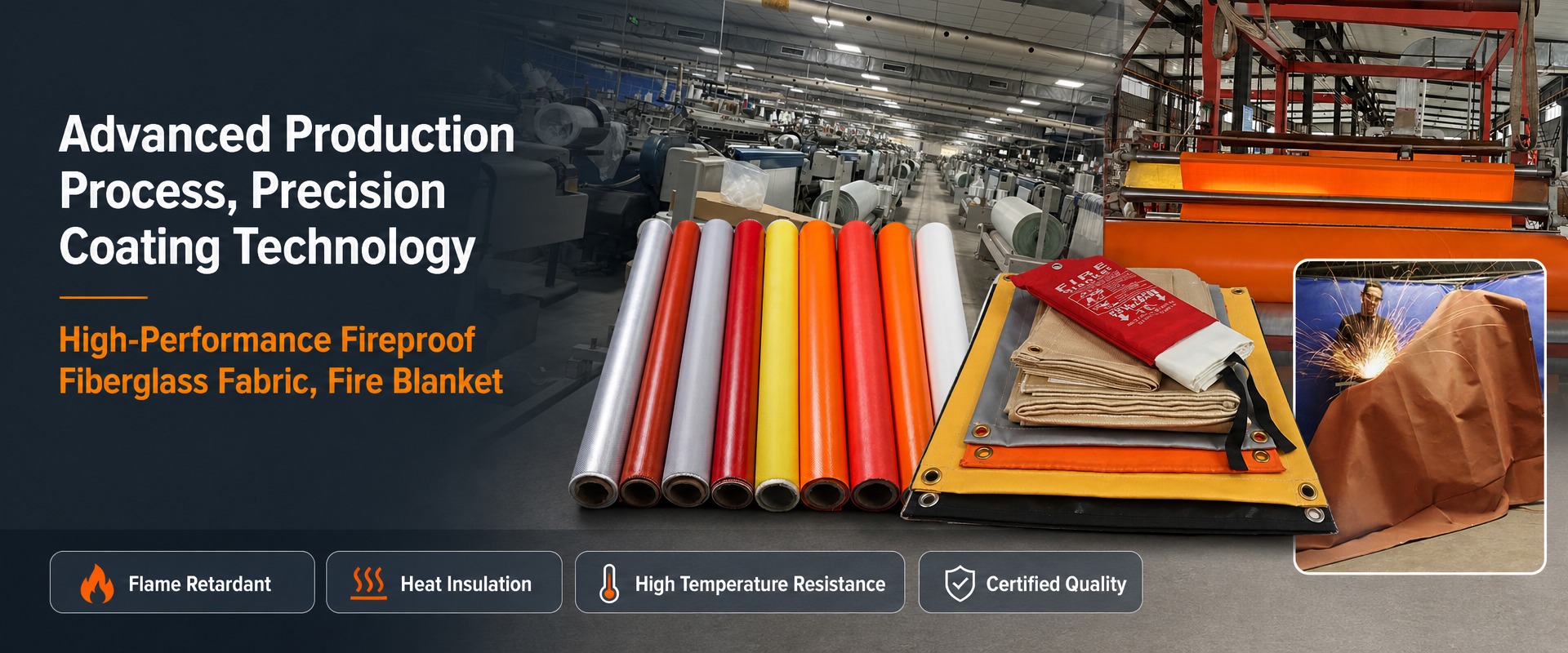
Why Fire Retardant PVC Tarpaulin Is a Preferred Choice for Welding Isolation
How PVC tarpaulin resists ignition from sparks and radiant heat through char-forming chemistry
Fire retardant PVC (polyvinyl chloride) tarpaulin resists welding sparks via a well-understood char-forming mechanism. Halogenated and phosphorus-based additives decompose under thermal stress, releasing chlorine radicals that interrupt gas-phase combustion while promoting dehydration of the PVC polymer backbone. This reaction forms a stable, carbon-rich char layer that acts as a physical barrier—blocking oxygen ingress, slowing conductive heat transfer, and protecting the underlying polyester scrim. Brief exposure to hot slag or grinding sparks typically results in localized charring rather than flame propagation, and the material usually self-extinguishes once the ignition source is removed. Radiant heat from nearby arcs—commonly 100–300°C at the tarpaulin surface—may soften the coating but rarely initiates sustained ignition in certified material. This controlled, predictable failure mode—not absolute non-combustibility—is what makes FR PVC tarpaulin a reliable first-line shield for welding isolation, provided it remains outside direct flame impingement. The chemistry also suppresses afterglow and eliminates hot, flaming drips, reducing secondary ignition risks in the work zone.
Comparative safety advantages over standard polyethylene or canvas barriers
Compared with standard polyethylene (PE) tarps, fire retardant PVC tarpaulin offers a significantly higher ignition threshold and avoids the hazardous melting and dripping behavior typical of PE, which softens at 120–130°C and can spread fire via burning droplets. Canvas, though non-melting, readily absorbs oils, greases, and spatter; contamination transforms it into an inadvertent fuel source. In contrast, FR PVC resists hydrocarbon absorption, sheds sparks more effectively, and forms an insulating char instead of dripping. It also delivers superior UV resistance and tear strength—key for repeated deployment across hot work shifts. These properties collectively reduce fire propagation risk and simplify housekeeping in high-traffic welding bays. Crucially, its failure is localized and visually detectable: unlike PE or contaminated canvas—which may collapse, melt, or ignite silently—FR PVC signals degradation through visible charring or embrittlement, giving crews time to intervene.
Compliance Essentials: NFPA 701, ASTM E84, and OSHA Requirements for PVC Tarpaulin in Hot Work Zones
Decoding NFPA 701 Section 2 vertical flame test—and why it’s mandatory for welding curtains
NFPA 701 Section 2 evaluates vertically hung fabric using a standardized flame application to the bottom edge. Pass/fail criteria include afterflame duration (≤2 seconds), char length (≤152 mm), and absence of flaming residue. Because welding curtains are suspended and exposed to downward-traveling sparks and radiant heat, this vertical orientation closely replicates real-world hazard exposure. An uncertified tarpaulin that continues to burn or emits flaming particles poses a documented risk of igniting adjacent equipment, flooring, or stored materials. OSHA 1926.352 mandates fire-resistant shields wherever sparks may contact combustibles—making NFPA 701 certification not just advisable but functionally required for compliance. Many industrial facilities explicitly prohibit untreated PVC tarpaulin on site due to its consistent failure in this test, recognizing it as a latent fire hazard in otherwise controlled environments.
Aligning PVC tarpaulin certifications (UL 723, AWS F1.1) with site-specific hot work permits
UL 723 (identical in methodology to ASTM E84) measures surface burning characteristics—including flame spread index (FSI) and smoke-developed index (SDI)—and is widely accepted for evaluating large-area barriers covering walls or ceiling openings. A low FSI (<25) and SDI (<450) support justification for use in expansive hot work enclosures. AWS F1.1, Recommended Practices for Safety in Welding and Cutting, further specifies that protective barriers must be flame-resistant and positioned to limit spark travel distance and accumulation. Hot work permits frequently codify these expectations—citing maximum allowable flame spread ratings, minimum standoff distances from the arc, and fire watch responsibilities. A fire retardant PVC tarpaulin backed by current NFPA 701 and UL 723 test reports provides permit issuers with objective, third-party evidence of compliance. Maintain those certificates on-site and accessible during inspections. If a permit imposes stricter limits than the tarpaulin’s certified values—such as requiring FSI <15 or standoff >900 mm—supplement with heavier-duty shielding or switch to a higher-rated barrier.
Real-World Performance Limits of Fire Retardant PVC Tarpaulin in Welding Applications
Critical distinction: flame-retardant ≠ non-combustible—behavior under sustained radiant heat (>600°C) and UV exposure
Fire-retardant PVC tarpaulin is not non-combustible. Its additives delay ignition and promote protective charring—but they do not eliminate flammability. Under sustained radiant heat exceeding 600°C, the polymer matrix can soften, shrink, deform, or ultimately ignite. Unlike ceramic fiber or tempered glass fabrics, FR PVC cannot withstand direct flame contact or prolonged proximity to intense arc radiation. It functions best as a secondary barrier—designed to intercept stray sparks and attenuate radiant energy—not as primary containment for the arc itself. Prolonged UV exposure accelerates plasticizer migration and coating degradation, reducing tensile strength and increasing susceptibility to cracking. While standard PVC tarpaulin is rated for service temperatures between –30°C and +70°C, peak radiant heat near welding operations often exceeds 300°C at the surface—underscoring the need for prudent placement. For reliable performance, specify thickness ≥0.5 mm, inspect for heat discoloration or surface embrittlement before each shift, and replace panels showing crazing, stiffness, or loss of flexibility. Recognizing this inherent limitation is essential for sound hot work permit planning and safe, defensible curtain placement.
Proper Installation and Handling of PVC Tarpaulin for Maximum Welding Safety
Proper installation begins with vertical suspension on non-combustible frames—maintaining a minimum 600 mm (24 in) clearance from the welding arc and all hot work sources. Overlap adjacent panels by at least 150 mm and secure all edges with heat-resistant ties or clamps to prevent spark, slag, or radiant heat bypass. Apply moderate tension to minimize flapping, but avoid contact with sharp metal edges that could puncture or abrade the coated fabric. Before each shift, inspect for burns, holes, or combustible residue; remove oil, solvent, or grinding dust using a mild detergent and soft cloth—never abrasive cleaners or solvents that degrade the FR coating. Never substitute standard polyethylene or canvas in hot work zones. When not in active use, roll (do not fold) the tarpaulin to prevent permanent creasing and cracking, and store it in a dry, cool location away from ignition sources and direct sunlight. Replace any panel exhibiting char depth greater than 2 mm, holes larger than 10 mm, or significant loss of flexibility—even if no visible flame damage is present.
FAQs
What makes fire retardant PVC tarpaulin effective for welding isolation?
Fire retardant PVC tarpaulin employs a char-forming mechanism using halogenated and phosphorus-based additives that resist ignition and promote self-extinguishment. It forms a protective barrier that blocks oxygen ingress and reduces risks from welding sparks and radiant heat.
How does fire retardant PVC tarpaulin compare to polyethylene or canvas barriers?
Fire retardant PVC offers higher ignition thresholds, avoids hazardous melting or dripping typical of polyethylene, and resists hydrocarbon absorption. It also provides superior UV resistance and tear strength compared to canvas, making it more effective in welding applications.
Why is NFPA 701 certification important for PVC tarpaulin?
NFPA 701 certification ensures that the tarpaulin meets required fire performance standards, including reduced afterflame duration, char length, and absence of flaming residue, to enhance safety and comply with OSHA hot work regulations.
What are the installation best practices for fire retardant PVC tarpaulin?
Proper installation involves vertical suspension on non-combustible frames with at least 600 mm clearance from the welding arc, overlapping panels by 150 mm, and regular inspection for damages. Panels should be stored properly when not in use to extend their lifespan.
Is fire retardant PVC tarpaulin non-combustible?
No, it is flame-retardant, not non-combustible. While it resists ignition and delays flame propagation, it cannot withstand direct or prolonged exposure to high heat or flames.
Table of Contents
- Why Fire Retardant PVC Tarpaulin Is a Preferred Choice for Welding Isolation
- Compliance Essentials: NFPA 701, ASTM E84, and OSHA Requirements for PVC Tarpaulin in Hot Work Zones
- Real-World Performance Limits of Fire Retardant PVC Tarpaulin in Welding Applications
- Proper Installation and Handling of PVC Tarpaulin for Maximum Welding Safety
-
FAQs
- What makes fire retardant PVC tarpaulin effective for welding isolation?
- How does fire retardant PVC tarpaulin compare to polyethylene or canvas barriers?
- Why is NFPA 701 certification important for PVC tarpaulin?
- What are the installation best practices for fire retardant PVC tarpaulin?
- Is fire retardant PVC tarpaulin non-combustible?