 EN
EN

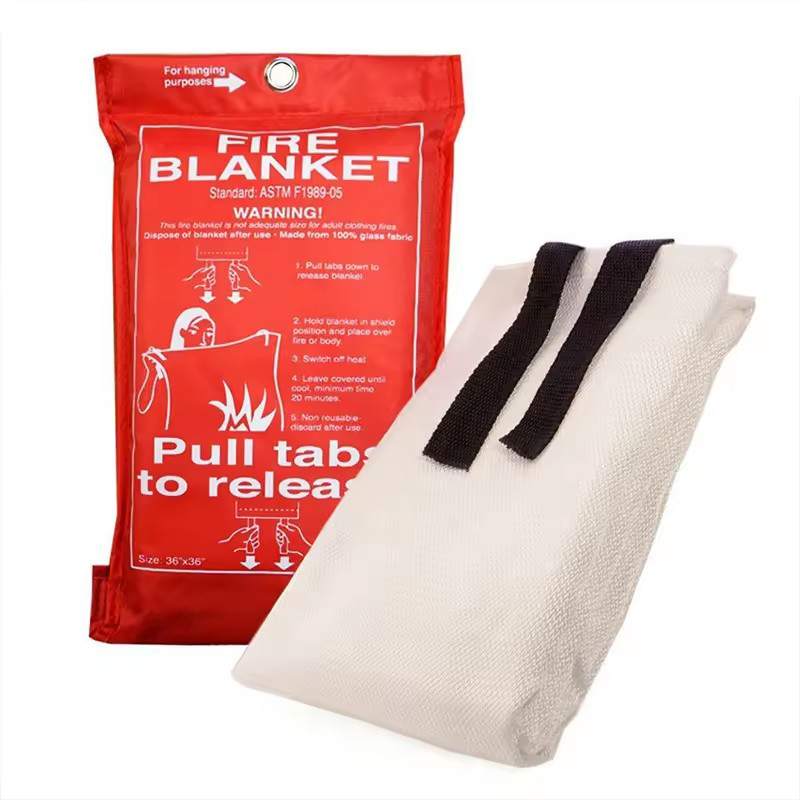
Testing Lithium Battery Fire Blankets to 1000°C: Standards, Field Tests, and What Safety Managers Must Know
When you watch a 100 kWh battery pack go into catastrophic thermal runaway inside a test bay, you realize quickly that standard firefighting gear is completely outmatched. Within seconds, internal cell temperatures blow past 1000°C, and the pack begins venting molten copper, burning electrolyte droplets, and hydrofluoric acid plumes under intense pressure.
Over the last seven years of conducting burn tests on containment fabrics, I have lost count of how many safety managers ask me: "Can't we just throw a standard welding blanket or Class A fire cover over the rack?"
The short answer is no. If you are sourcing or deploying battery fire blankets for ESS facilities, testing labs, or EV workshops, here is what laboratory standards like DIN SPEC 91489 and EN 13501-1 actually demand, where most fabrics fail, and how to verify compliance.
The 1000°C Reality: Thermal Resistance vs. Heat Dissipation
A battery fire blanket has two brutal jobs during thermal runaway: survive direct torching without burning through, and disperse intense thermal energy before the fabric tears from internal pressure pulses.
| Metrica Experimenti | Benchmark Specification | What We Observe in Real Burns | Requisitum Ingenieriae |
|---|---|---|---|
| Peak Flame Resistance | DIN SPEC 91489 (Radiant heat up to 1200°C for ≥15 min) | Cheap silica blends begin crystallizing and shedding glass fibers within 4 minutes. | Requires ultra-high purity SiO₂ (>96%) woven with vermiculite or graphite heat-dispersion layers. |
| Integritas Structurae | ASTM E119 (Structural fire endurance curve) | Mechanical shock from cell explosive ruptures tears seams and punctures non-reinforced fabric. | Filum multiplex cum filo ferro inox aut nucleo basalteo reforti. |
| Redistributio Caloris | Gradientes thermici superficiales | Puncta calida concentrata causant perforationem; tegumentum liquefit in vasculum bateriae. | Tunicas externas cum graphito recubertas ad effundendum calorem superficialem horizontalem aequabiliter. |
Refutatio Mythonis Suffocandi: Relatio Gasorum versus Privatio Oxigeni
Unus error criticus in securitate industriali: non potes privare incendium ex fuga thermica oxigeno. Postquam cathodi NMC aut LFP decomponuntur, ipsi producunt oxigenum internum ad nutriendum combustionem.
| Difficultās operātōria | Error Vulgaris | Field Engineering Reality | Correct Fabric Strategy |
|---|---|---|---|
| Exclusio oxygenii | "Smothering the pack puts out the battery fire." | The pack burns without any ambient air. Smothering only suppresses secondary fires around the battery. | Focus on flame redirection rather than attempting an airtight seal. |
| Toxic Venting (HF & CO) | "The blanket must completely seal all smoke inside." | Completely trapping high-pressure gas creates a bomb effect, lifting the blanket or rupturing seams violently. | Engineered microporous weave or perimeter vents to vent gas safely while arresting sparks. |
| Attactio chimica | "Any heat-resistant cloth survives off-gassing." | Electrolytum bateriae vaporizatum cum umore coniungitur ut acidum hydrofluoricum (HF) formet, quod vulgares vestes ceramicas dissolvit. | Barrierae chemicae acido-inertes quae sub expositione acidi non inrigescunt. |
Interpretatio Certificatorum Experimentorum: Normae Incendii EN et UL
Cum tibi fornitorēs certificata experimentorum mittunt, scire debes quinam numerī veram conformitātem ad normās salūtis indicent.
| Norma et Codex | Quae Laboratorium Experītur | Limis Successus/Insuccesus | Quid Hoc Ad Tuam Facilitatem Significat |
|---|---|---|---|
| EN ISO 1182 | Non-combustibilitās intra fornacem 750°C | Incrementum temperātūrae fornacis ≤30°C; pēnsum perditum exemplāris <50% | Verifies the base fabric contains zero combustible resin binder that could burn. |
| EN ISO 1716 | Gross calorific potential (bomb calorimeter) | Gross calorific value PCS ≤ 2.0 MJ/kg | Ensures the entire layered composite does not contribute latent fuel to the fire. |
| EN 13501-1 | Reaction to fire classification | A1-s1,d0 (Highest rating) | Non-combustible (A1), negligible smoke generation (s1), zero flaming droplets (d0). |
| UL 9540A & NFPA 855 | Ignis propagatio per thermalem runaway in ESS | Interruptio propagationis cellula-ad-cellulam | Demonstrat quod pallium praecipit incendium thermale ad modulos bateriarum vicinos vel arcae. |
Index adponendus pro expeditione in campo: quaerere et administrare incidentia
Si turma tua examinat pallia pro continentia officinae aut ESS, utere hoc regula operativa practica:
| Consideratio Operativa | Praxis secura | Insidiae alti riscus |
|---|---|---|
| Gravitas et tractatio | Adpete 1.2 ad 1.8 kg/m ² cum anulis aranearum conspicuis, resistentibus ad 500°C. | Pallia nimis gravia (>2.5 kg/m ²) quod duo technici non possunt vehiculum retrahere infra 30 secunda. |
| Post-Combustionis Reusabilitas | Tractare ut barriera sacrificialis ad casus urgentes ; inspicere et deponere post eventa graviora quae superent 900°C. | Assumendo quod quaelibet pallium sit multiplex usus post subitam pulverulentam rutilantis cupri effusionem et crystallizationem fibrae vitreae. |
| Sigillatio marginis | Catena perimetralis robusta aut tuniculae ex silicio ad tenendum terram contra ascensus thermicos. | Leves orae plicatae quae tremulant et levantur statim cum exhalatio gasorum batteriae incipit. |
Frequenter Interrogata in Campo
| Quaestio ab Officiorum Custodibus Securitatis | Practical Answer |
|---|---|
| Can we reuse a lithium fire blanket after a runaway event? | In 90% of severe thermal runaway events, no. Even if the blanket looks intact, exposure to >1000°C and corrosive HF destroys the polymer binders and embrittles the silica weave. Treat it as emergency PPE—replace it once deployed. |
| What is the single most important certification mark to look for? | Demand an official EN 13501-1 test report showing A1-s1,d0 pro complete composite , not just the raw untoothed fiberglass base roll. |
| How long should the blanket remain over the battery? | A minimum of 60 to 120 minutes. Maintain a wide perimeter and continuous thermal imaging monitoring. Moving the blanket too early introduces fresh oxygen to unburned flammable gas mixtures. |
Index Rerum
-
Testing Lithium Battery Fire Blankets to 1000°C: Standards, Field Tests, and What Safety Managers Must Know
- The 1000°C Reality: Thermal Resistance vs. Heat Dissipation
- Refutatio Mythonis Suffocandi: Relatio Gasorum versus Privatio Oxigeni
- Interpretatio Certificatorum Experimentorum: Normae Incendii EN et UL
- Index adponendus pro expeditione in campo: quaerere et administrare incidentia
- Frequenter Interrogata in Campo