 EN
EN

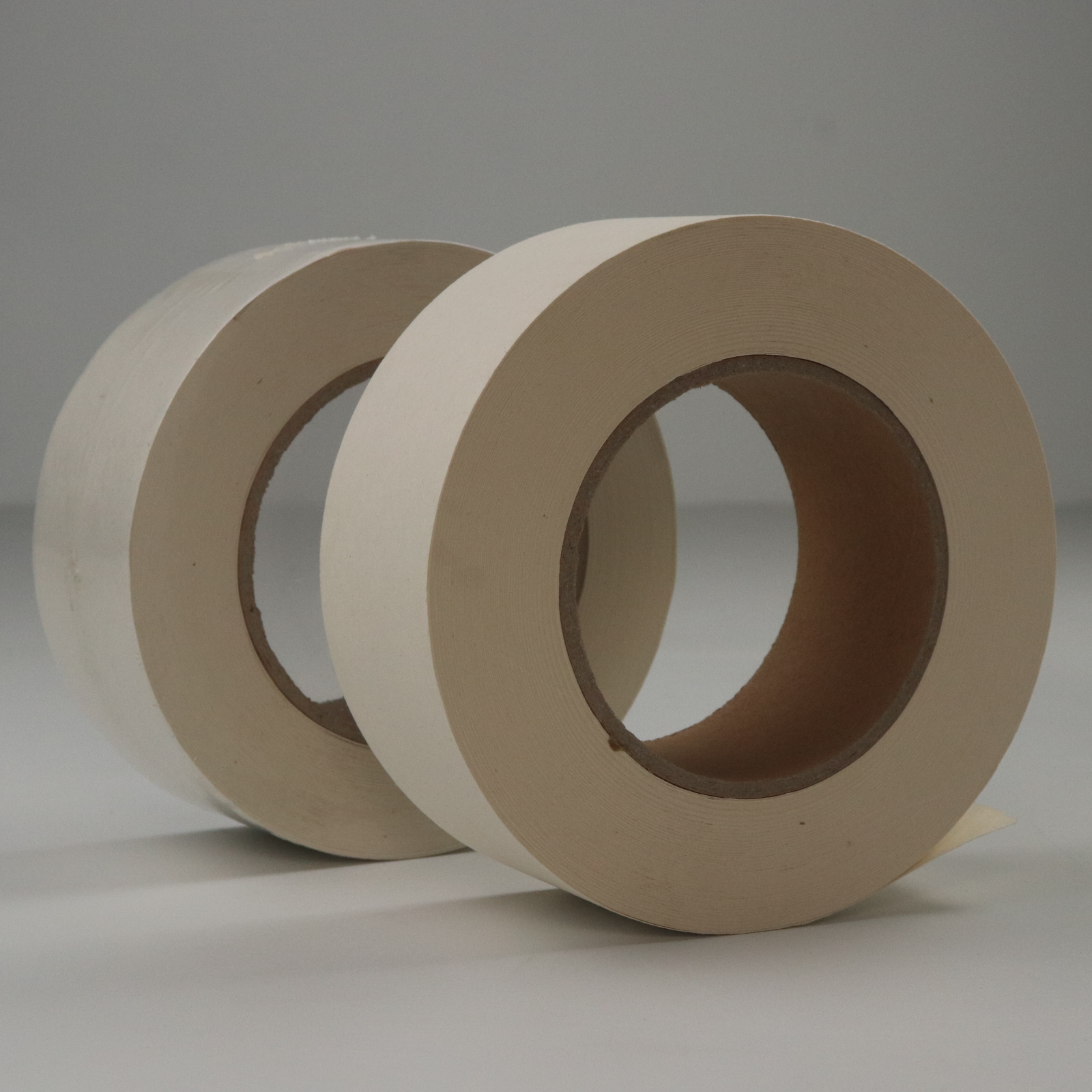
CONCLAVE: Paper tape embedded in all-purpose mud remains the undisputed king for 90% of flat seams and inside 90-degree corners. Self-adhesive fiberglass mesh is strictly for fast drywall patches and non-structural joints—and it must always be embedded in chemically setting hot mud , never air-drying bucket compound.
? Framing Physics: Why Drywall Panels Naturally Want to Crack
In over 15 years running drywall crews, I have walked through hundreds of 1-year warranty callbacks. Nine times out of ten, the homeowner points at a jagged hairline crack along a living room ceiling or hallway butt joint.
Here is what happens behind the paint: green framing lumber dries from an initial 19% moisture content down to an indoor equilibrium around 8%. As those wood studs shrink and twist, and as the building settles on its foundation, adjacent drywall panels shear against each other.
Gypsum compound by itself has solid compressive strength, but nearly zero tensile flexibility. Without a high-tensile joint tape bridging the gap, that micro-movement cracks the brittle compound line immediately. Joint tape functions as an embedded tensile plate, turning a vulnerable seam into a load-distributing composite sandwich.
| Performance Vector | Cross-Fiber Kraft Paper Tape | Open-Weave Fiberglass Mesh Tape | Job Site Reality & Field Verdict |
|---|---|---|---|
| Fortia Structural in Tensione | High (Resists lateral framing pull) | Moderate (Elastic fibers stretch under low load) | Paper stops hairline cracks; mesh can stretch enough to let top coats fissure. |
| Mechanical Bond Mechanism | Compound polymer absorption into cellulose pores | Topical adhesive tack + compound mechanical keying | Paper forms a solid composite plate; mesh relies entirely on mud shearing through holes. |
| Inside 90° Corner Profiling | Perfect (Factory pre-creased center line) | Poor (Fibers shred against corner knives; lacks crease) | Never use mesh in inside corners; use creased paper tape for laser-straight lines. |
| Required Bedding Mud | All-Purpose ready-mix or setting hot mud | Strictly chemically setting compound (Hot Mud) | Air-drying compound over mesh will crack due to evaporation shrinkage. |
| Moisture / Mold Susceptibility | Moderate (Organic paper cellulose) | Immune (Inorganic alkali-resistant glass fiber) | Mesh wins in wet environments like tile backer installations. |
⚠️ The Truss Uplift Myth: Why No Tape Can Stop Structural Displacement
A dangerous misconception in amateur drywall forums is that flexible mesh tape can "absorb" truss uplift at ceiling-to-wall transitions.
Truss uplift occurs during cold winter months when roof trusses bow upward due to moisture differences between the warm bottom chord and cold top chords. That vertical shift can exert hundreds of pounds of continuous upward tension.
No tape—paper or mesh—can stop this movement. If you tape that corner tight and screw the ceiling drywall within 8 inches of the interior partition wall, the seam will shear off or tear the ceiling panel face.
| Engineering Strategy | How It Works in Framing / Hanging | Result on Joint Tape Integrity |
|---|---|---|
| Floating Interior Angle (GA-216 Standard) | Omit drywall screws within 7–12 inches of the ceiling-wall corner; let drywall rest on top wall plates. | Allows the truss to bow upward freely without pulling the drywall joint apart. |
| Deflection Corner Clips | Use mechanical clips along top partition plates instead of rigid perimeter fasteners. | Eliminates stress transfer into the tape line completely. |
| Backer Crown Molding | Nail crown molding strictly to the ceiling plane, leaving the wall junction free to slide. | Completely conceals structural seasonal movement without stressing any tape joint. |
? Master Class: The Professional 3-Step Taping Workflow
Long-term crack prevention depends entirely on the thickness of your bedding layer. Follow this field-proven protocol to eliminate dry spots and paper blistering:
| Stadium Installationis | Correct Field Technique | Costly Mistake to Avoid |
|---|---|---|
| 01. Board Inspection & Wipe | Wipe all joint bevels with a damp cloth to clear gypsum dust; ensure fastener heads sit just below the board plane. | Taping over drywall dust blocks polymer bonding, guaranteeing edge delamination within 6 months. |
| 02. The Mud Bedding Coat | Lay down a continuous, uniform 1/8-inch bed of heavy all-purpose mud with a 5-inch taping knife. | Do not apply mud too thin. Starving the joint prevents paper fibers from saturating, causing hollow blisters. |
| 03. Tape Seating & Squeegee | Seat the paper tape on the wet compound, then wipe down with a 5-inch knife at a 45-degree angle from center to edge. | Squeegeeing too hard wipes out the bedding layer. Leave a uniform 1/16-inch cushion of mud beneath the tape. |
| 04. Intermediate Fill Coat | After the bed coat hardens completely, use an 8-inch knife to bridge the recess bevel with lightweight topping compound. | Applying finish coats over damp bedding traps moisture, leading to joint ridging and delayed shrinkage cracks. |
| 05. Wide Skim Feather | Extend the joint 12–14 inches on both sides using a 10-inch or 12-inch finish trowel to eliminate glancing-light shadows. | Sanding intermediate coats will scuff the paper fibers. Only lightly scrape blade marks between coats. |
? Technical Specification Standards: ASTM C475 and GA-216
When preparing submittals for commercial specifications or architect inspections, ensure your joint assemblies comply with these industry baselines:
| Referentia Communis | Scope & Performance Mandate | Application Relevance |
|---|---|---|
| ASTM C475 | Standard Specification for Joint Compound and Joint Tape for Finishing Gypsum Board | Defines minimum tensile strength, width tolerance, and dimensional stability for reinforced paper systems. |
| ASTM C840 | Standard Specification for Application and Finishing of Gypsum Board | Outlines Level 1 through Level 5 drywall finish requirements, including compound feathering boundaries. |
| Associatio Gypsii GA-216 | Application et finition des produits en panneaux de plâtre | Strictly governs fastener placement, structural movement joints, and ceiling-to-wall floating corner methods. |
❓ Field Frequently Asked Questions
| Quaestio | Veteran Drywaller Answer |
|---|---|
| Why did my paper joint tape crack straight down the center line? | A straight centerline crack indicates severe structural movement or framing settlement that exceeded the tensile yield point of the tape. It is rarely a taping error; check for foundation settling, inadequate framing ties, or missing structural control joints. |
| Can I use all-purpose bucket compound to embed self-adhesive mesh tape? | Never. Bucket ready-mix cures strictly by water evaporation, which causes shrinkage. As the compound shrinks, the open weave of the mesh allows micro-fissures to transfer directly to your paint. Mesh must always be filled with chemically setting compound (Hot Mud). |
| Quomodo corrigere possum bullam ex taenula postquam pictura iam in pariete est? | Ne coneris lutum in eam impellere. Exscinde lamellam papiricam bullatam prudenter cultro raso, imple craterem subtilem composito cito durante (Easy Sand 20), lima ad aequatur, et applica tenue stratum antequam imprimeris. |